Summary
- Natural history: Great Horned Owls begin nesting so early in the year that females sometimes incubate eggs while snow is still falling, and Vermont nests have been found in borrowed hawk and heron nests, broken tree stubs, and even the underside of a railroad bridge. Because the species prefers open, patchy landscapes rather than solid forest, Vermont’s maturing woodlands appear to be squeezing it out in favor of the forest-loving Barred Owl, which has increased as the state has reforested. Pairs defend the same territory year-round, announcing themselves with deep hoots that can carry up to a mile.
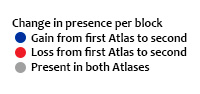
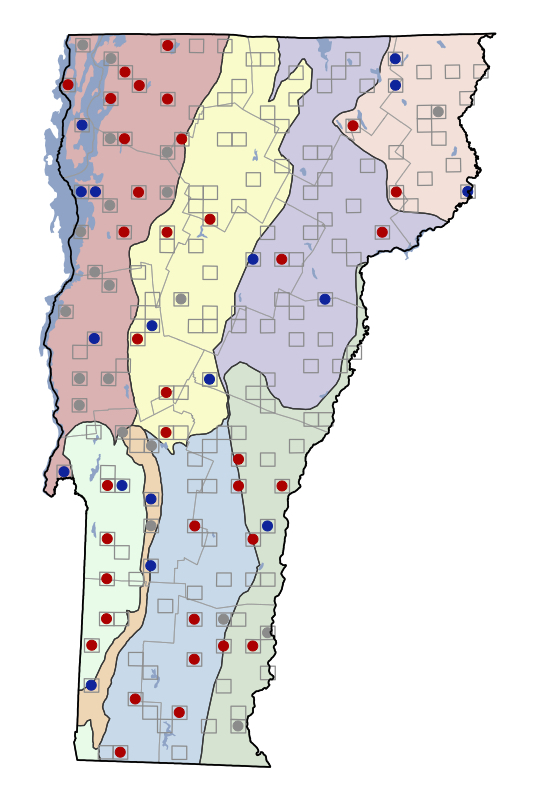
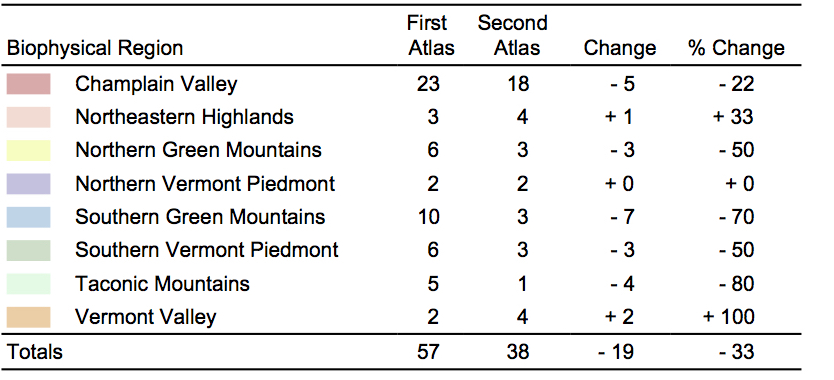
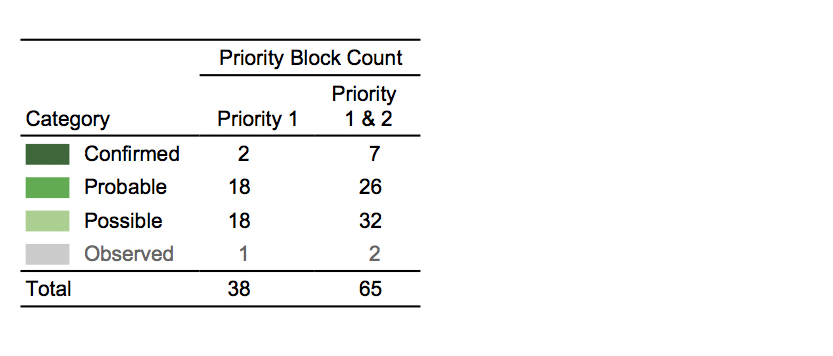
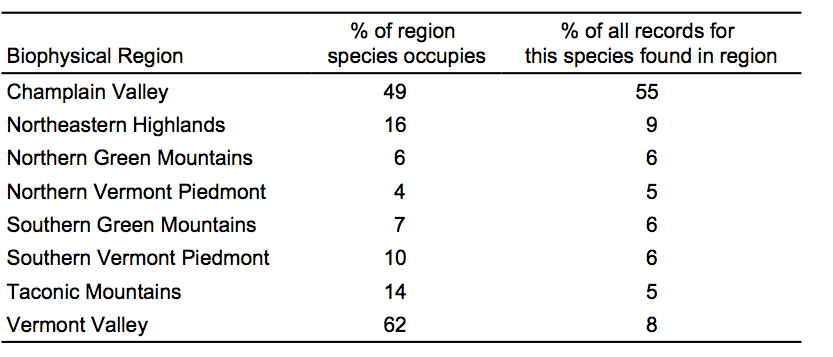
- Status in VT: Decreased by 33% (57 to 38 blocks). Greatest decrease in Taconic Mountains.
- Data from other research: No additional data for VT.
- Conservation status: State rank S3
- Other atlases: NY: -18%; PA: 28%; ON: -40% (southern regions).
- VT’s role in North American range: VT is within the core of the range.
- Causes of change since first Atlas: Maturation of forests.
- Management/Monitoring recommendations:Targeted, long-term monitoring in order to provide a more accurate index of population trend in VT.
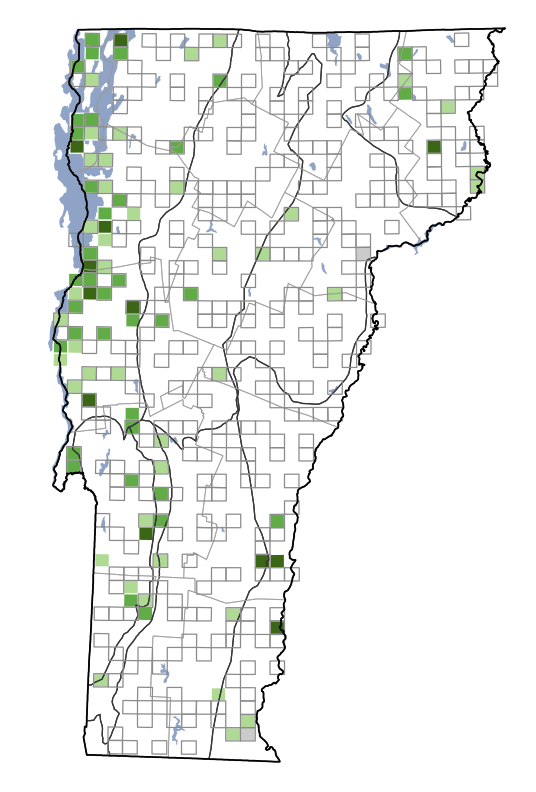
First Vermont Breeding Bird Atlas (1976-1981)
Second Vermont Breeding Bird Atlas (2003 – 2007)
Change in Distribution