Summary
- Natural history: The Great Crested Flycatcher is the only flycatcher in eastern North America that nests in tree cavities, and it has a quirky habit of weaving a shed snakeskin into the nest lining, or shiny plastic and cellophane when snakeskin isn’t available. Unlike most forest-interior birds, it actually benefits from forest fragmentation, since it hunts and nests along open, sunny forest edges rather than deep woods, a preference that makes the Champlain Valley’s patchwork of fields and woodlots its Vermont stronghold. The species has lost ground in the spruce-fir country of the Green Mountains and Northeast Kingdom as logging has waned and forests have matured, closing over the open edge habitat it depends on.
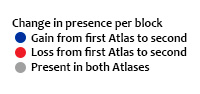
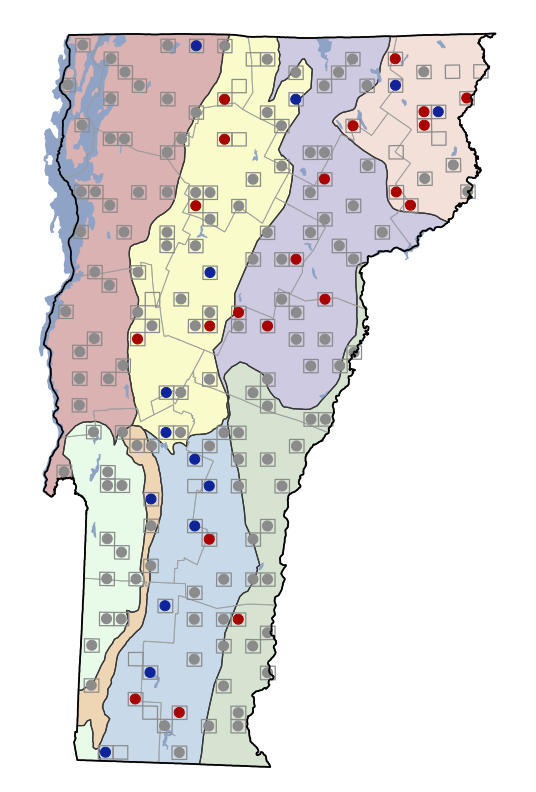
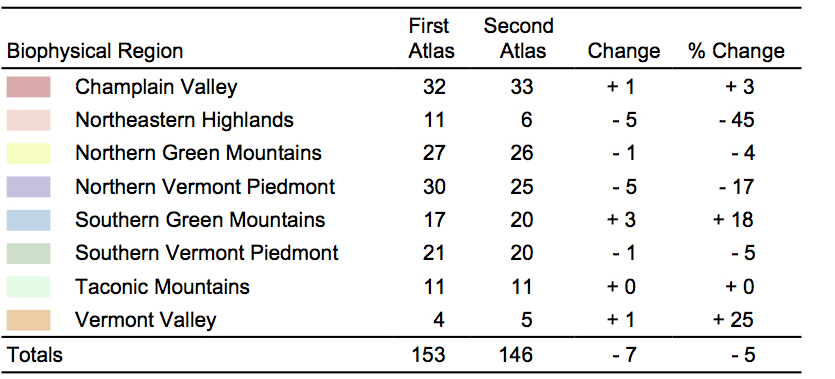
- Status in VT: Decreased by 5% (153 to 146 blocks). Greatest decrease in Northeastern Highlands.
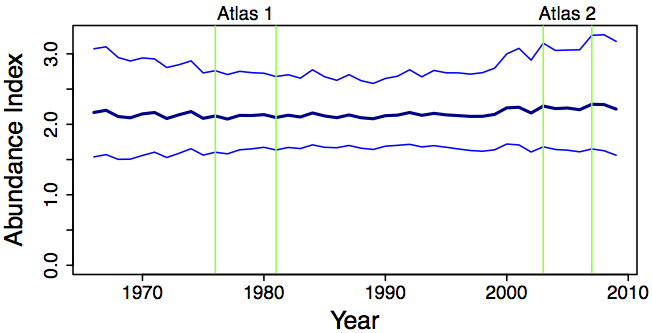
- Data from other research: FBMP: no sig. trend
- Conservation status: State rank S5B
- Other atlases: NY: -3%; PA: 3%; ON: -8%
- VT’s role in North American range: VT is within the core of the range.
- Causes of change since first Atlas: Reduction of edge habitat due to forest maturation and decreased logging (?).
- Management/Monitoring recommendations:No current recommendations.
Population Trends
First Vermont Breeding Bird Atlas (1976-1981)
Second Vermont Breeding Bird Atlas (2003 – 2007)



Change in Distribution