Summary
- Natural history: The Great Black-backed Gull is the largest gull species in the world, but it did not breed anywhere in Vermont until a single nest turned up on Lake Champlain’s Young Island in 1983, long after Herring and Ring-billed Gulls had already established colonies there. Unlike its more social relatives, it nests as just one or two isolated, territorial pairs even amid colonies of thousands of other birds, and it doubles as a predator, regularly eating the eggs and chicks of the very cormorants, gulls, and terns it nests beside. Though the species remains rare on Lake Champlain, its coastal populations have boomed since the 1970s, and Vermont’s tiny inland outpost shows how vulnerable such small colonies can be, as a botulism outbreak nearly wiped out an entire Lake Ontario nesting population by 2007.
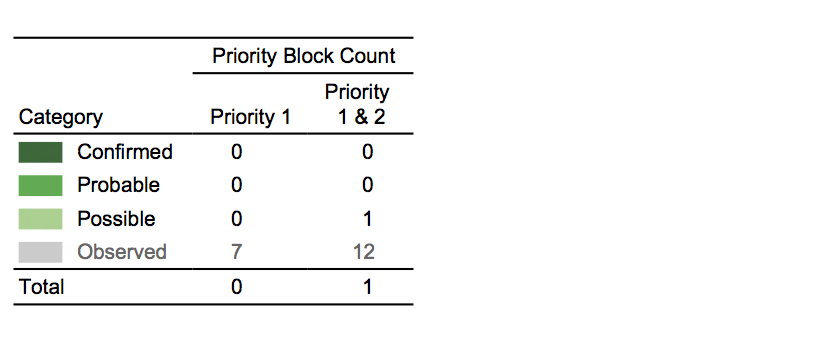
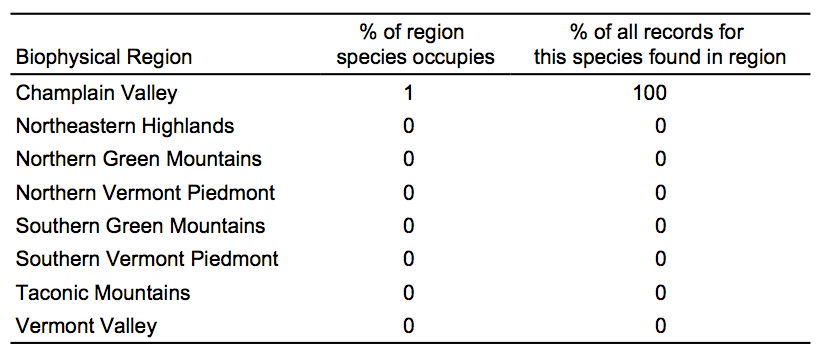
- Status in VT: Continues to be a rare breeder on Champlain Islands; first breeding record in 1983. Young Island regularly supports three nesting pairs.
- Data from other research: No additional data for VT.
- Conservation status: State rank S1B; S5N
- Other atlases: NY: -6%; ON: no change
- VT’s role in North American range:Population is dispersed along Atlantic coast and inland as far as the Great Lakes, including the Champlain Islands.
- Causes of change since first Atlas: No change.
- Management/Monitoring recommendations: No current recommendations.
First Vermont Breeding Bird Atlas (1976-1981)
Second Vermont Breeding Bird Atlas (2003 – 2007)
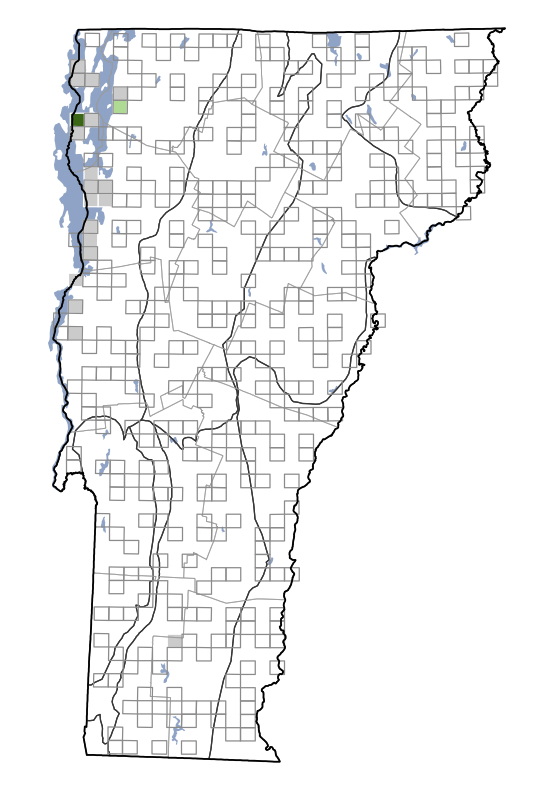
Change in Distribution