Summary
- Natural history: Gray Jays are famously tame, gliding boldly into campsites and hunting camps where they’ve learned people mean food, and Vermont’s population sits at the southern edge of a range spanning the boreal forests of Canada and Alaska. They are remarkably early nesters, incubating eggs in March while snow still covers the ground, a feat made possible by caching huge stores of food each fall to live on through winter and into the breeding season. Researchers in Ontario have linked that reliance on stored food to a hoard-rot hypothesis, where unusually warm autumns spoil the jays’ caches and lower nesting success the next spring, a pattern that drove a steep decline there and raises concern for Vermont’s own small, shrinking population in the Northeast Kingdom.
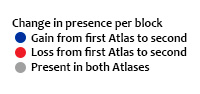
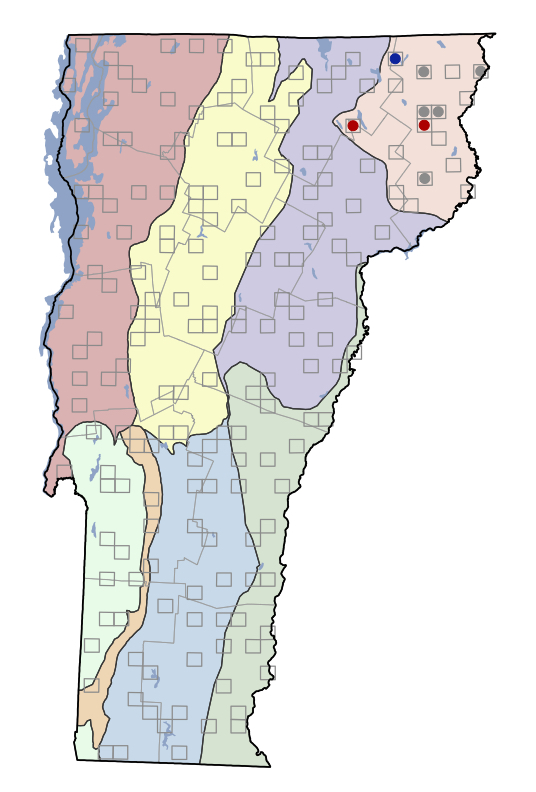
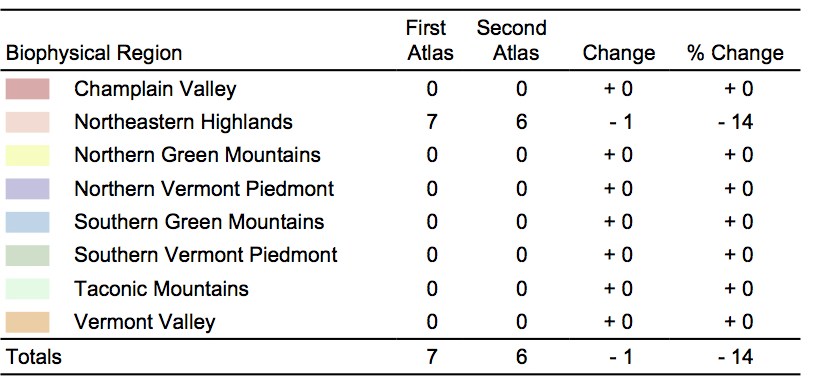
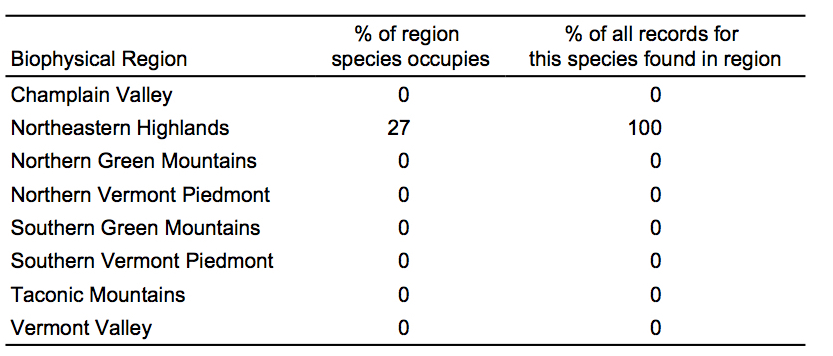
- Status in VT: Decreased by 14% (7 to 6 blocks). Loss occurred in the Northeastern Highlands.
- Data from other research: Victory Bog: 20-year study shows fewer territorial pairs in recent years.
- Conservation status: State rank S2; SSC; SGCN-M
- Other atlases: ON: stable or increasing distribution
- VT’s role in North American range: VT is near the southern edge of the range.
- Causes of change since first Atlas: Heavy logging (?); “hoard-rot” hypothesis suggests that higher than average temperatures in autumn could contribute to poorer than average productivity in the following breeding season.
- Management/Monitoring recommendations: Monitor trends through targeted surveys; determine minimum area of suitable habitat necessary to support 500 breeding pairs.
First Vermont Breeding Bird Atlas (1976-1981)
Second Vermont Breeding Bird Atlas (2003 – 2007)
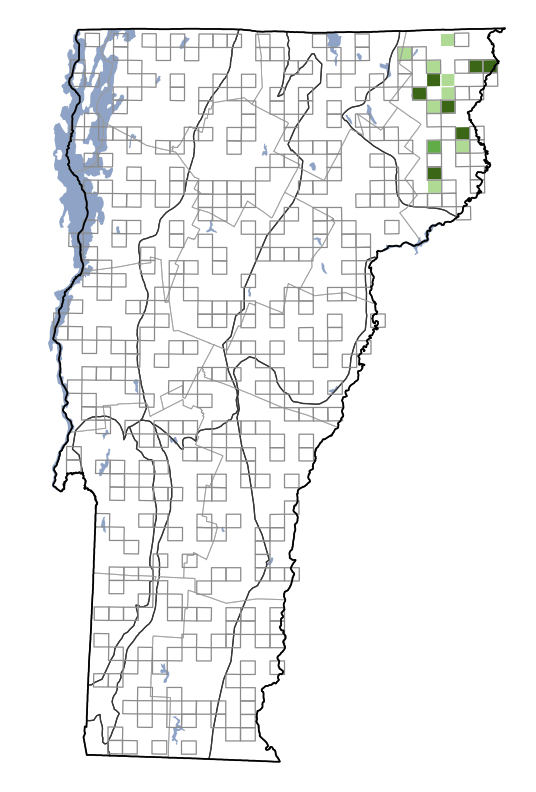

Change in Distribution