Summary
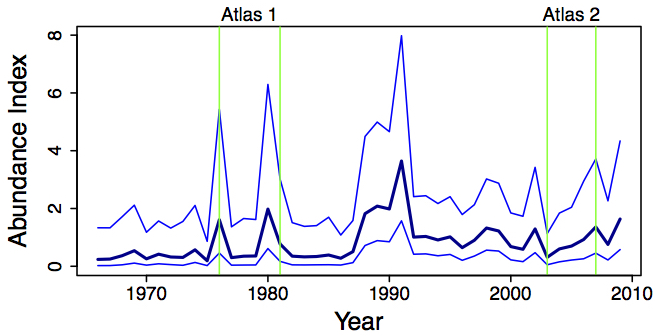
- Natural history: One of the smallest songbirds in Vermont, the Golden-crowned Kinglet nonetheless lays a clutch of up to 11 eggs, and it shrugs off brutal winter cold as low as 40 below zero by piling together with other kinglets into a tight, insulated cluster, whether that means inside a tree hollow, an abandoned squirrel nest, or simply huddled together on an exposed branch. Vermont’s cold, high-elevation spruce-fir stands are prime nesting habitat, but farther south the species has also begun colonizing conifer plantations planted in the early-to-mid-1900s, a type of forest once used only for wintering. Biologists expected Vermont’s population to rebound as its conifer forests matured, but logging losses and a destructive 1998 ice storm across the Northeast instead kept numbers roughly flat.
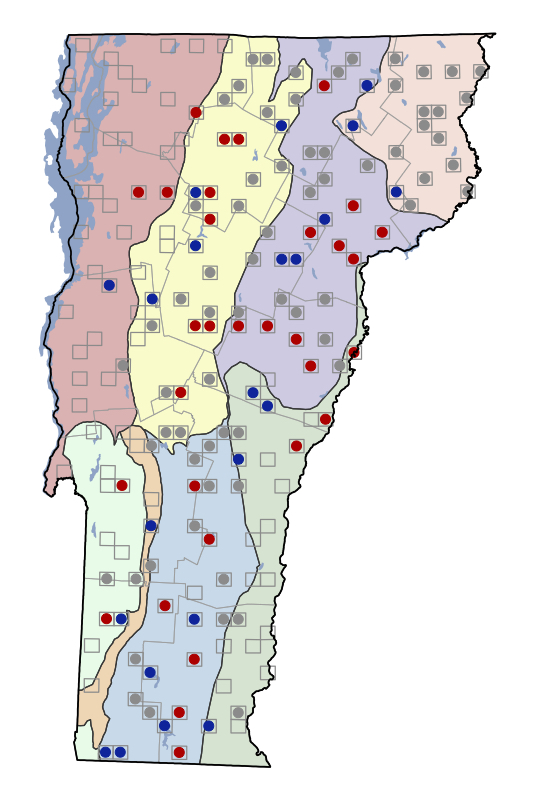
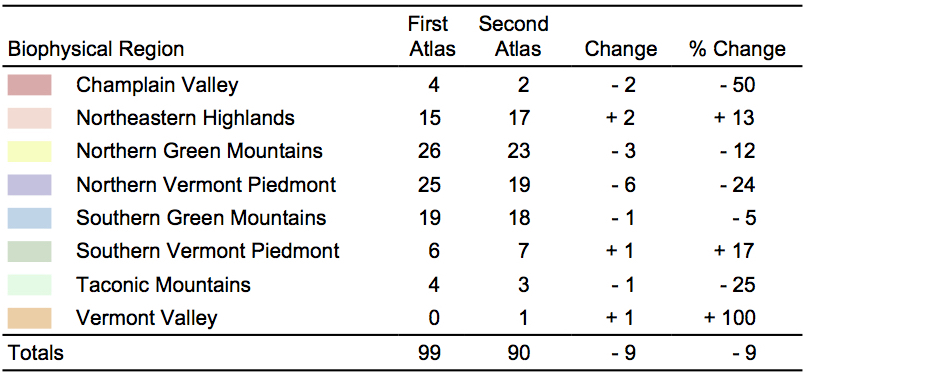
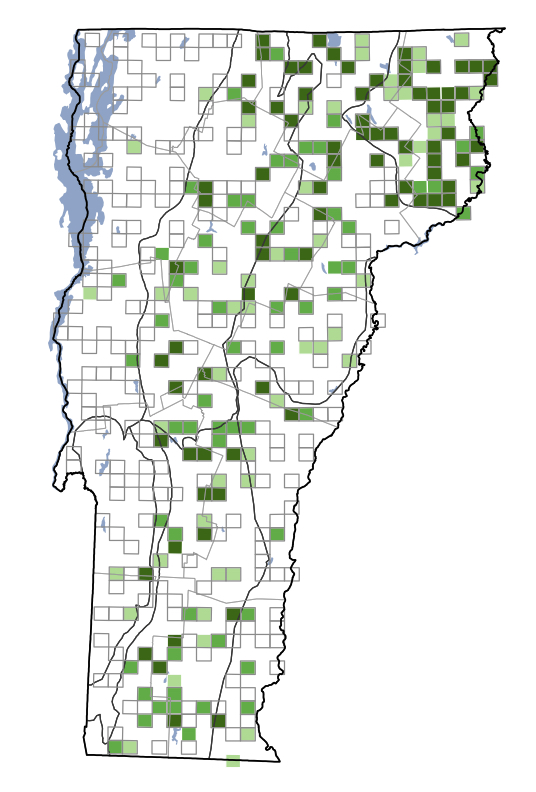
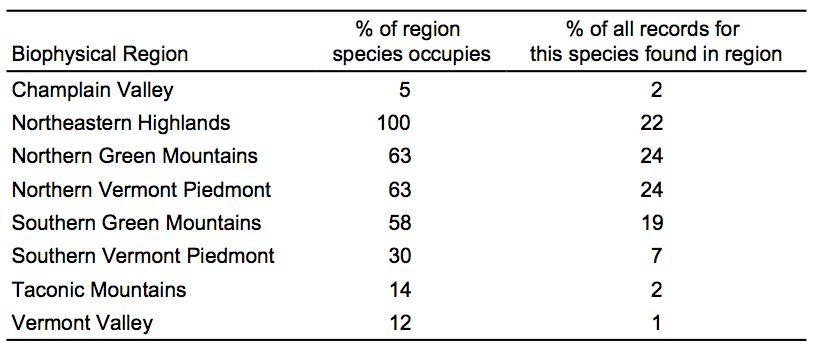
- Status in VT: Decreased by 9% (99 to 90 blocks). Greatest decrease in Champlain Valley.
- Data from other research: No additional data for VT.
- Conservation status: State rank S5B
- Other atlases: NY: 13%; PA: 105%; ON: 47%
- VT’s role in North American range: VT is in the southeastern corner of the eastern breeding range.
- Causes of change since first Atlas: Decrease of mature spruce-fir acreage.
- Management/Monitoring recommendations:No current recommendations.
Population Trends
First Vermont Breeding Bird Atlas (1976-1981)
Second Vermont Breeding Bird Atlas (2003 – 2007)

Change in Distribution