Summary
- Natural history: The Evening Grosbeak was long considered a strictly western bird, unrecorded in New England until the winter of 1889-90 and not confirmed nesting in Vermont until 1926 in Woodstock. Its eastward spread has been credited to several changes on the landscape, including box elder trees planted as shelterbelts across the prairies, spruce budworm outbreaks, and the wild cherries that sprang up after logging and burning, though backyard birders point instead to the rise of sunflower feeders. Even as continental populations have fallen sharply since the 1980s, the species continues to expand as a breeder in the Northeast, a trend tied to the same feeders that made it a winter favorite.
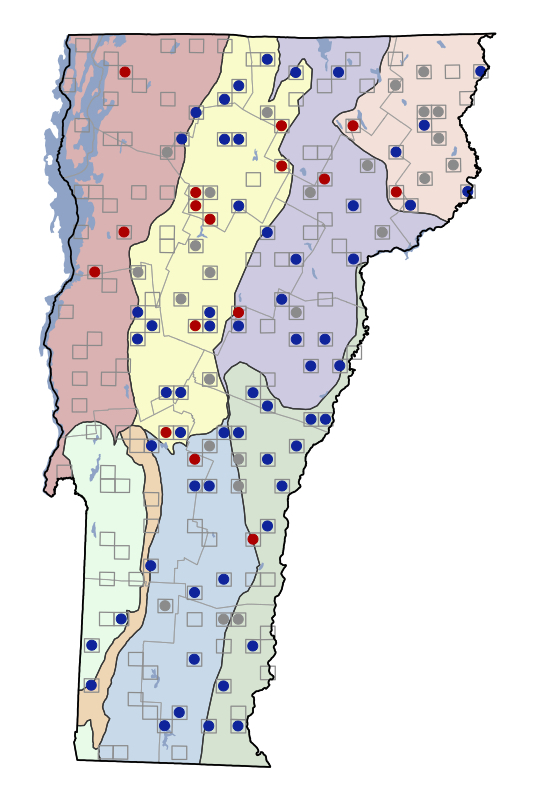
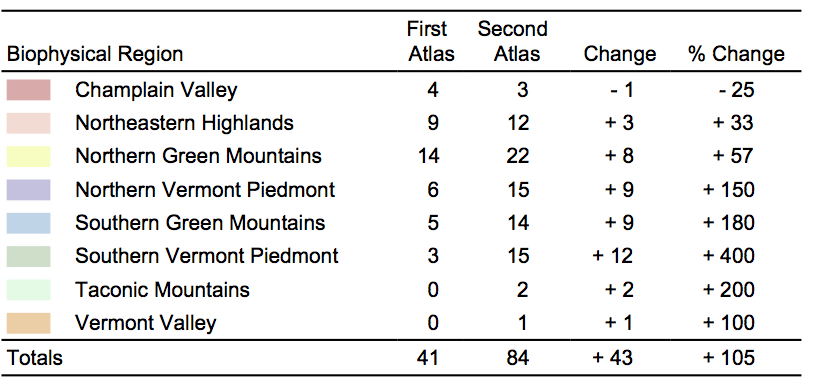
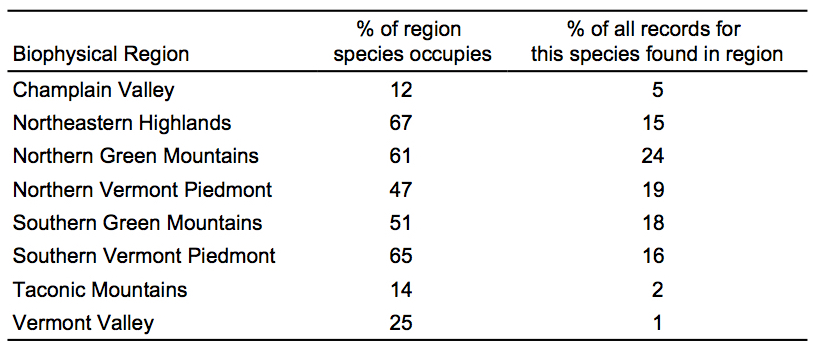
- Status in VT: Increased by 105% (41 to 84 blocks). Greatest increase in Southern Vermont Piedmont.
- Data from other research: No additional data for VT.
- Conservation status: State rank S5B; S4N
- Other atlases: NY: 44%; ON: -30%
- VT’s role in North American range: VT is on the southern edge of the eastern part of the range.
- Causes of change since first Atlas: Increase in number of feeder stations in the Northeast.
- Management/Monitoring recommendations: No current recommendations.
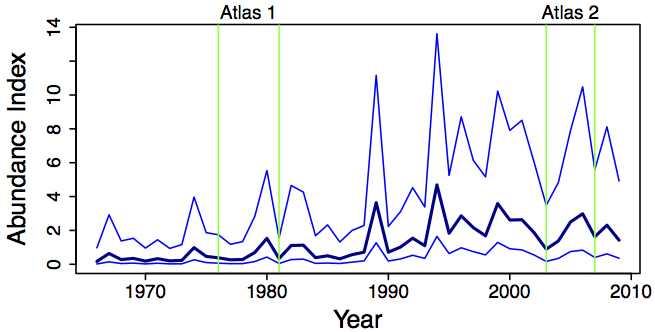
Population Trends
First Vermont Breeding Bird Atlas (1976-1981)
Second Vermont Breeding Bird Atlas (2003 – 2007)
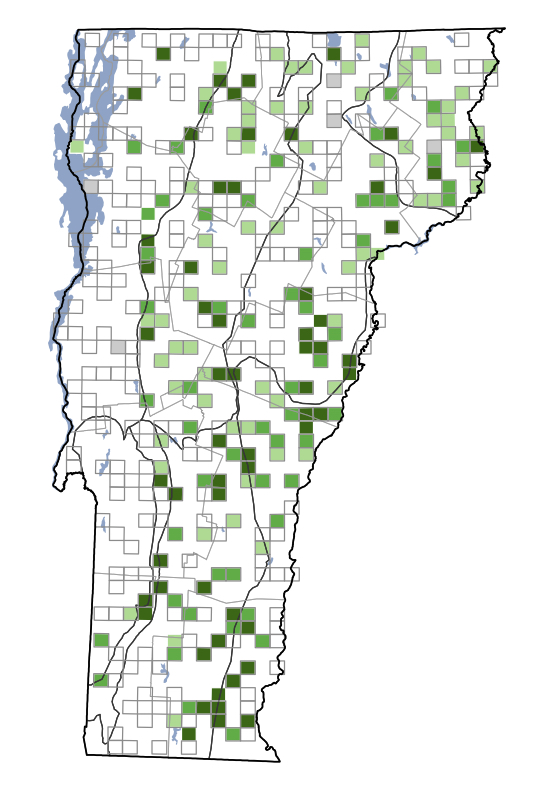

Change in Distribution