Summary
- Natural history: One overlooked sign of changing seasons in Vermont is a starling’s beak, which fades from a drab winter gray to a bright breeding-season yellow, a shift that can begin as early as February. Every European Starling in North America descends from birds released in New York City in the late 1800s, and the species reached Vermont remarkably quickly, with the first record in Bennington in 1913 and an established statewide population within less than a decade. Despite a reputation for outcompeting native birds for tree cavities and damaging fruit and grain crops, decades of trapping and poisoning campaigns aimed at controlling starling numbers have had no lasting effect on the overall population.
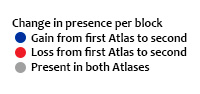
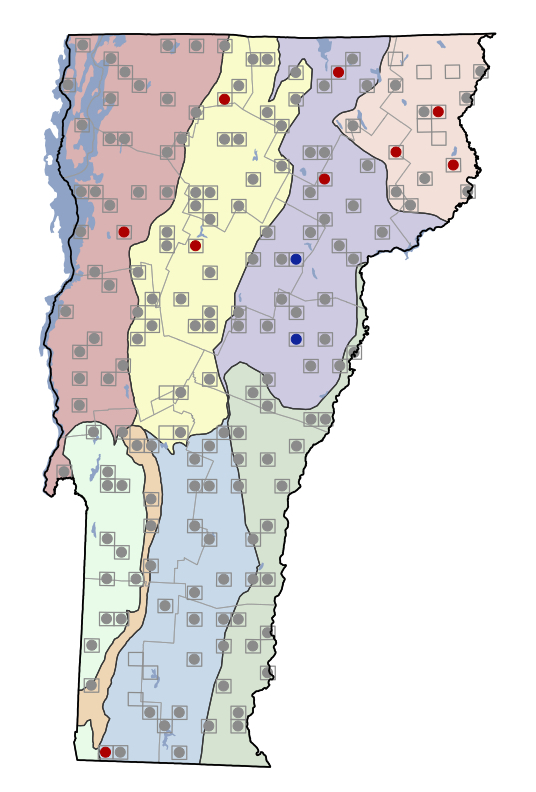
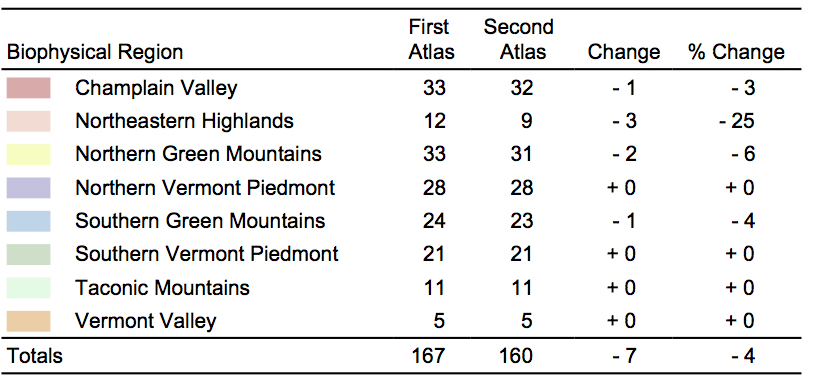
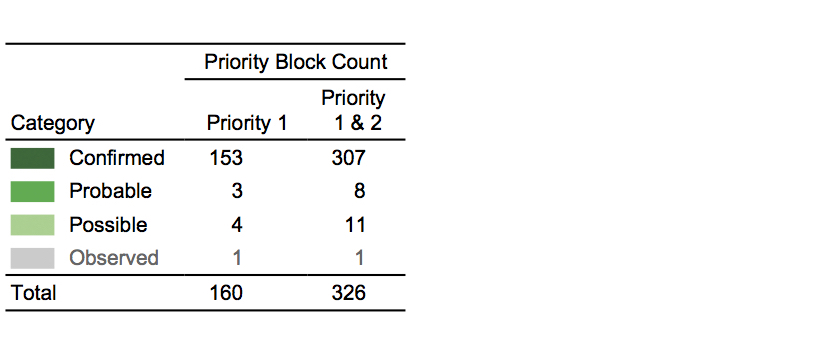
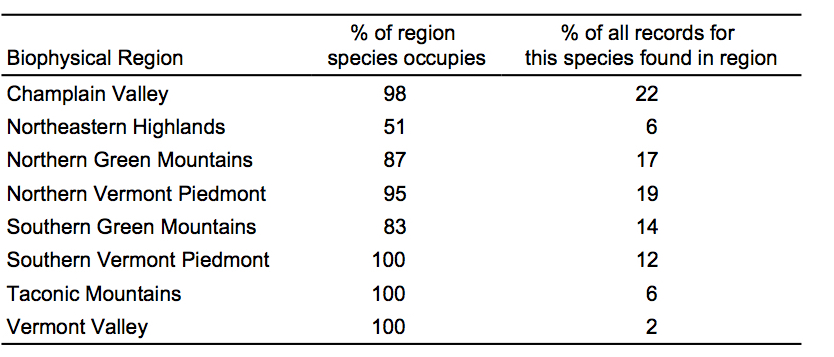
- Status in VT: Decreased by 4% (167 to 160 blocks). Greatest decrease in Northeastern Highlands.
- Data from other research: No additional data for VT.
- Conservation status: State rank SNA. Exotic species that competes with native bird species for nest sites.
- Other atlases: NY: -2%; PA: 1%; MD: 1%; ON: no change
- VT’s role in North American range: VT is within the core of the range.
- Causes of change since first Atlas: Minimal change.
- Management/Monitoring recommendations: No current recommendations.
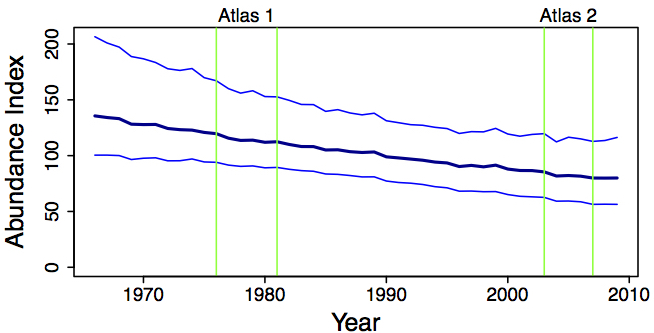
Population Trends
First Vermont Breeding Bird Atlas (1976-1981)
Second Vermont Breeding Bird Atlas (2003 – 2007)
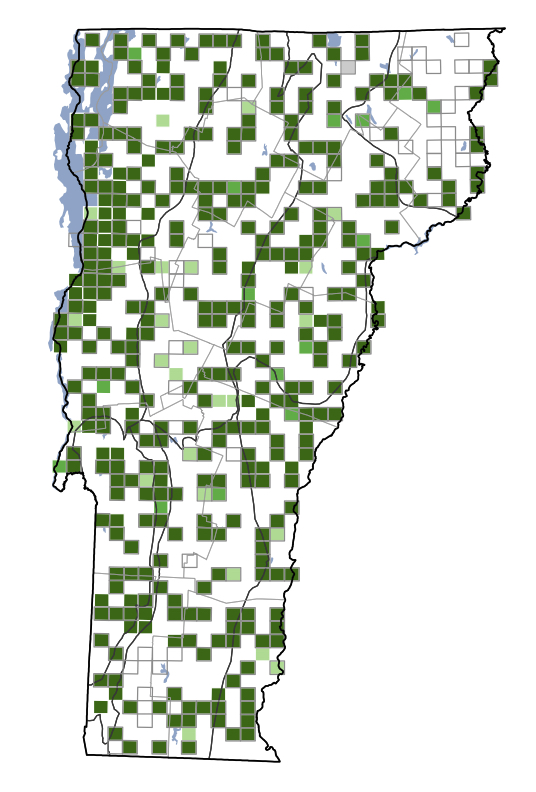
Change in Distribution