Summary
- Natural history: The Eastern Towhee needs a dense shrub layer to thrive, favoring old fields, power-line corridors, and gaps in an otherwise closed forest canopy, and Vermont sits near the northeastern edge of its range. Although the bird still occupies roughly the same parts of the state that it did during the First Atlas, it was confirmed as an actual breeder in barely one-fifth of its occupied blocks during the Second Atlas, down from about half during the First Atlas, as the regrowth of farmland into mature forest steadily thinned out the shrubby habitat it depends on. Some researchers suspect New England’s towhee population actually peaked artificially in the mid-1900s after widespread forest clearing, and today’s steep decline may simply be a return toward the lower numbers that existed before extensive land-clearing began in the 1800s.
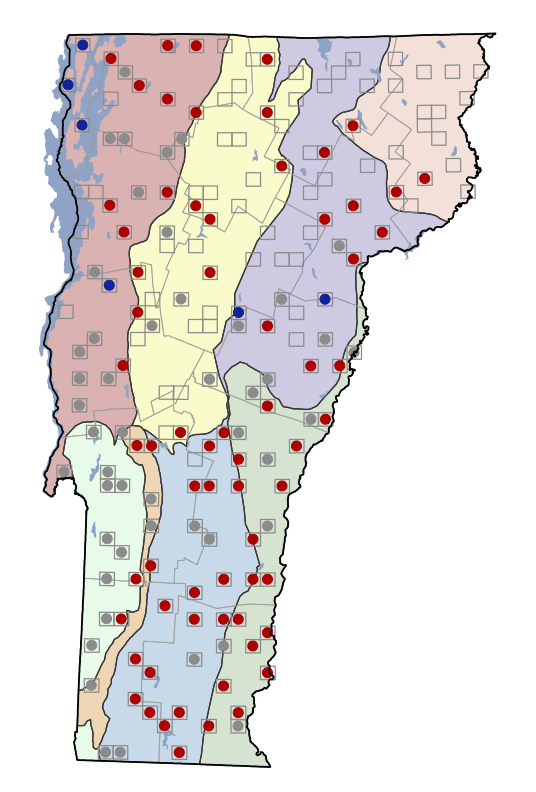
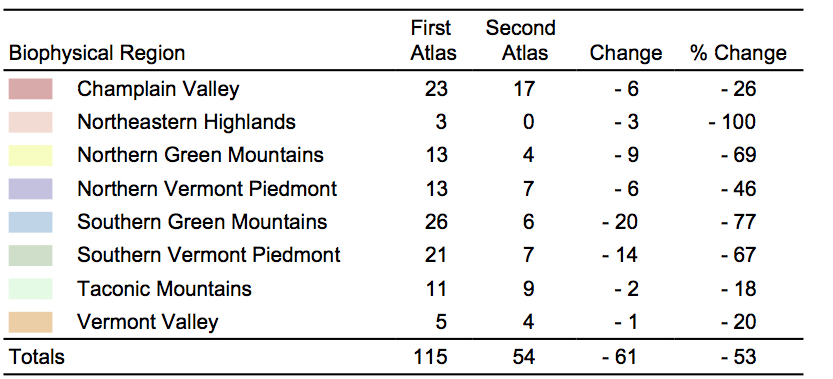
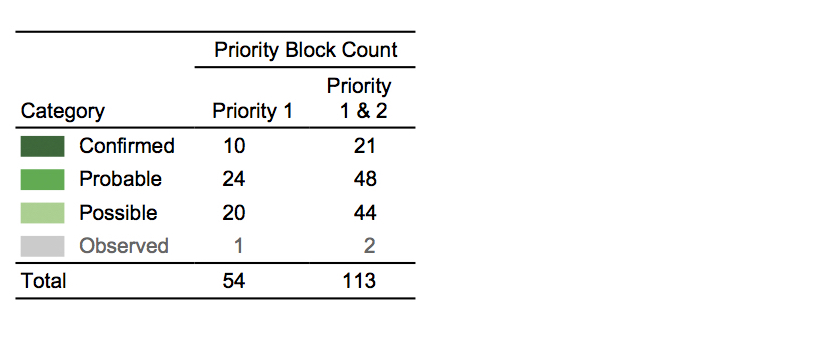
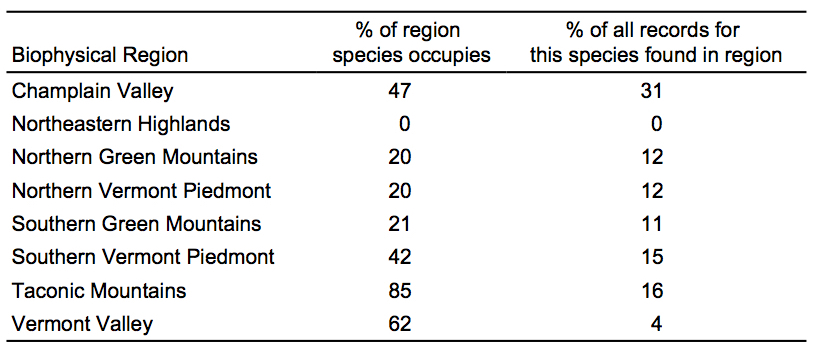
- Status in VT: Decreased by 53% (115 to 54 blocks). Greatest decreases in Northeastern Highlands and Southern Green Mountains.
- Data from other research: No additional data for VT.
- Conservation status: State rank S4B; SGCN-H; SSC
- Other atlases: NY (Adirondacks), ON: declining; MD, PA: not declining
- VT’s role in North American range: VT is near the northeastern edge of the range.
- Causes of change since first Atlas: Habitat loss from farmland abandonment, succession of shrubland, forest maturation.
- Management/Monitoring recommendations: More study needed at northern edge of range to determine degree of area-sensitivity; more study in powerline rights-of-way; management or disturbance that promotes development of shrub layer.
Population Trends

First Vermont Breeding Bird Atlas (1976-1981)
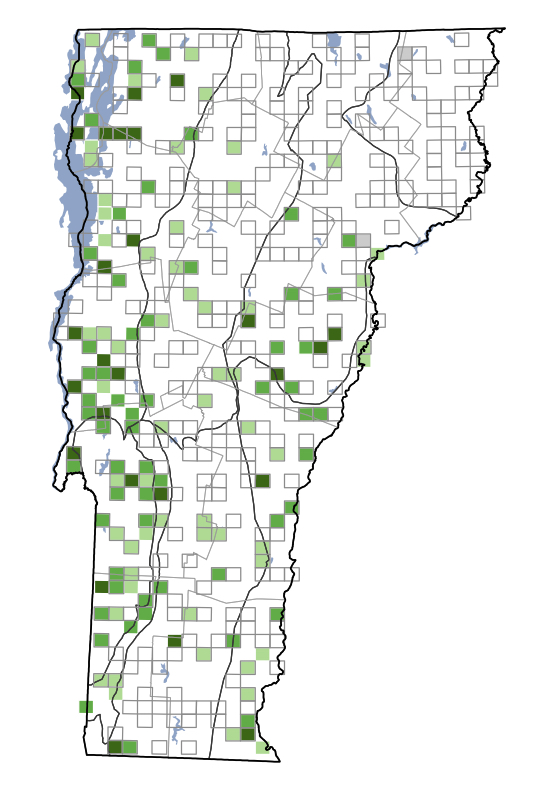
Second Vermont Breeding Bird Atlas (2003 – 2007)
Change in Distribution