Summary
- Natural history: True to its name, the Eastern Kingbird aggressively dominates any bird, however large, that strays too close to its nest. Before Vermont’s forests were cleared, the species likely nested in snags around beaver ponds and along storm- or fire-created clearings, and it readily adapted to the pastures, hedgerows, and orchards that replaced them, often favoring thorny trees like hawthorn and locust for extra nest protection. Parenting duties split sharply by sex, with females doing all the incubating and most of the feeding while males specialize in driving off predators, and after the breeding season Vermont’s kingbirds funnel south to winter roosts reported as far away as Bolivia.
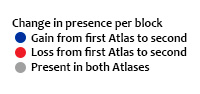
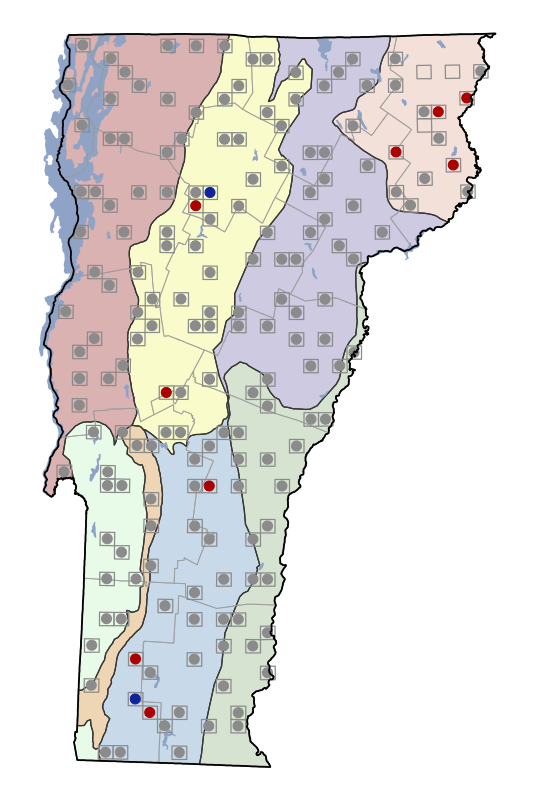
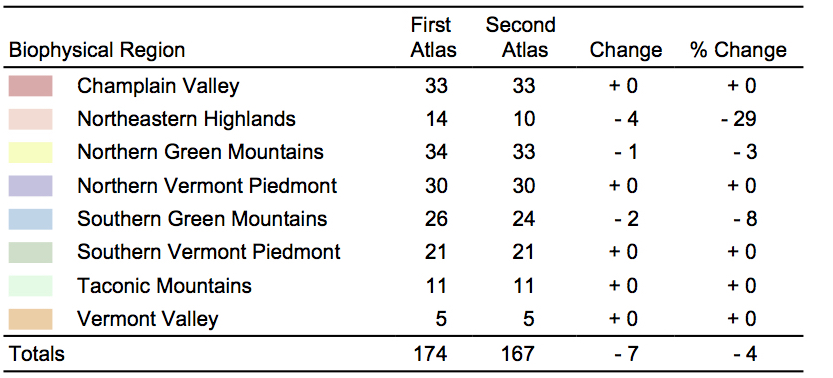
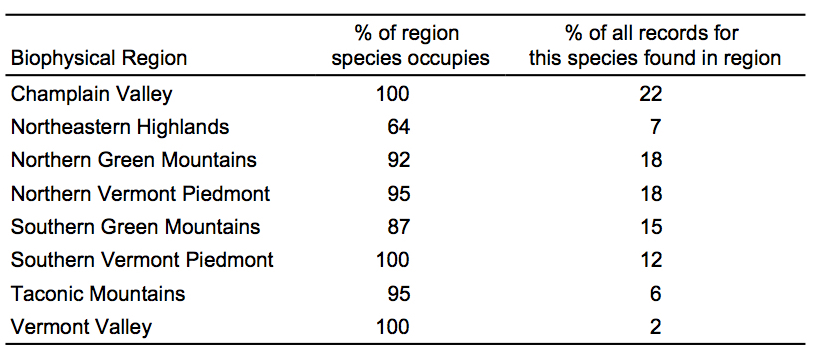
- Status in VT: Decreased by 4% (174 to 167 blocks). Greatest decrease in Northeastern Highlands.
- Data from other research: No additional data for VT.
- Conservation status: State rank S5B
- Other atlases: NY: -7%; PA: 1%; ON: reduced numbers in all regions
- VT’s role in North American range: VT is within the core of the range.
- Causes of change since first Atlas: Farm abandonment and loss of open fields (?).
- Management/Monitoring recommendations: No current recommendations.
Population Trends

First Vermont Breeding Bird Atlas (1976-1981)
Second Vermont Breeding Bird Atlas (2003 – 2007)


Change in Distribution