Summary
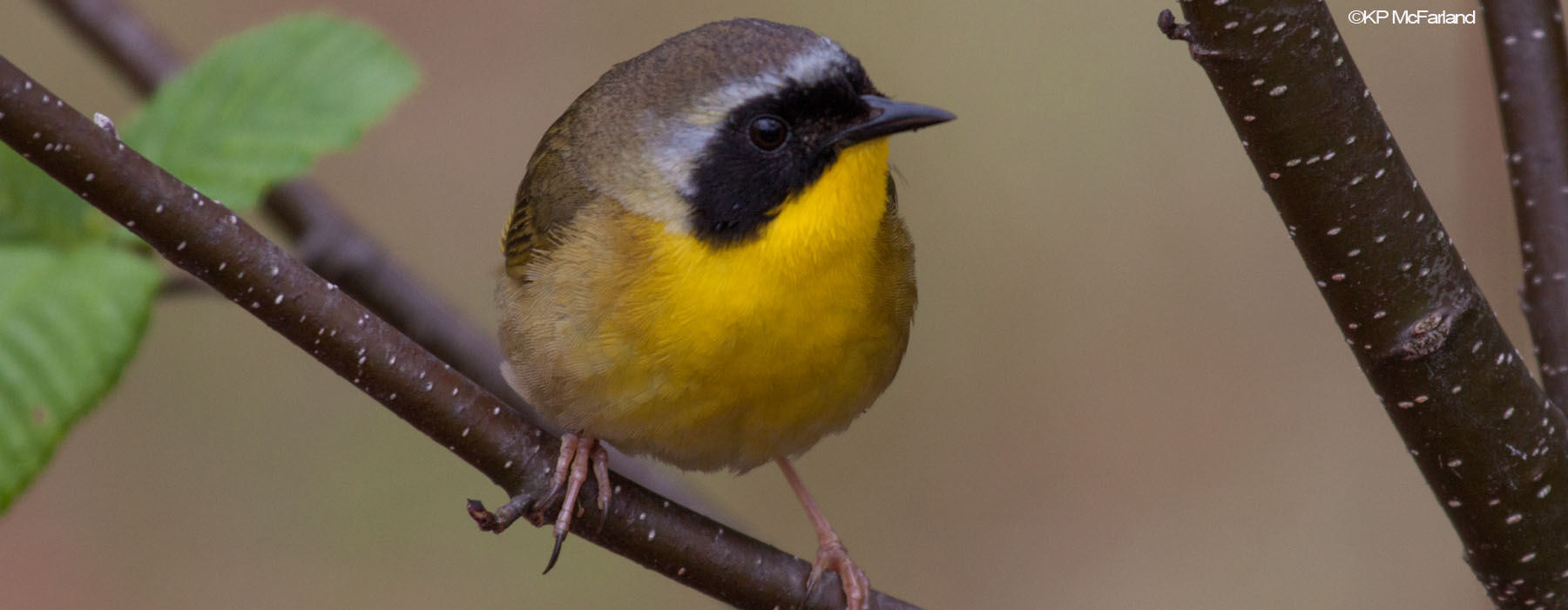
- Natural history: Common Yellowthroats announce themselves with a raspy, rhythmic witchity-witchity song, one of the most recognizable sounds in Vermont’s wetlands and shrubby fields. The species has tracked Vermont’s changing land use for more than a century, benefiting first when nineteenth-century sheep and dairy farms cleared forest into open pasture, then possibly benefiting even more once those pastures were abandoned and grew into brushy spirea thickets. Its nestlings grow remarkably fast, quintupling in weight within eight days and leaving the nest within three weeks of egg-laying, which likely lets many Vermont pairs raise a second brood each summer.
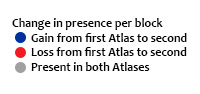
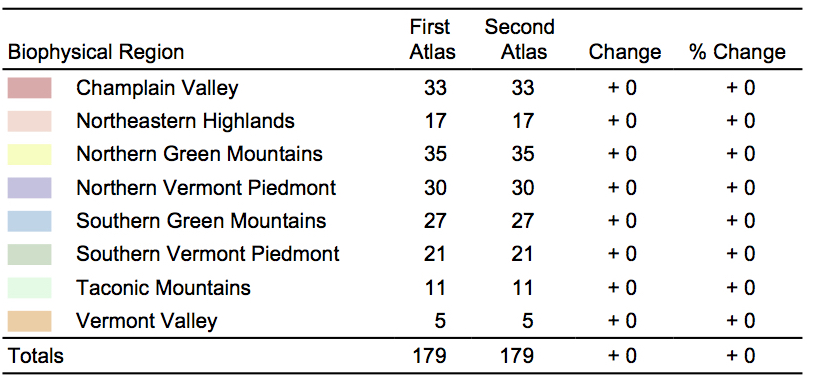
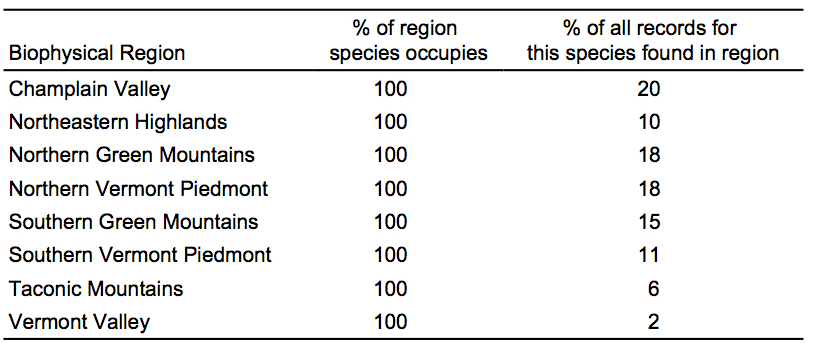
- Status in VT: No Change (179 to 179 blocks). Occupies 100% of Priority 1 blocks.
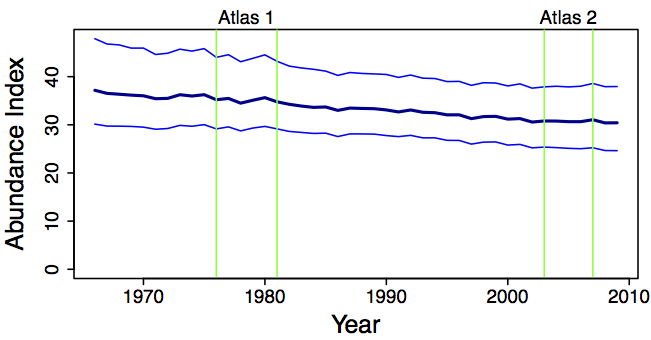
- Data from other research: FBMP: significant increase (P=0.04)
- Conservation status: State rank S5B
- Other atlases: MD and PA: minimal increases; NY: no change
- VT’s role in North American range: VT is within the core of the range.
- Causes of change since first Atlas: No change.
- Management/Monitoring recommendations: No current recommendations.
Population Trends
First Vermont Breeding Bird Atlas (1976-1981)
Second Vermont Breeding Bird Atlas (2003 – 2007)
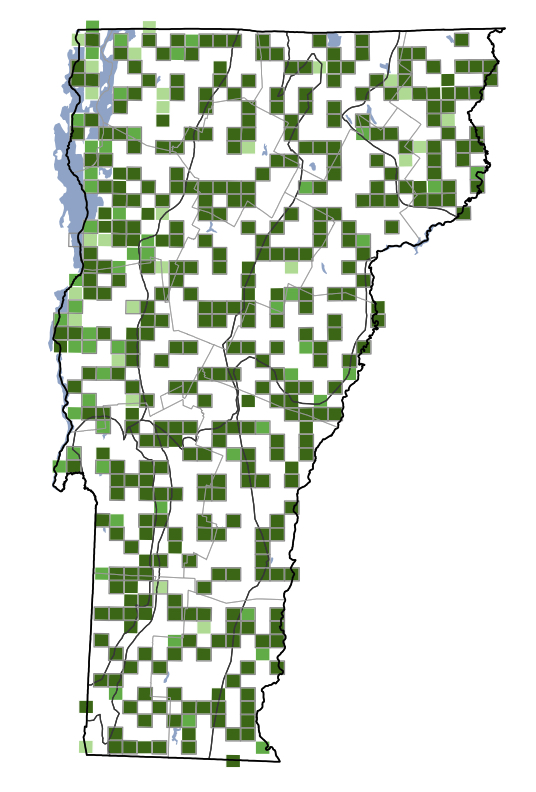

Change in Distribution