Summary
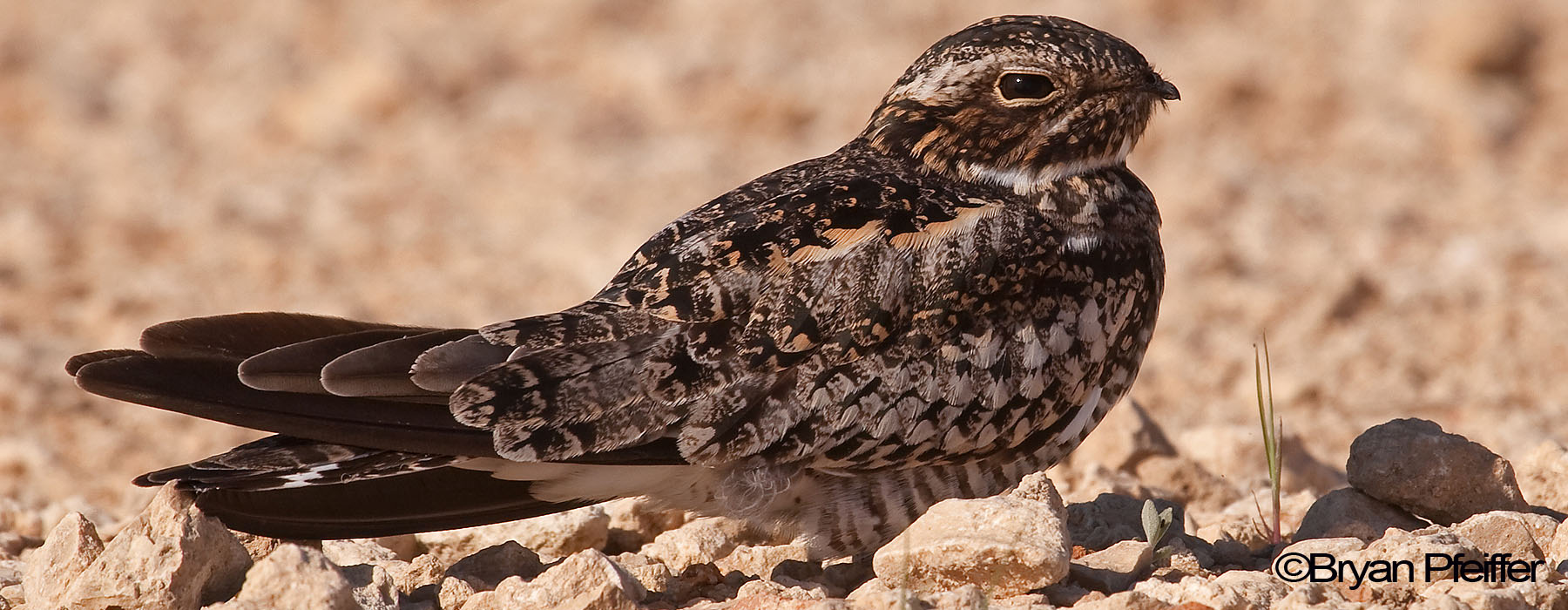
- Natural history: Male Common Nighthawks perform a startling courtship dive, plunging steeply and pulling up just enough to make their wingtips boom like a distant clap of thunder. Beginning in the late 1800s, the species adapted from nesting on open barrens and gravelly ground to using flat gravel rooftops in cities across the Northeast, but that adaptation has since collapsed as roofers switched from gravel to rubber and other smooth materials the birds cannot use. As a result, Vermont’s nighthawks nearly vanished, becoming one of the few historically breeding species that atlas volunteers could not confirm nesting anywhere in the state during the Second Atlas.
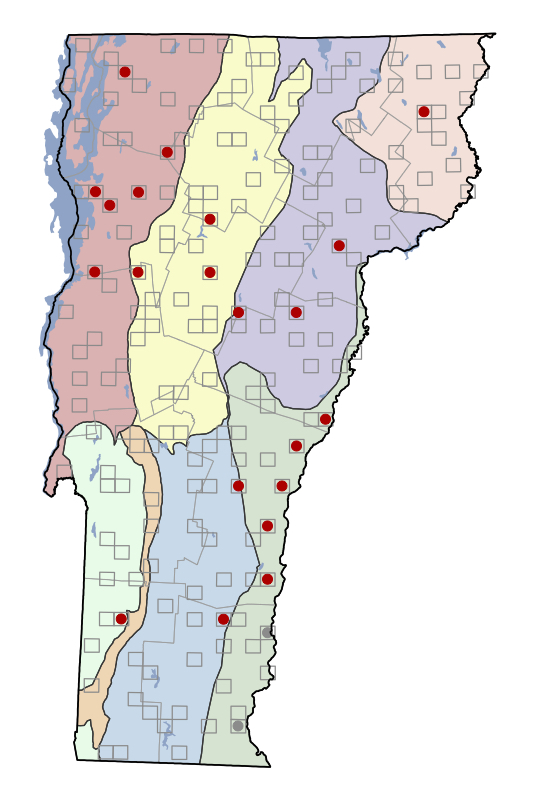
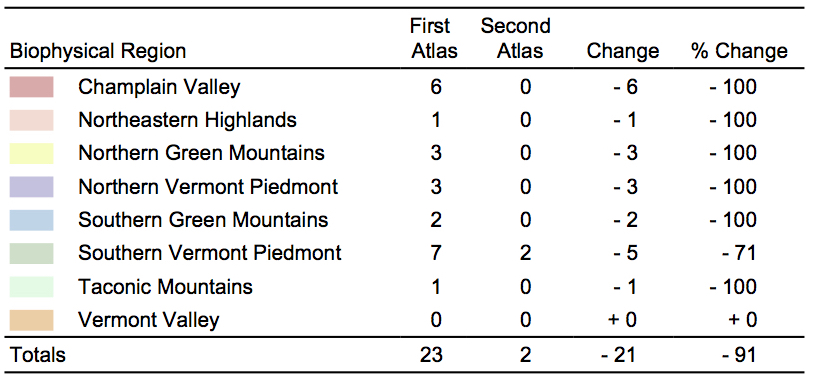
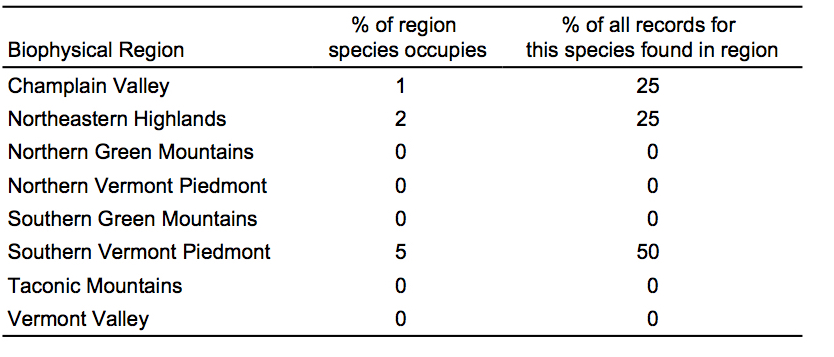
- Status in VT: Declined by 91% (23 to 2 blocks). Losses occurred in every biophysical region.
- Data from other research: No additional data in VT.
- Conservation status: State rank S1B; SSC; SGCN-H
- Other atlases: Average -70% in MD, NY and PA; ON: -39%
- VT’s role North American range: VT is within the core of the range.
- Causes of change since first Atlas: Loss of preferred nesting areas, especially gravel on flat-roofed buildings; loss of upland openings due to succession, urban/suburban development; increased predation (crows, feral cats); pesticide use on breeding grounds, especially for mosquitoes; pesticide use on wintering grounds (?); vehicle collision while roosting on gravel roads (?).
- Management/Monitoring recommendations: Provide gravel on flat roof tops for nesting (see Nighthawk Gravel Nest Patch Handbook); restore habitat, especially on lakeshore and in riparian areas.
First Vermont Breeding Bird Atlas (1976-1981)
Second Vermont Breeding Bird Atlas (2003 – 2007)
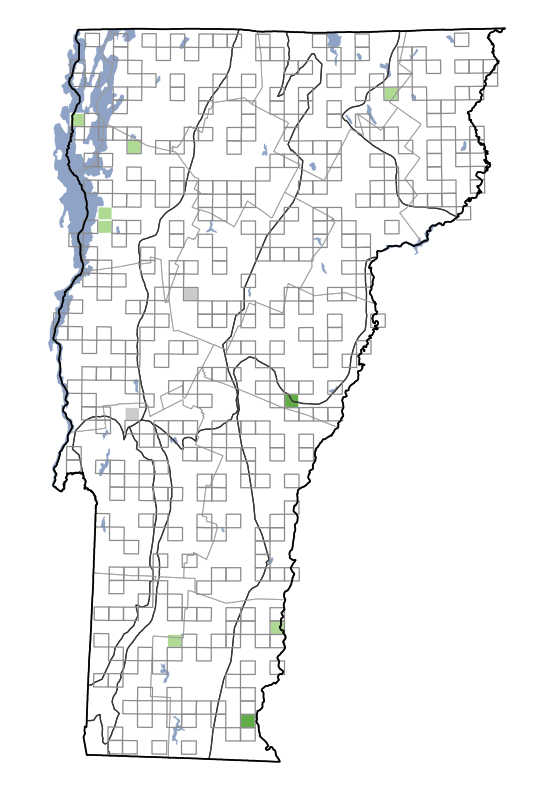

Change in Distribution