Summary
- Natural history: The Clay-colored Sparrow is a bird of the northern prairies, where it favors shrub patches in dry grasslands, and Vermont marks the easternmost edge of a breeding range that has been pushing steadily eastward for decades, reaching western New York by the 1970s and Vermont’s Champlain Valley only in the mid-1980s. In New England the bird substitutes old pastures grown up in steeplebush for the prairie shrubs it favors out west, and its arrival here appears to be part of a broader eastward push of western birds taking advantage of shrubby habitat left behind by farm abandonment. Because immature Clay-colored Sparrows look nearly identical to Chipping Sparrows, with which they occasionally hybridize, some of the species’ breeding activity in Vermont may go undetected or misidentified.
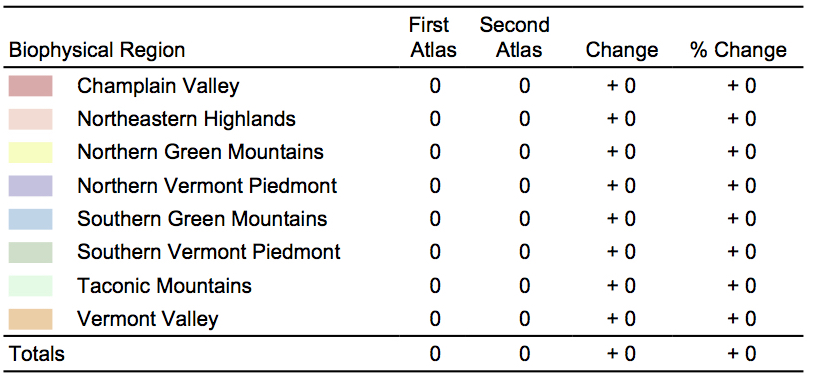
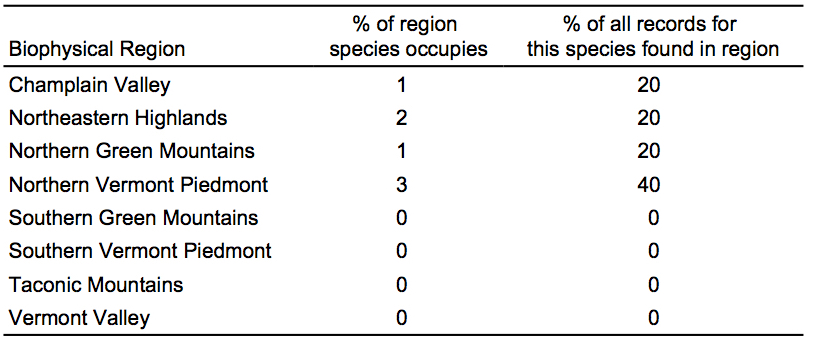
- Status in VT: No reports in the first Atlas. Five Confirmed records in the second Atlas.
- Data from other research: No additional data for VT.
- Conservation status: State rank S2B
- Other atlases: NY: 200%; PA: 867%; ON: 80%
- VT’s role in North American range: VT is on the easternmost edge of the range.
- Causes of change since first Atlas: Influx from western populations; availability of suitable habitat resulting from farm abandonment.
- Management/Monitoring recommendations:Conservation easements on grasslands allowing time for shrubs to become established.
First Vermont Breeding Bird Atlas (1976-1981)
No Species Account Available
Second Vermont Breeding Bird Atlas (2003 – 2007)
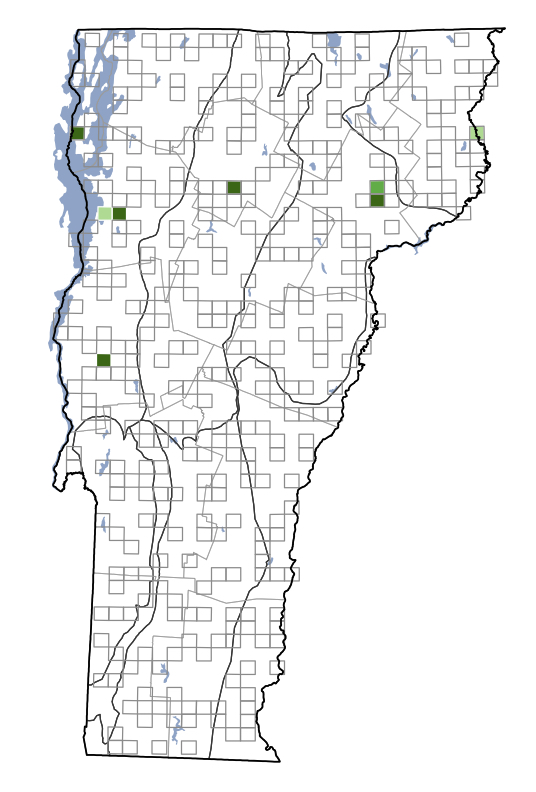

Change in Distribution