Summary
- Natural history: The Chipping Sparrow has been closely tied to people for a very long time, with one Vermont naturalist writing back in 1842 that it was already the state’s most familiar and common sparrow, likely thanks to its habit of foraging on lawns and nesting in ornamental conifers close to buildings. More recently, Vermont’s Christmas tree plantations turned out to be an unexpected boon for the species, offering the same kind of dense overhead conifer cover for nesting that the bird seeks out in yards and gardens. Its trilling song is easily confused with a Dark-eyed Junco’s or a Pine Warbler’s, but the sparrow’s constant activity and conspicuous habits make it hard to overlook once you know to look.
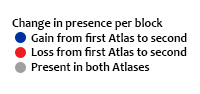
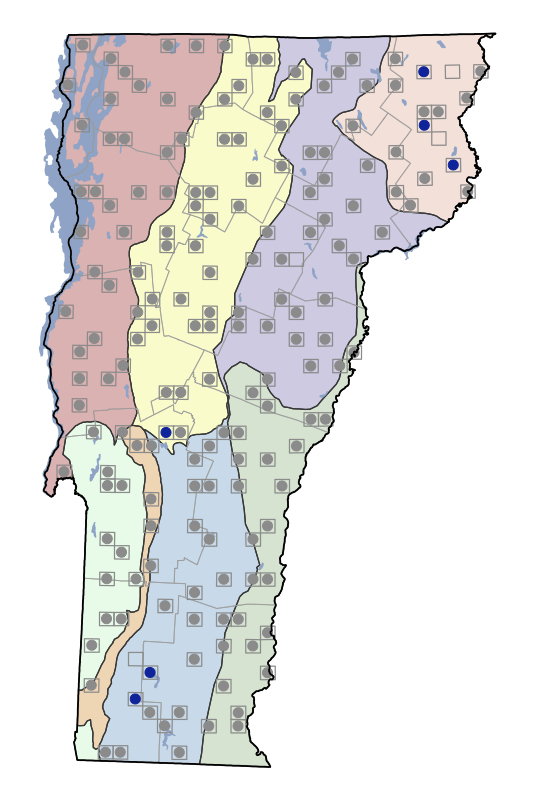
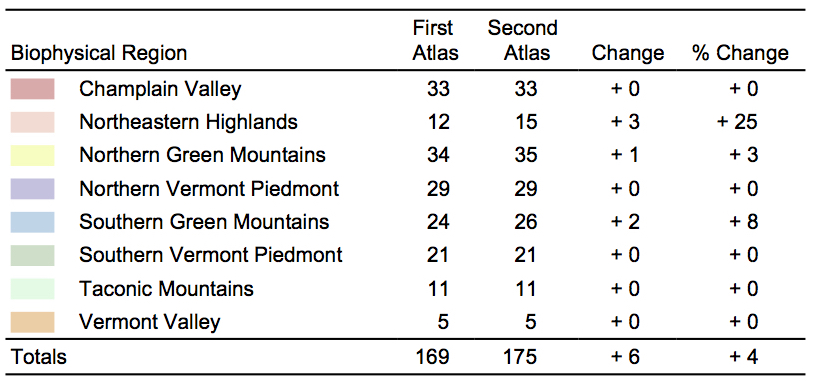
- Status in VT: Increased by 4% (169 to 175 blocks). Greatest increase in Northeastern Highlands.
- Data from other research: No additional data for VT.
- Conservation status: State rank S5B
- Other atlases: MD and PA: 3% or less; NY and ON: no change
- VT’s role in North American range: VT is within the core of the range.
- Causes of change since first Atlas: Increased availability of suburban habitat.
- Management/Monitoring recommendations: No specific recommendations.
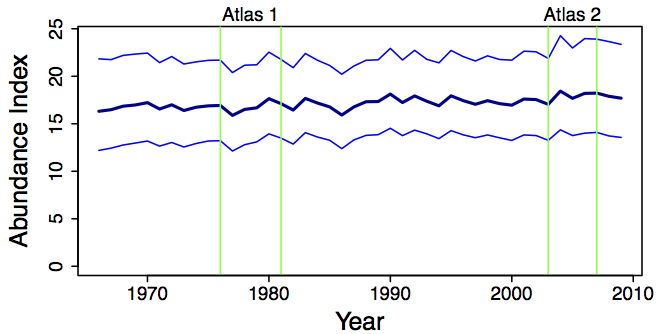
Population Trends
First Vermont Breeding Bird Atlas (1976-1981)
Second Vermont Breeding Bird Atlas (2003 – 2007)


Change in Distribution