Summary
- Natural history: Despite being named for Cape May, New Jersey, where the first specimen was collected, this warbler is now only a rare passing migrant there, spending its actual breeding season hundreds of miles north in Canada’s spruce-fir boreal forest. Vermont’s population was likely wiped out entirely in the 1800s by that era’s sweeping forest clearance and sheep pasturage, and even now the state hosts an estimated 200 birds, a sliver of the roughly 3 million found continent-wide. Like several other boreal warblers, the Cape May is a spruce budworm specialist, laying larger clutches when the caterpillars are abundant and becoming scarce across the landscape during the long lulls between outbreaks.
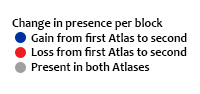
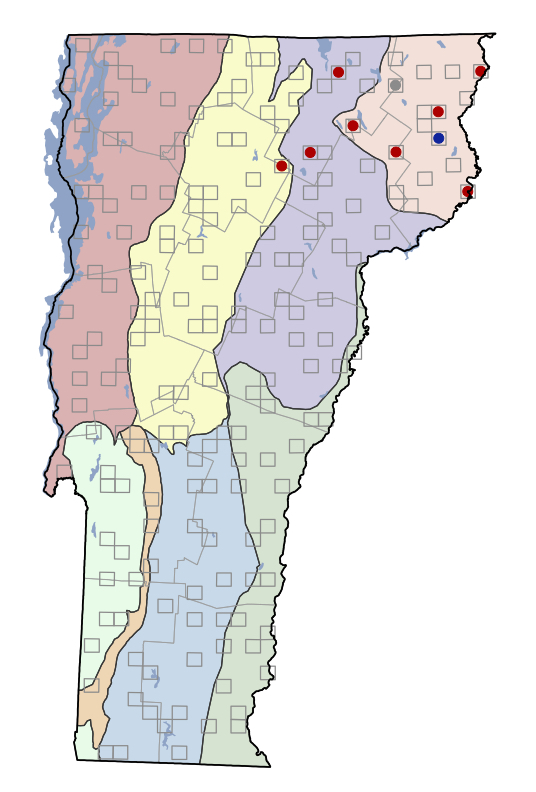
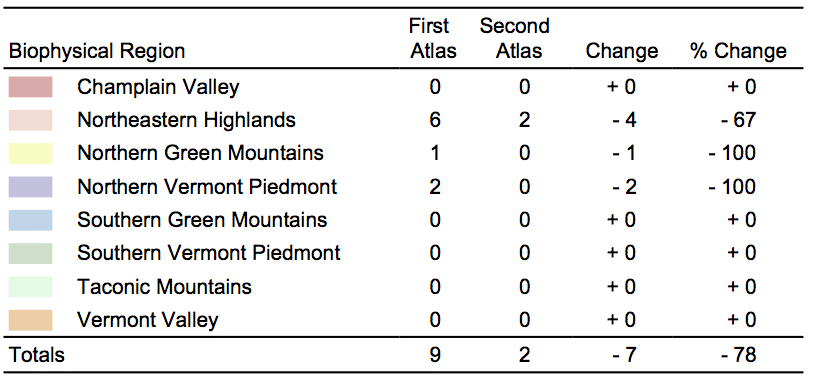
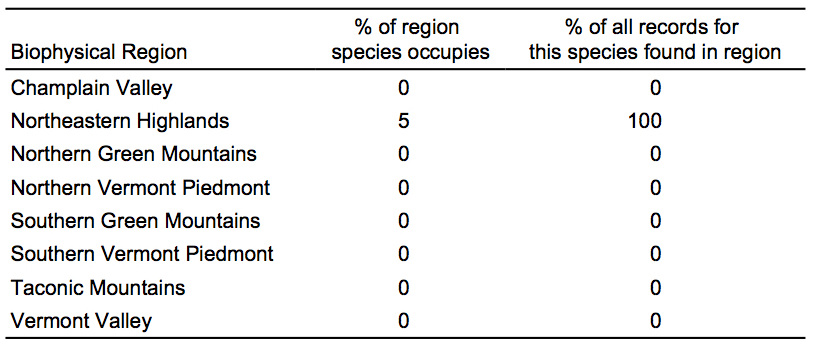
- Status in VT: Decreased by 78% (9 to 2 blocks). Greatest decrease in Northern Green Mountains and Northern Vermont Piedmont.
- Data from other research: No additional data for VT.
- Conservation status: State rank S1B
- Other atlases: ON: no sig. change (-35% in Southern Shield)
- VT’s role in North American range: VT is at the extreme southern edge of the range.
- Causes of change since first Atlas: Decrease in spruce budworm abundance; increased demand for lumber resulting in decreases in acreage of mature spruce/fir stands (?).
- Management/Monitoring recommendations:No specific recommendations.
First Vermont Breeding Bird Atlas (1976-1981)
Second Vermont Breeding Bird Atlas (2003 – 2007)


Change in Distribution