Summary
- Natural history: The Brown Thrasher has an unusual singing habit, delivering each phrase of its long, rambling song twice in a row before switching to something new, and a given phrase might not return again for an hour or more. Long before European settlement, the shrubby thickets it needs were kept open by beavers, wildfire, and Native American land use, but nineteenth-century farm clearing and the wave of farm abandonment that followed created a temporary glut of such habitat that has been shrinking again as fields revert to forest. The thrasher defends its territory aggressively, so a single shrubby field typically supports only a pair or two rather than the dense clusters of songbirds found in similar habitat.
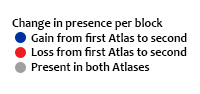
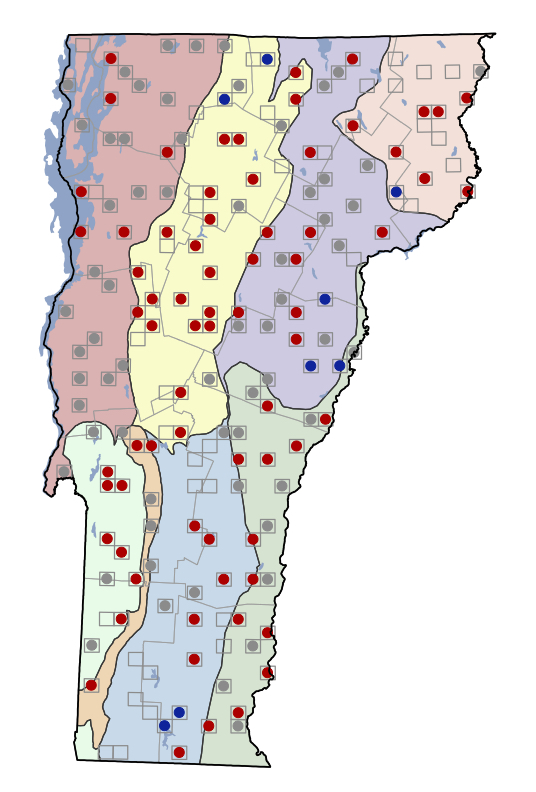
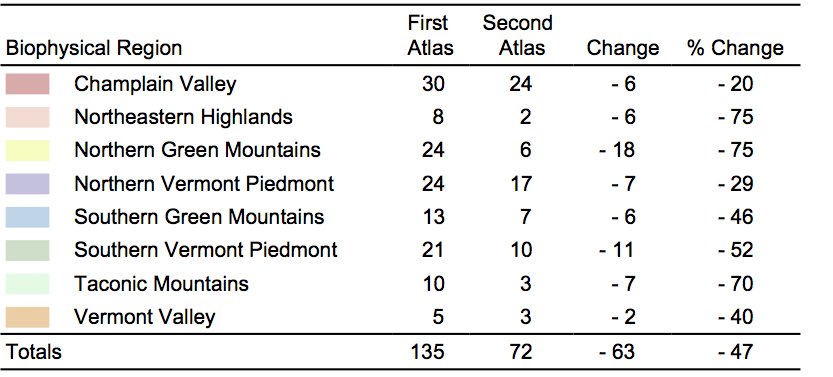
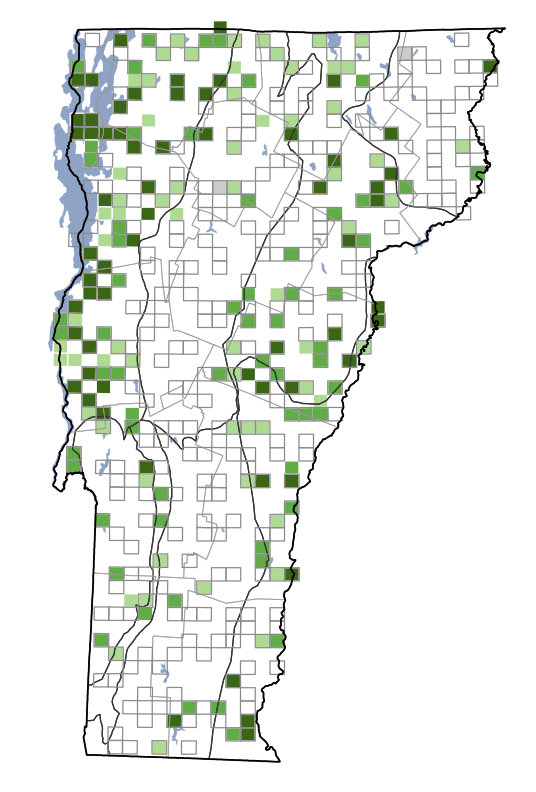
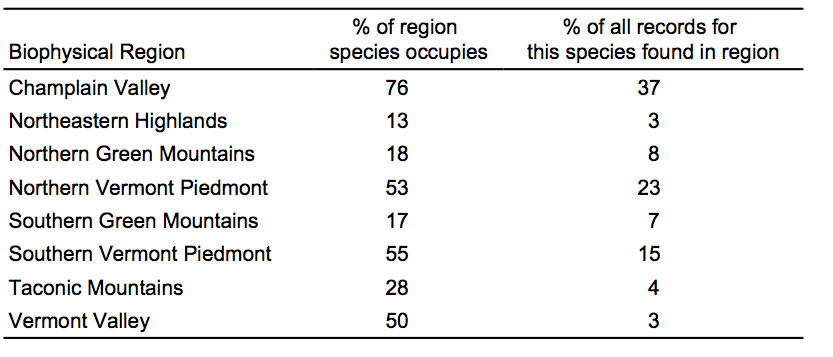
- Status in VT: Decreased by 47% (135 to 72 blocks). Greatest decreases in Northeastern Highlands, Northern Green Mountains, Taconic Mountains.
- Data from other research: No additional data for VT.
- Conservation status: State rank S4B; SSC; SGCN-M
- Other atlases: NY: -30%; ON: -24%
- VT’s role in North American range: VT is within the core of the range.
- Causes of change since first Atlas: Maturation of early-successional habitats.
- Management/Monitoring recommendations:Continued management for early-successional habitat.
Population Trends
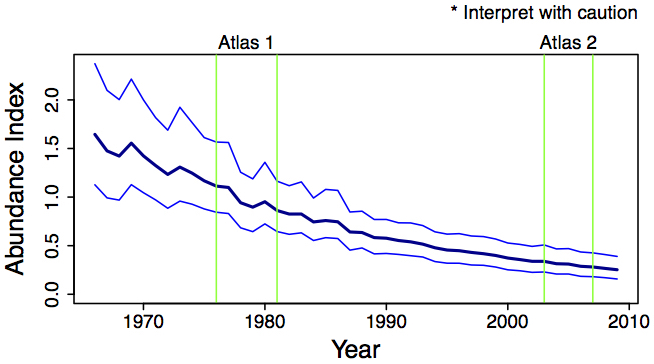
First Vermont Breeding Bird Atlas (1976-1981)
Second Vermont Breeding Bird Atlas (2003 – 2007)

Change in Distribution