Summary
- Natural history: Brown-headed Cowbirds evolved on the Great Plains in close association with nomadic bison herds, and the species only spread into the Northeast once colonial-era forest clearing brought grazing cattle to serve as a substitute for the bison it once followed. As an obligate brood parasite that lays its eggs in other birds’ nests instead of building its own, the cowbird has been documented parasitizing more than 247 species across North America, and its spread into fragmented forests has become a serious concern for the nesting success of many smaller songbirds.
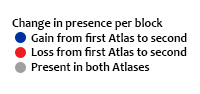
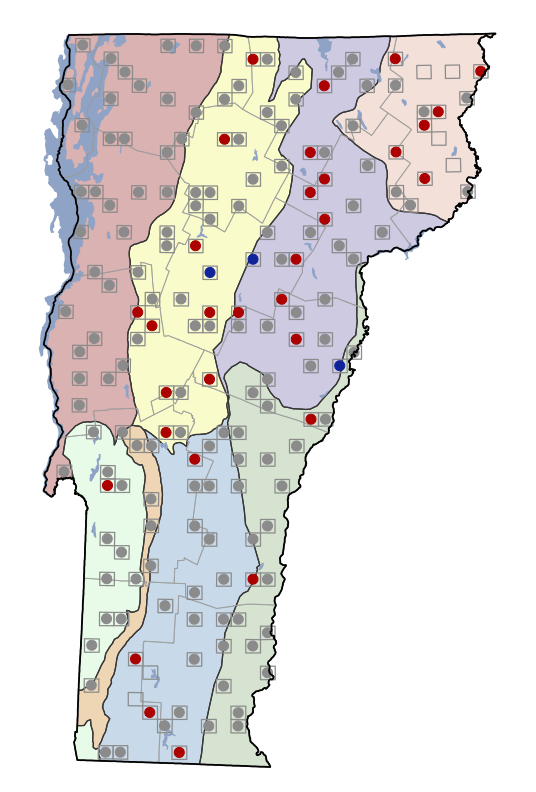
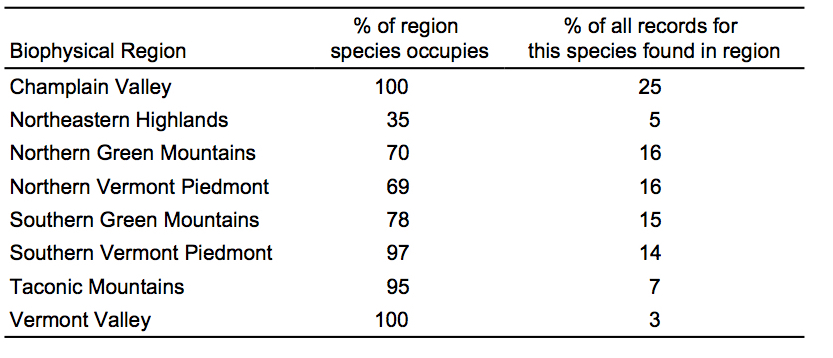
- Status in VT: Decreased by 16% (170 to 142 blocks). Greatest decrease in Northeastern Highlands.
- Data from other research: No additional data for VT.
- Conservation status: State rank S5B
- Other atlases: NY: -7%; PA: <1%; MD: <1%; ON: -7%
- VT’s role in North American range: VT is within the core of the range.
- Causes of change since first Atlas: Continued decline in agricultural activities combined with regrowth of forests.
- Management/Monitoring recommendations: No specific recommendations.
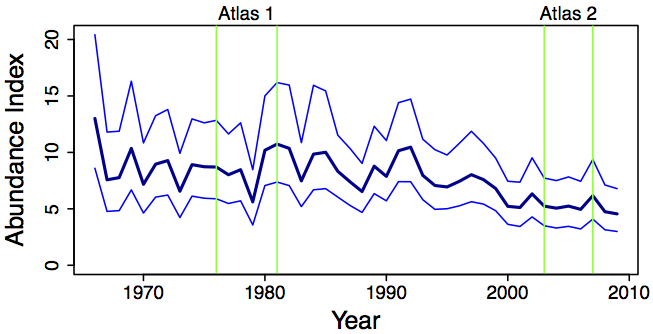
Population Trends
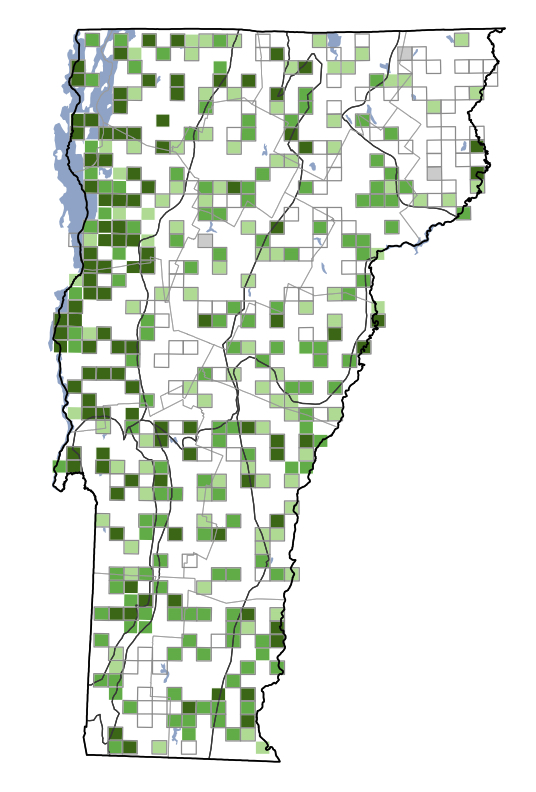
First Vermont Breeding Bird Atlas (1976-1981)
Second Vermont Breeding Bird Atlas (2003 – 2007)

Change in Distribution