Summary
- Natural history: The Blue-headed Vireo was split from the old Solitary Vireo complex along with two western look-alikes, Cassin’s and Plumbeous vireos, and unlike those two, it thrives in the conifer forests common across Vermont’s higher terrain. It’s also the toughest of the state’s vireos, arriving in late April and staying into mid-October, often defending large territories in hemlock-shaded mountain ravines. Its numbers have climbed steadily as former hill farms and young woodlands mature into the conifer-hardwood mix it favors, a shift reflected in a more than 30 percent jump in Vermont’s softwood timber volume between 1983 and 1997.
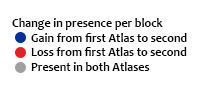
- Status in VT: Increased by 10% (134 to 148 blocks). Greatest increase in Champlain Valley.
- Data from other research: FBMP: -7% (P < 0.01)
- Conservation status: State rank S5B
- Other atlases: NY: 39%; PA: 59%; ON: 85%
- VT’s role in North American range: VT is within the core of the range.
- Causes of change since first Atlas: Maturation of early successional forestland (particularly in former agricultural areas) (?).
- Management/Monitoring recommendations:No current recommendations.
Population Trends

First Vermont Breeding Bird Atlas (1976-1981)
Second Vermont Breeding Bird Atlas (2003 – 2007)


Change in Distribution