Summary
- Natural history: The Blue-gray Gnatcatcher builds an unusually delicate nest for a Vermont bird, a small, deep cup of plant down and bark bits held together with spider or caterpillar silk and flecked with lichen for camouflage, perched well up on a slender branch or twig fork. The species reached Vermont in 1954, just a few years after its initial push into New England, but unlike fellow southern newcomers such as the Northern Cardinal and Tufted Titmouse, the gnatcatcher’s range here has barely budged since and remains confined mostly to the Champlain Valley and Connecticut River floodplain for reasons researchers still don’t fully understand.
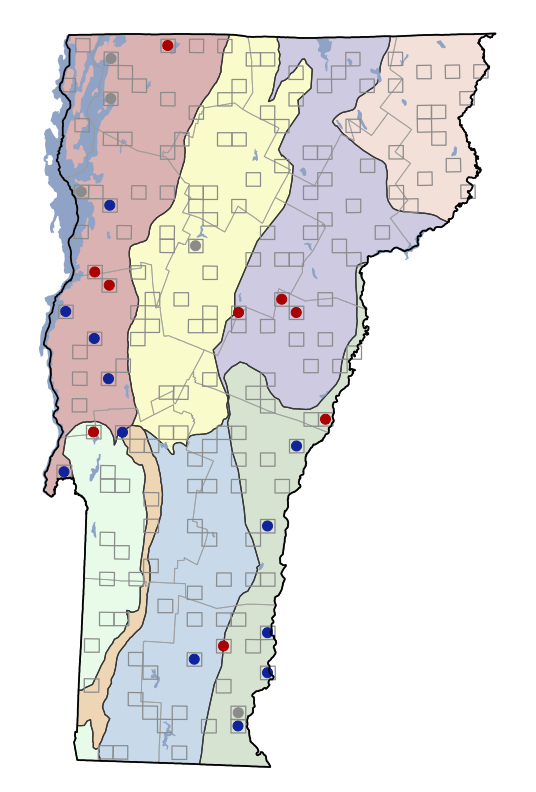
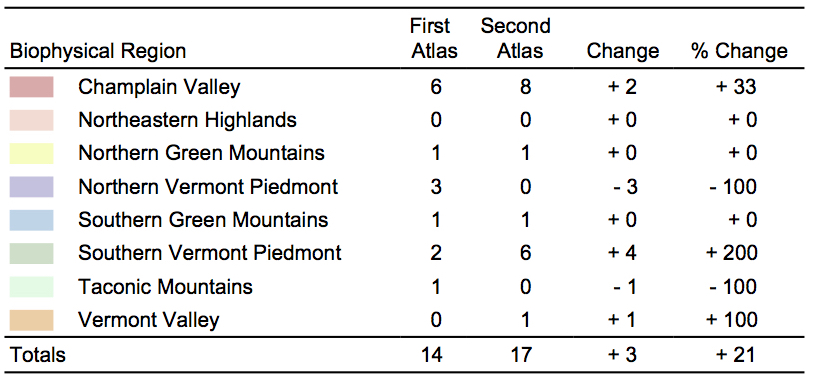
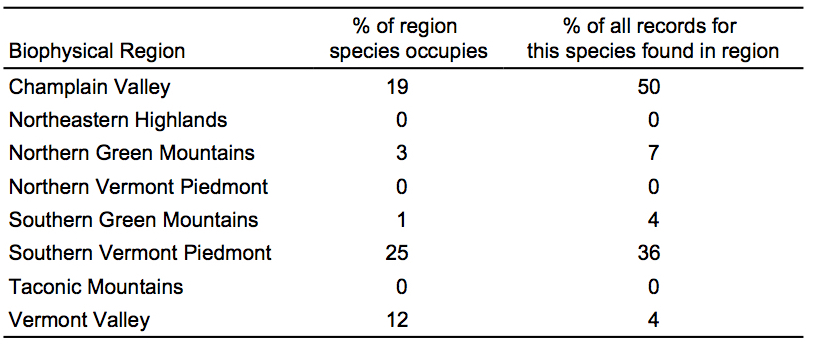
- Status in VT: Increased by 21% (14 to 17 blocks). Greatest increases in Southern Vermont Piedmont.
- Data from other research: No additional data in VT.
- Conservation status: State rank S3B
- Other atlases: NY: 19%; PA: 14%; ON: 48%
- VT’s role in North American range: VT is within the core of the range.
- Causes of change since first Atlas: Warming climate (?); forest maturation (?).
- Management/Monitoring recommendations: No specific recommendations.
First Vermont Breeding Bird Atlas (1976-1981)
Second Vermont Breeding Bird Atlas (2003 – 2007)
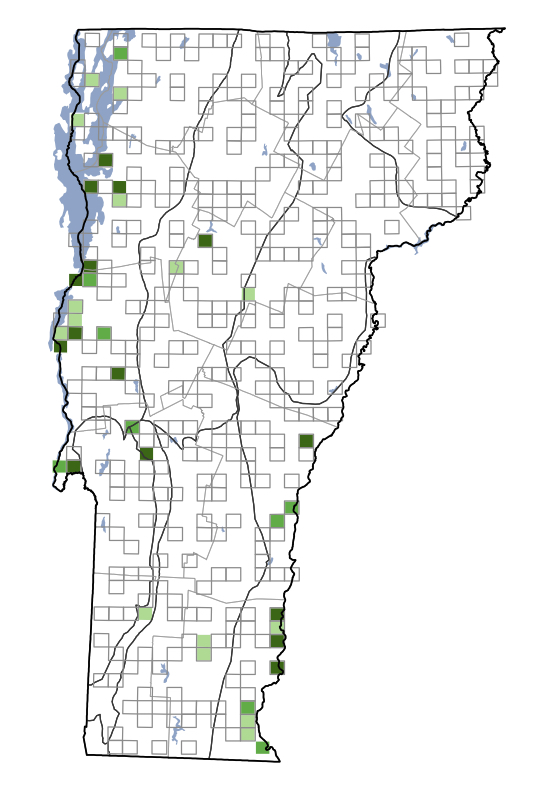

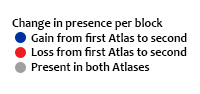
Change in Distribution