Summary
- Natural history: The Blackburnian Warbler carries a throat and chest of vivid fiery orange found on no other North American warbler, yet the bird is surprisingly hard to spot, foraging and singing high in the crowns of the tall conifers it favors, which are rarely shorter than about 60 feet. Its thin, high-pitched song sits at the upper edge of human hearing, so much so that some observers cannot hear it at all. Although Vermont’s population has grown slightly as its forests have matured into the tall stands this bird favors, a broader multi-decade shift in the state’s woods away from conifers and toward hardwoods, plus the spread of the hemlock-killing woolly adelgid, could work against the species over time.
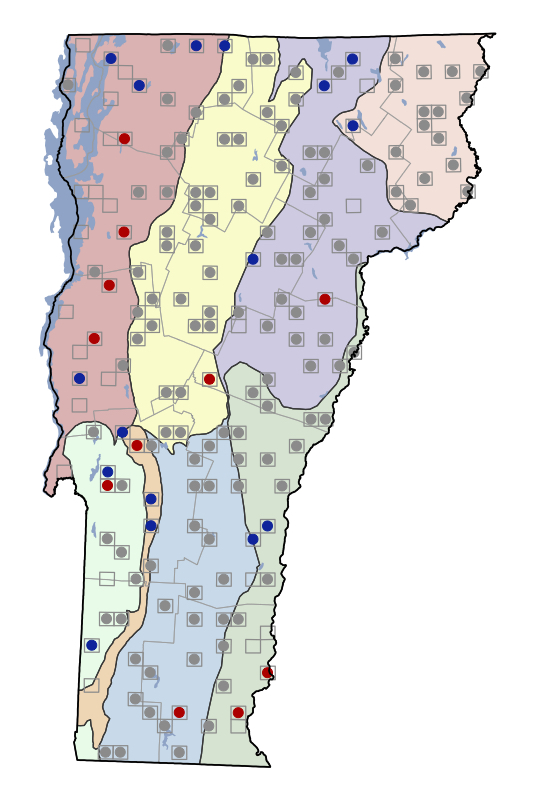
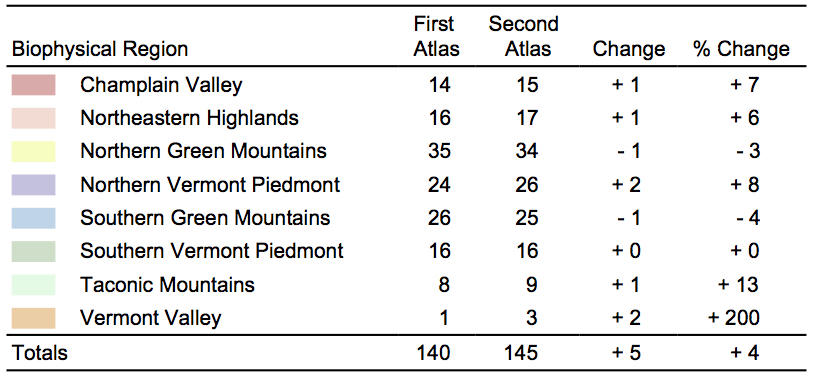
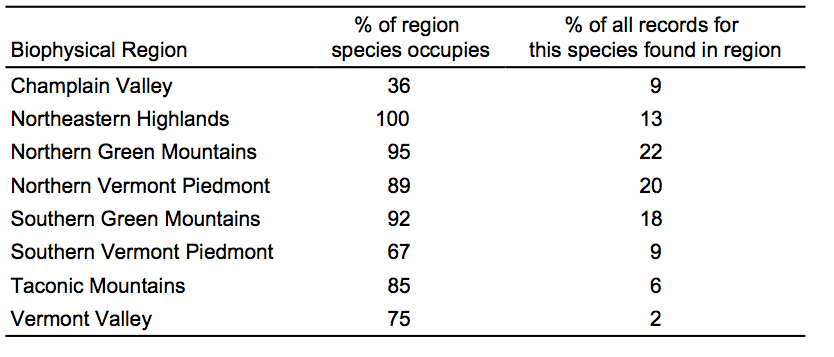
- Status in VT: Increased by 4% (140 to 145 blocks). Greatest increases in Vermont Valley.
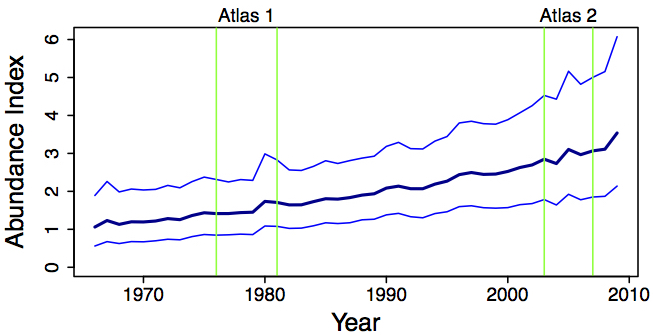
- Data from other research: FBMP: 5.5% annual increase
- Conservation status: State rank S5B
- Other atlases: NY: 19%; ON: 6% (south), 35% (north); PA: 72%
- VT’s role in North American range: VT is at the eastern edge of the range.
- Causes of change since first Atlas: Minimal change; forest maturation
- Management/Monitoring recommendations:No specific recommendations; potential threats include spread of hemlock woolly adelgid, loss of spruce and fir from climate change.
Population Trends
First Vermont Breeding Bird Atlas (1976-1981)
Second Vermont Breeding Bird Atlas (2003 – 2007)
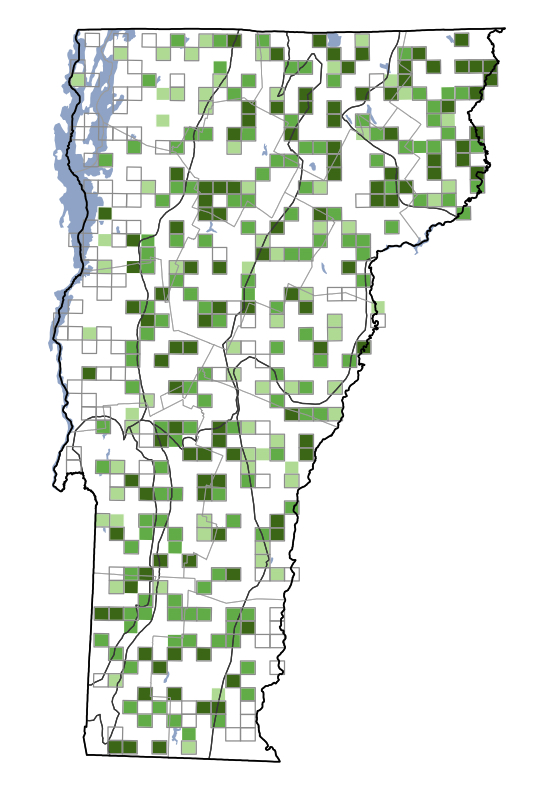

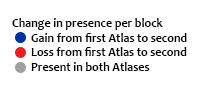
Change in Distribution