Summary
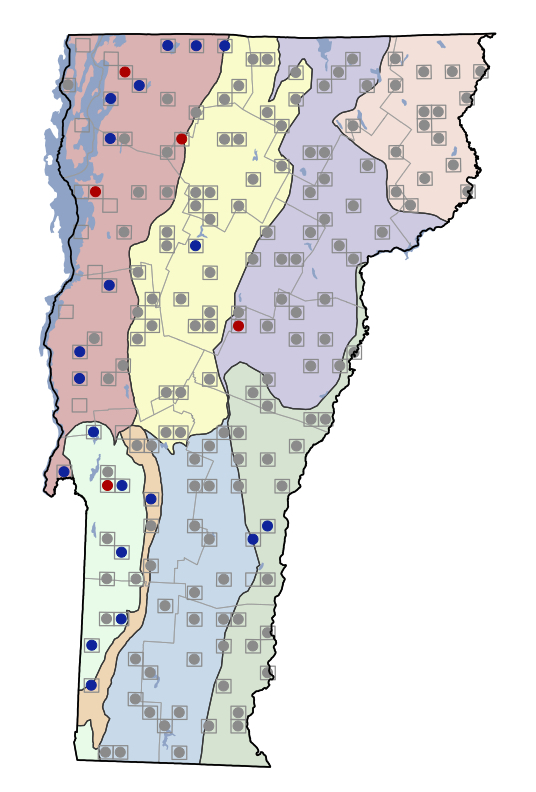
- Natural history: The Black-throated Green Warbler’s buzzy song is a defining sound of Vermont’s cool hemlock ravines, and in the state it reaches its highest numbers in northern hardwood forests mixed with pockets of hemlock or red spruce. Its range expanded noticeably across the western part of the state from the First Atlas to the Second Atlas, apparently as farmland in the Champlain Valley and Taconic Mountains grew back into forest, while the eastern half of Vermont saw little change. Looking ahead, the hemlock woolly adelgid, an introduced insect that has already wiped out hemlock stands across the mid-Atlantic and southern New England, is currently held back by Vermont’s cold winters, but a warmer climate could let it advance north and damage one of this warbler’s key habitats.
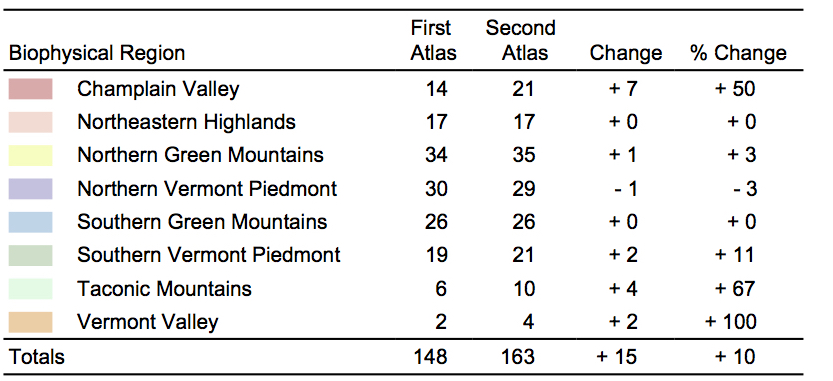
- Status in VT: Increased by 10% (148 to 163 blocks). Greatest increases in Champlain Valley, Taconic Mountains, Vermont Valley.
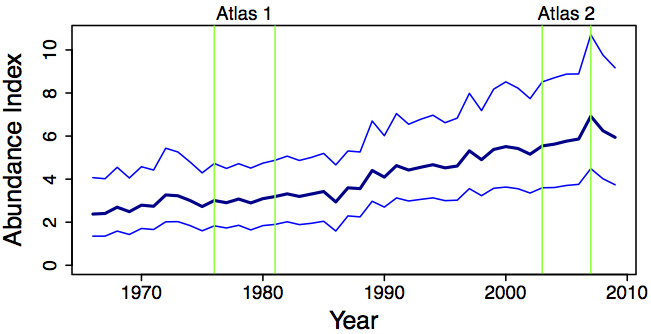
- Data from other research: FBMP: annual decrease of 3.5%
- Conservation status: State rank S5B
- Other atlases: NY: 29%; PA: 48%; MD: 6%; ON: significant increases in most regions
- VT’s role in North American range: VT is within the core of the range.
- Causes of change since first Atlas: Forest maturation.
- Management/Monitoring recommendations:Maintain suitable breeding habitat; monitor hemlock woolly adelgid.
Population Trends
First Vermont Breeding Bird Atlas (1976-1981)
Second Vermont Breeding Bird Atlas (2003 – 2007)
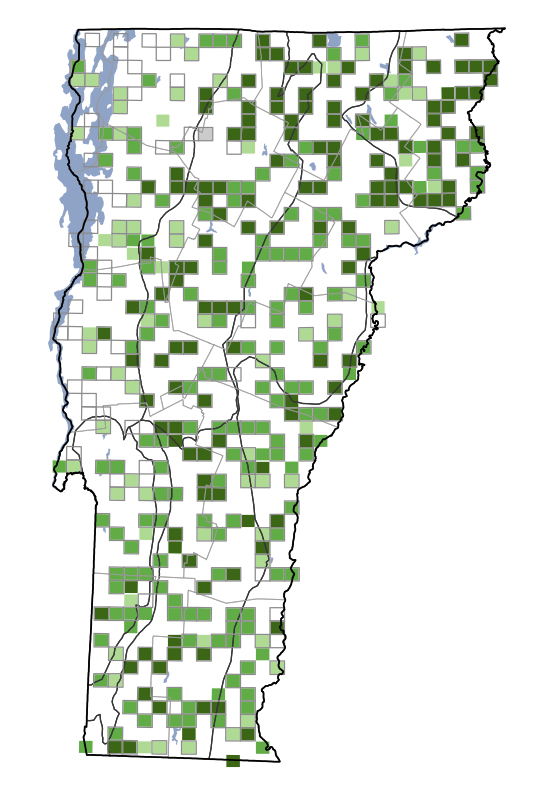

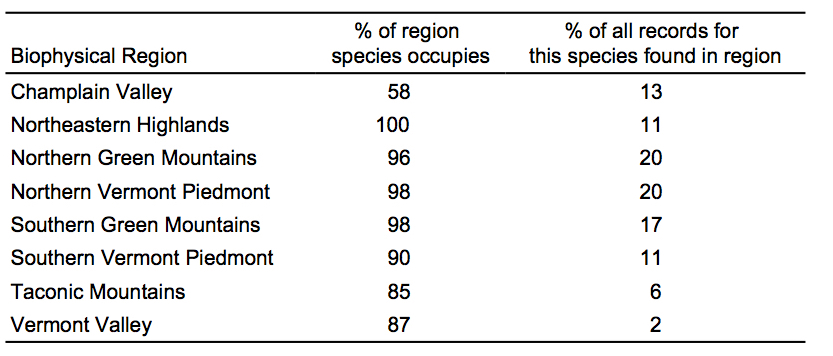
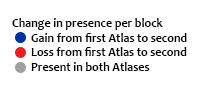
Change in Distribution