Summary
- Natural history: Living up to their name, Black-crowned Night-Herons do most of their hunting and courting after sundown, then nest in colonies tucked below the tree canopy on islands free of ground predators. Vermont’s only substantial colony, on Lake Champlain’s Young Island, typically held 25 to 35 nests through the 1980s until a growing population of Double-crested Cormorants killed off the nesting trees, forcing the herons out in the early 1990s. After a failed attempt on a disturbance-prone private island, the closest stable colony shifted to New York’s Four Brothers Islands, where more than 150 pairs still nest in one surviving stand of buckthorn even as cormorants continue to destroy trees on neighboring islands.
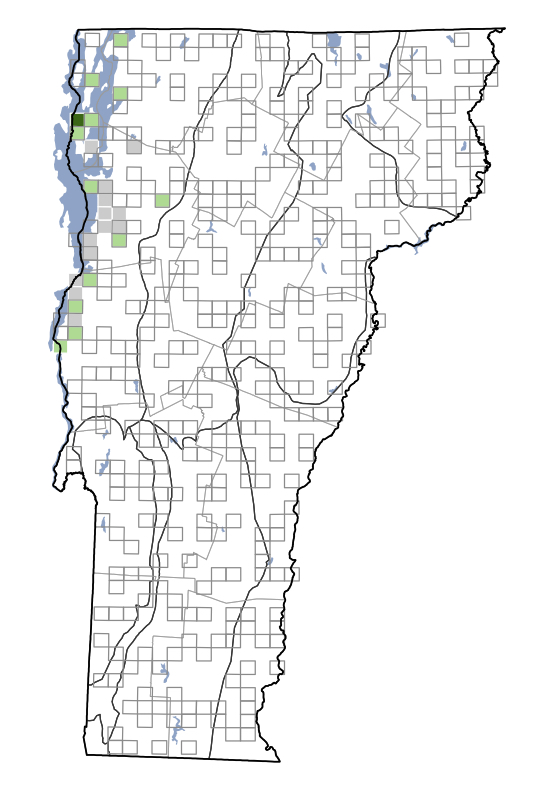
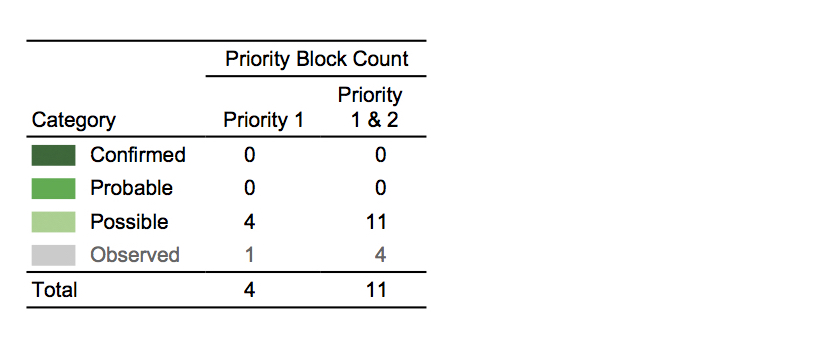
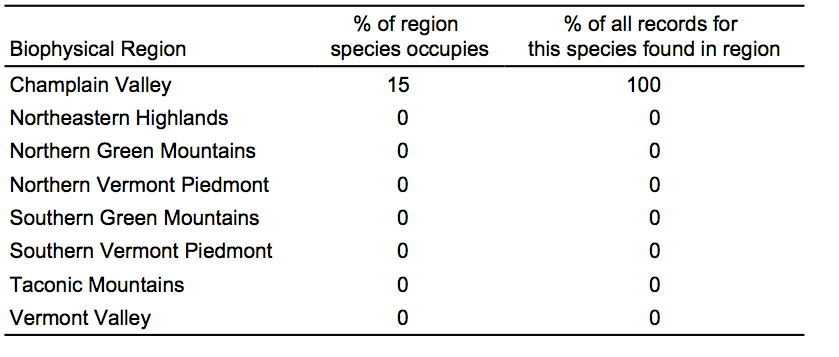
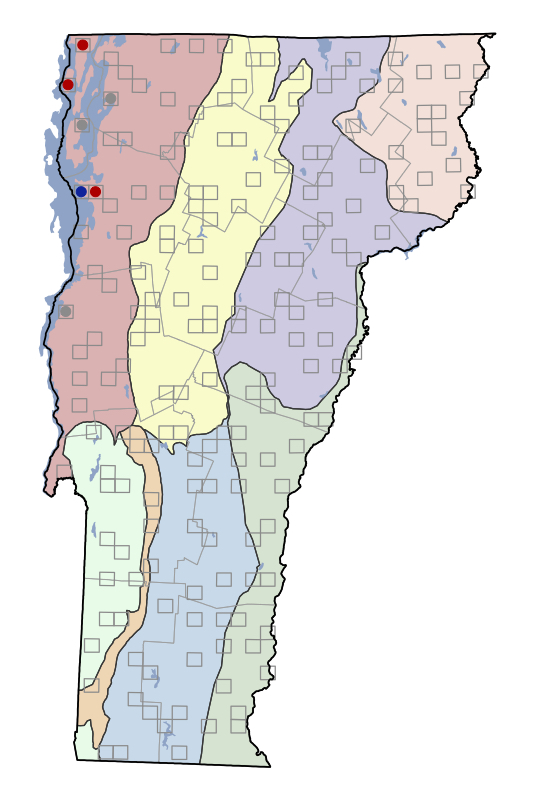
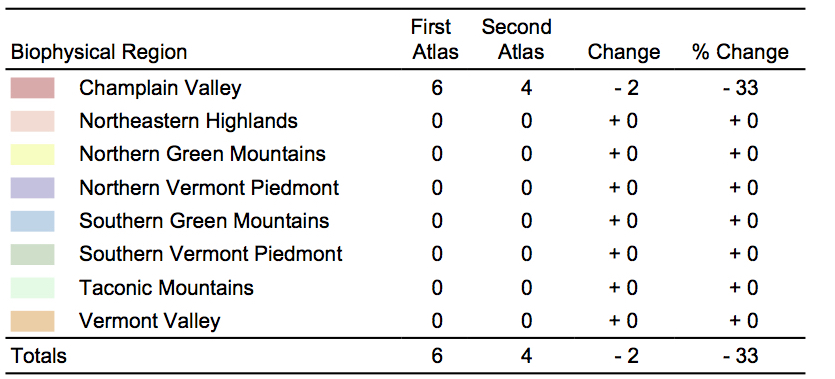
- Status in VT: Decreased by 33% (6 to 4 blocks). Decrease in Champlain Valley.
- Data from other research: No additional data for VT.
- Conservation status: State rank S1B; SSC; SGCN-M
- Other atlases: NY: 1%; PA: -36%; MD: 13%
- VT’s role in North American range: VT is in the northeastern corner of the range.
- Causes of change since first Atlas: Death of trees on Young Island due to expanding nesting population of cormorants; disturbance from efforts to disperse cormorants (?).
- Management/Monitoring recommendations:Reduce cormorant numbers, re-establish trees, and hold human disturbances to a minimum on Young Island.
First Vermont Breeding Bird Atlas (1976-1981)
Second Vermont Breeding Bird Atlas (2003 – 2007)
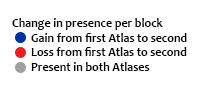
Change in Distribution
Links