Summary
- Natural history: Barn Swallows may actually have been more abundant in Vermont around the late 1800s than they are today, when widespread forest clearing for farmland left the countryside dotted with wooden barns whose open rafters and gaps offered easy entry, unlike the tightly sealed, aluminum-sided buildings common now. American males also evolved shorter tails than their Old World relatives because they share incubation duties with their mates, and a long tail becomes a liability when sitting on a nest for weeks at a stretch.
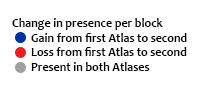
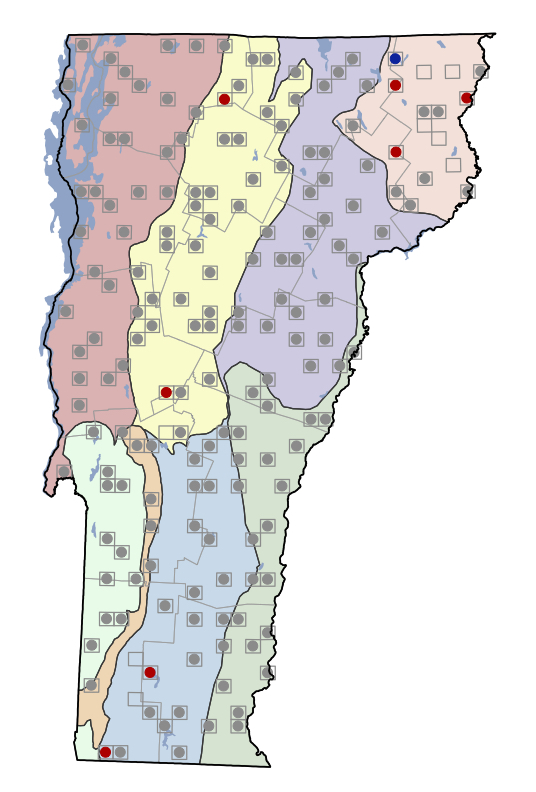
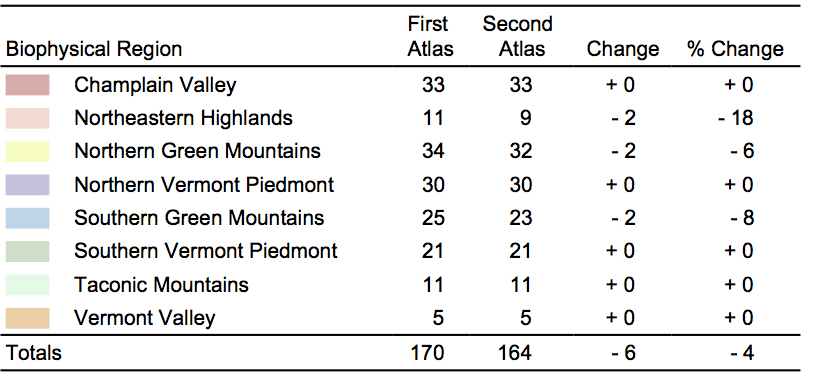
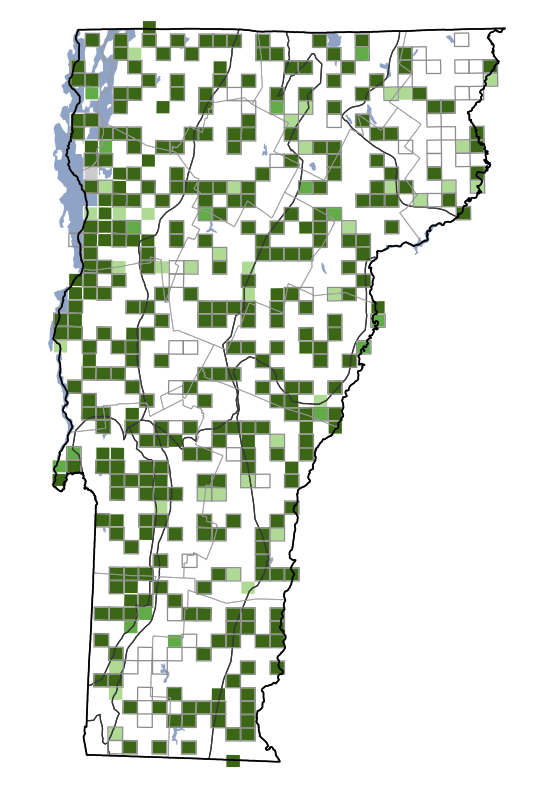
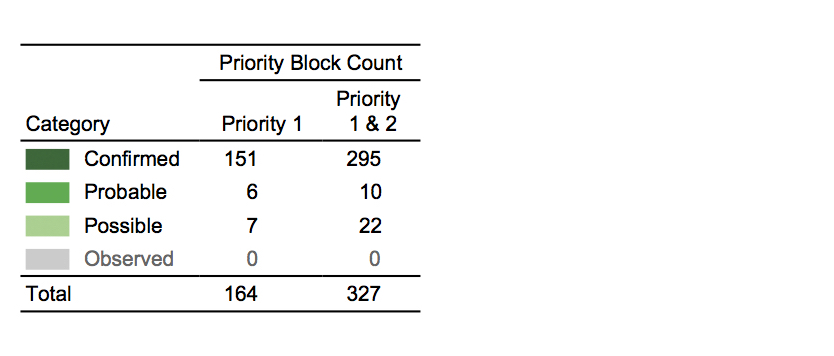
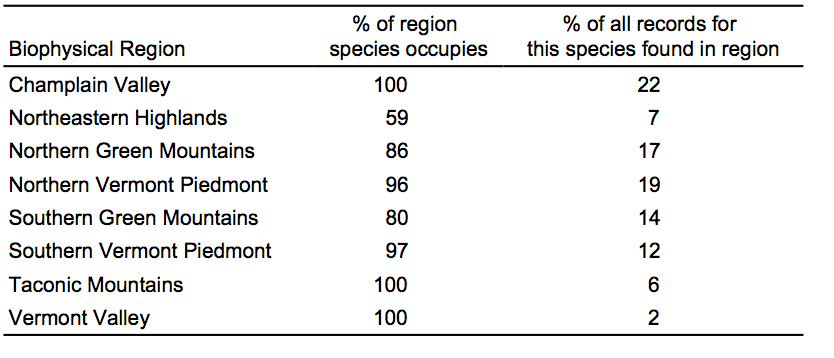
- Status in VT: Decreased by 4% (170 to 164 blocks). Greatest decreases in Green Mountains and Northeastern Highlands.
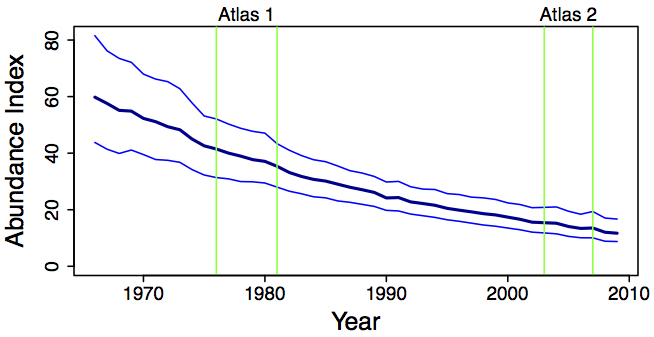
- Data from other research: FBMP: no sig. trend.
- Conservation status: State rank S5B
- Other atlases: NY: -6%; NY (Adirondacks): -28%; PA: -4%; ON: -35%
- VT’s role in North American range: VT is within the core of the range.
- Causes of change since first Atlas: loss of open foraging areas (succession of open fields to forest, development).
- Management/Monitoring recommendations: No current recommendations.
Population Trends
First Vermont Breeding Bird Atlas (1976-1981)
Second Vermont Breeding Bird Atlas (2003 – 2007)
Change in Distribution