Summary
- Natural history: Bald Eagles were essentially absent as a successful Vermont breeder for over sixty years, and the pair that fledged young in Concord in the mid-2000s was the first to do so since the 1940s. Biologists jumpstarted the state’s comeback by releasing 29 young eagles from a hacking site in Addison between 2004 and 2006, part of a broader Northeast rebound that followed the nationwide ban on DDT. The birds build massive stick nests tucked beneath the forest canopy near lakes and rivers, laying eggs as early as March and not fledging their young until nearly three months after hatching.
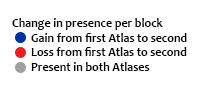
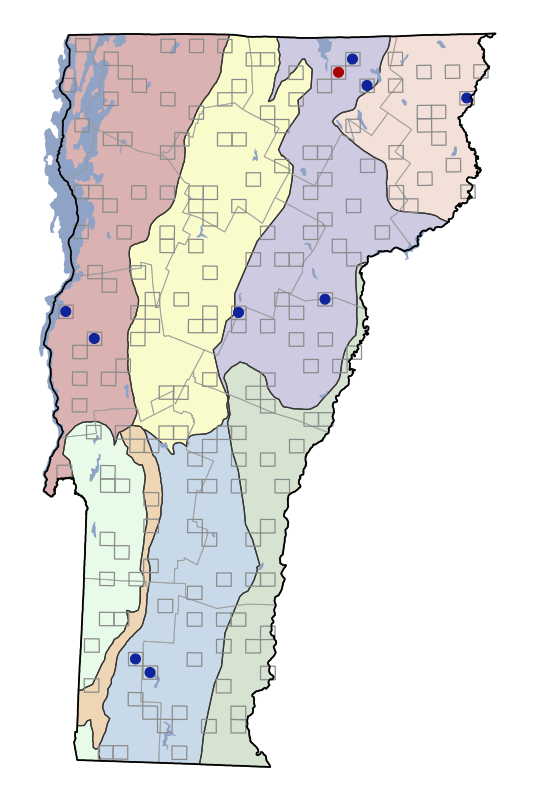
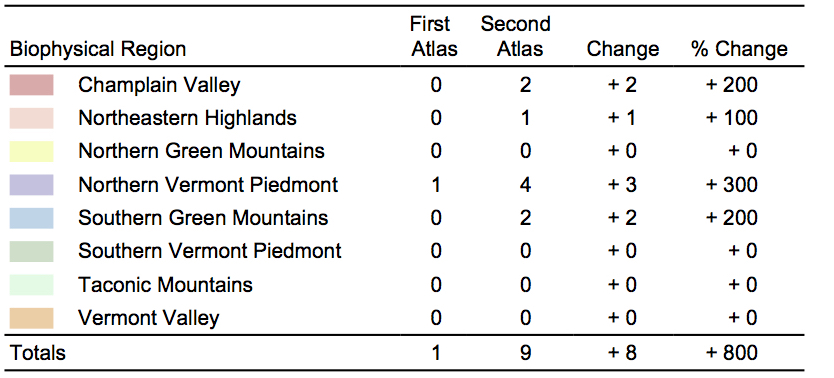
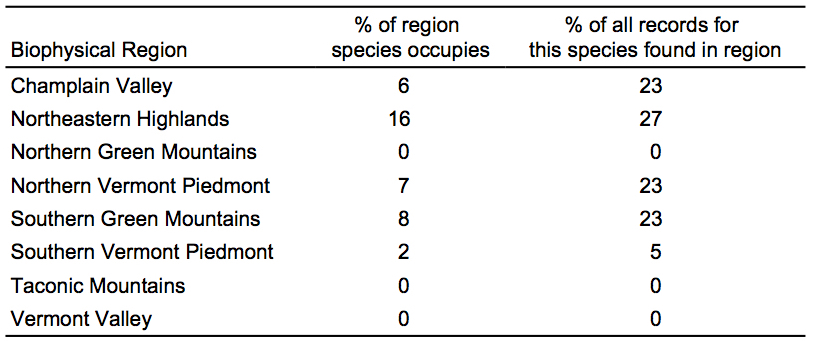
- Status in VT: Increased by 800% (1 to 9 blocks). Greatest increases in Northern Vermont Piedmont.
- Data from other research: VTFWD Mid-winter Survey and Spring Survey
- Conservation status: State rank S1B; S4N; SGCN-H; E
- Other atlases: NY: 2 blocks during first Atlas, 92 pairs during second Atlas; similar increases in MD, ON, and PA.
- VT’s role in North American range: VT is within the core of the historic range.
- Causes of change since first Atlas: Recovery efforts including reintroduction, habitat protection, and the ban on DDT.
- Management/Monitoring recommendations: Continued population monitoring to ensure stability; establishment of breeding site buffers; installation of predator guards on nest trees; protection of nest sites from disturbance and development. See VT Bald Eagle Recovery Plan.
First Vermont Breeding Bird Atlas (1976-1981)
Second Vermont Breeding Bird Atlas (2003 – 2007)

Change in Distribution