Summary
- Natural history: Despite being classified as a shorebird, the American Woodcock, nicknamed the ‘timberdoodle,’ spends its life away from any shore, probing damp soil in alder swamps and brushy fields with a flexible-tipped bill built to feel out and grasp earthworms underground. Each spring at dusk, males perform an elaborate sky dance, launching from the ground with a buzzy call and spiraling upward on whistling wings before parachuting back down, a display so conspicuous that biologists use it to survey the species. Because woodcock depend on young, brushy forest that is steadily maturing across the Northeast, wildlife agencies list it as a regional conservation priority even though Vermont’s own numbers have held up fairly well.
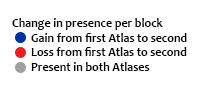
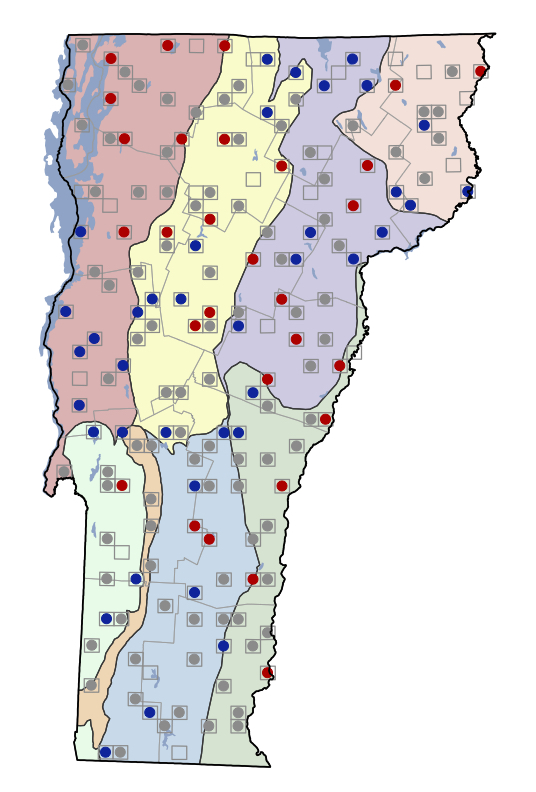
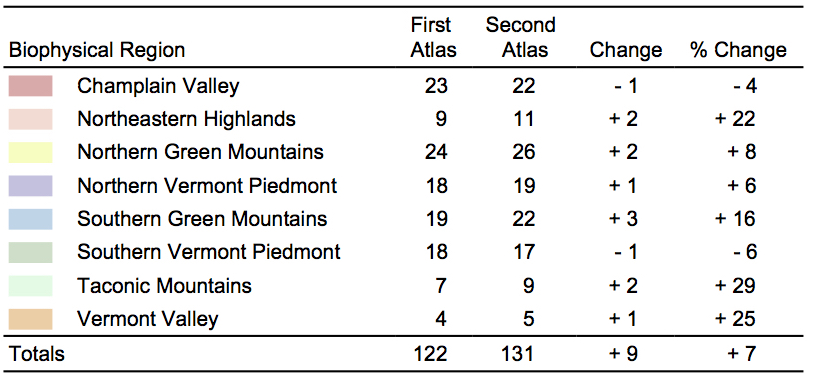
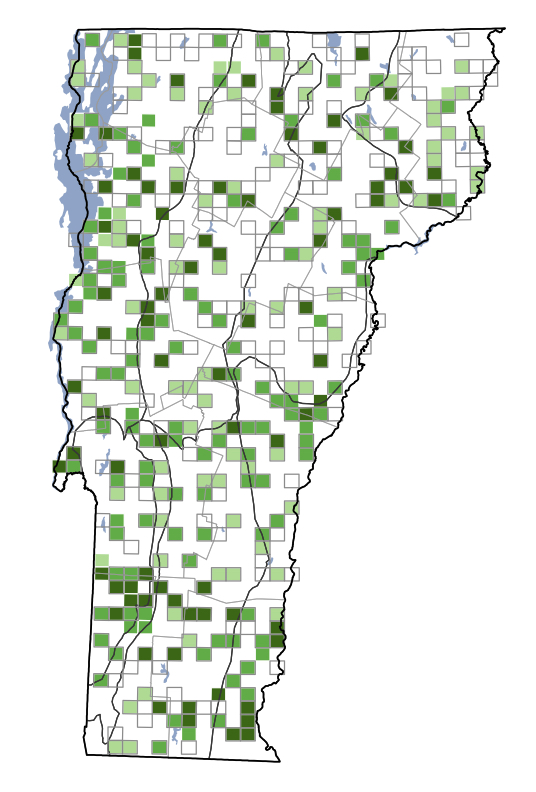
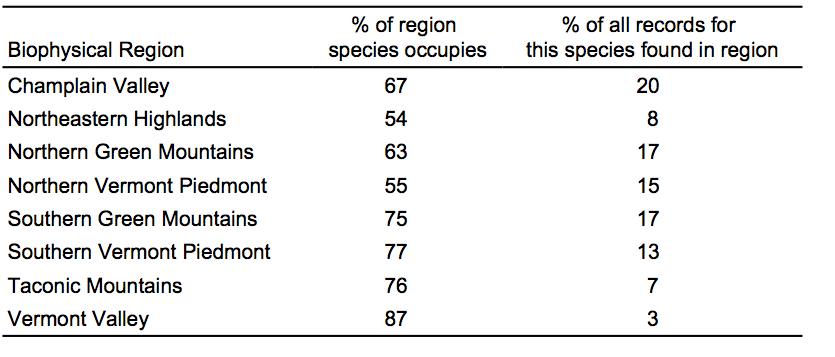
- Status in VT: Increased by 7% (122 to 131 blocks). Greatest increase in Taconic Mountains.
- Data from other research: No additional data for VT.
- Conservation status: State rank S5B; SGCN-H
- Other atlases: NY: 4%; PA: -6%; MD -48%
- VT’s role in North American range: VT is within the core of the range.
- Causes of change since first Atlas: Causes unknown.
- Management/Monitoring recommendations:Retain and expand forest openings; set back succession of maturing forestlands.
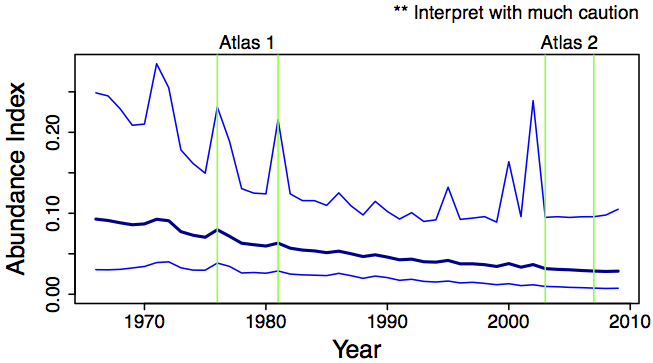
Population Trends
First Vermont Breeding Bird Atlas (1976-1981)
Second Vermont Breeding Bird Atlas (2003 – 2007)

Change in Distribution