Skip to content
American Three-toed Woodpecker (Picoides dorsalis)
Summary
- Natural history: Vermont’s rarest woodpecker is a beetle specialist, stripping bark from dead and dying spruce and fir to expose the wood-boring insects underneath, and it turns up most often where fire, flooding, or disease has left a forest stand full of dying trees ripe for infestation. An early twentieth-century ornithologist believed the species had once ranged more widely across New England, before extensive logging removed the old-growth spruce-fir forests it depends on, and today it survives in Vermont only in isolated pockets of the Northeastern Highlands, echoing similarly small, scattered populations just across the border in New Hampshire and New York’s Adirondacks.
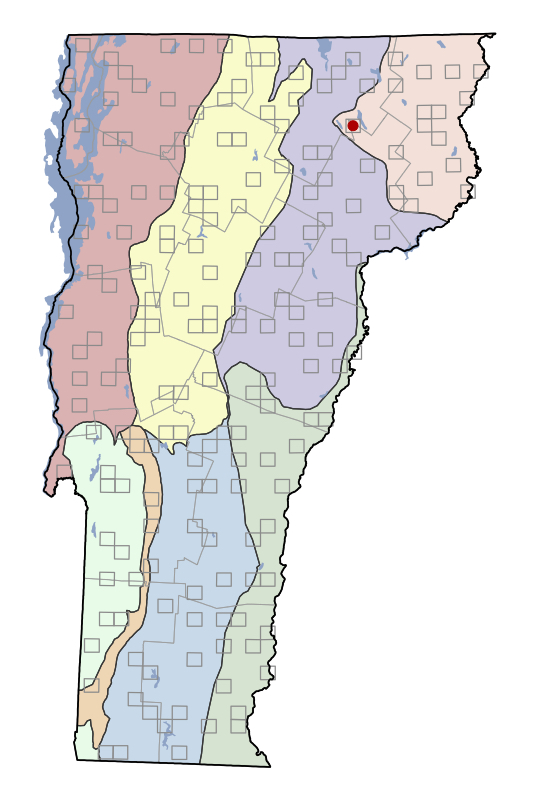
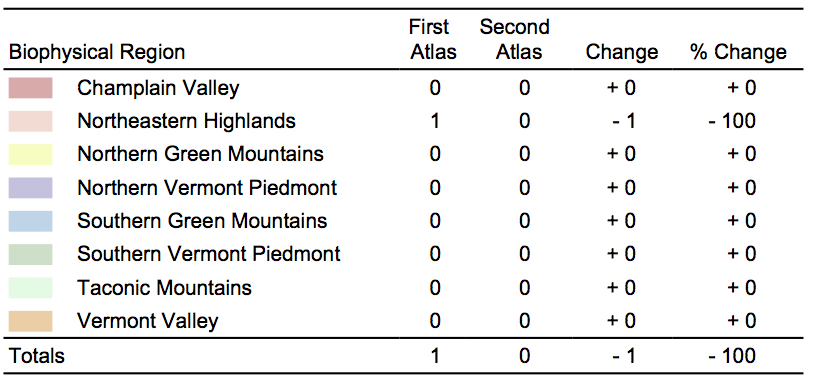
- Status in VT: Decreased by 100% (1 to 0 blocks). Found only in Northeastern Highlands. Found in one block during second Atlas.
- Data from other research: No additional data for VT.
- Conservation status: State rank S1
- Other atlases: NY: -32%; ON: no change.
- VT’s role in North American range: VT is at the southeastern edge of the range.
- Causes of change since first Atlas: Minimal change. Potential threats: destruction of boreal habitat due to climate change.
- Management/Monitoring recommendations:Protection of boreal habitat.
First Vermont Breeding Bird Atlas (1976-1981)
Species Account
Second Vermont Breeding Bird Atlas (2003 – 2007)
Species Account
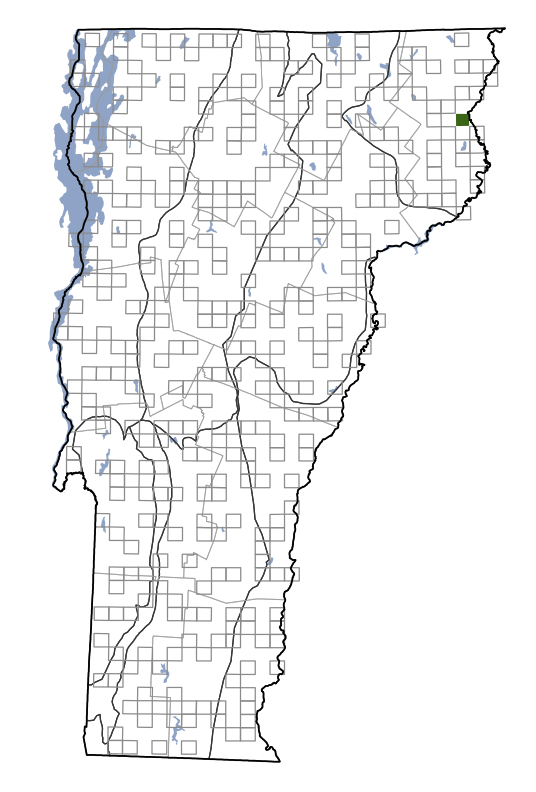


Change in Distribution
Links
Vermont eBird
Encyclopedia of Life
All About Birds