Skip to content
American Crow (Corvus brachyrhynchos)
Summary
- Natural history: Vermont once paid bounties to control the American Crow as an agricultural pest, yet by the late 1800s it was already considered common statewide. Today its habit of raiding dumpsters and picnic tables has made it a fixture of towns and suburbs, and because Vermont’s crows live at comparatively low, rural densities, the state seems to have escaped the severe West Nile virus die-offs that hit crow populations farther south after 1999.
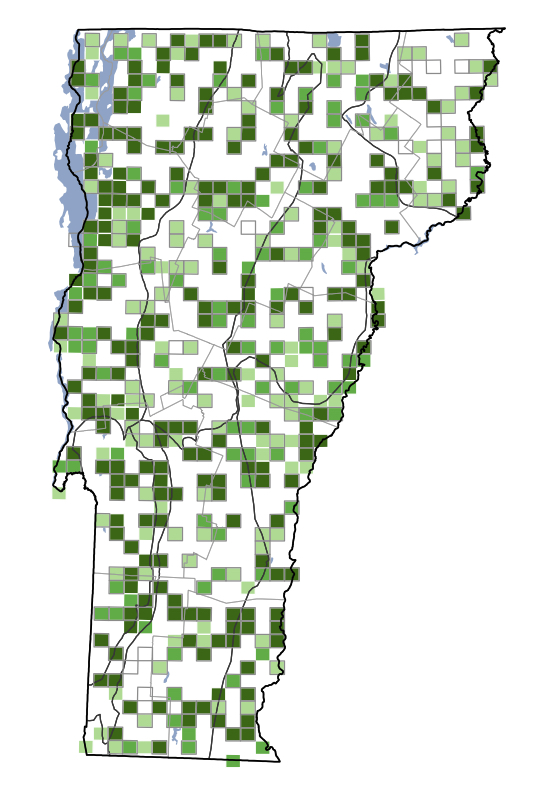
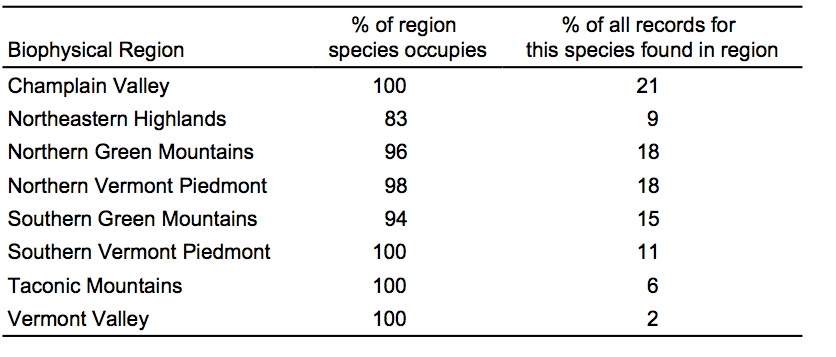
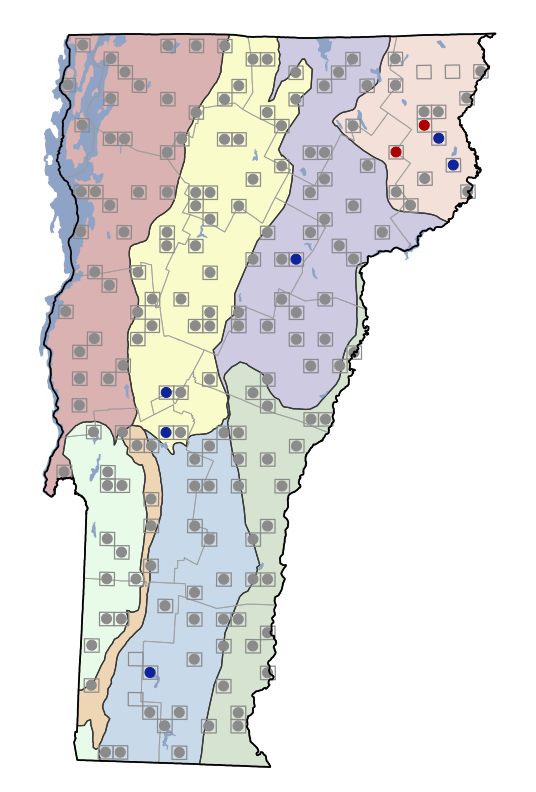
- Status in VT: Increased by 2% (169 to 173 blocks). Increases ranging from 3% to 6% occurred in Northern Vermont Piedmont, Southern Green Mountains, and Northern Green Mountains.
- Data from other research: No additional data in VT.
- Conservation status: State rank S5B; S5N
- Other atlases: Slight but non-sig. increases in MD, NY, and PA; ON showed expansion into northern part of range.
- VT’s role North American range: VT is within the core of the range.
- Causes of change since first Atlas: Ability to use habitat and resources available in urban centers and suburbs (see pdf).
- Management/Monitoring recommendations:West Nile virus has the potential to reduce local populations
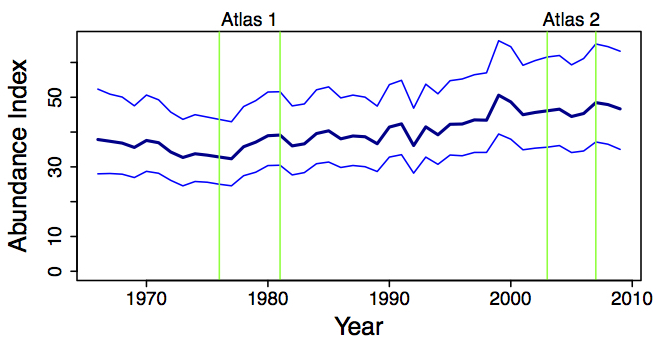
Population Trends
First Vermont Breeding Bird Atlas (1976-1981)
Species Account
Second Vermont Breeding Bird Atlas (2003 – 2007)
Species Account

Change in Distribution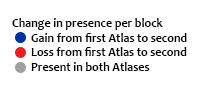

Links
Vermont eBird
Encyclopedia of Life
All About Birds