Skip to content
Alder Flycatcher (Empidonax alnorum)
Summary
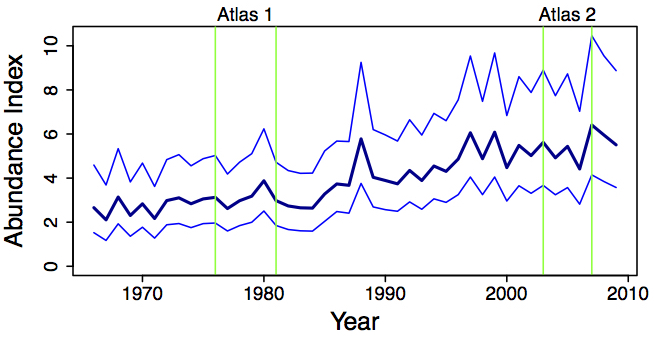
- Natural history: Until a 1973 taxonomic split, the Alder Flycatcher and its near-identical look-alike, the Willow Flycatcher, were classified as a single species called Traill’s Flycatcher, and the two still commonly nest in the same survey block today while maintaining separate, non-overlapping territories. Although it favors shrubby, early-successional habitat that might be expected to shrink as Vermont’s forests mature, the Alder Flycatcher’s numbers have climbed steadily in every region of the state, likely helped by streamside alder thickets recovering as dairy farming has declined and by the bird’s willingness to nest in shrubby roadside growth.
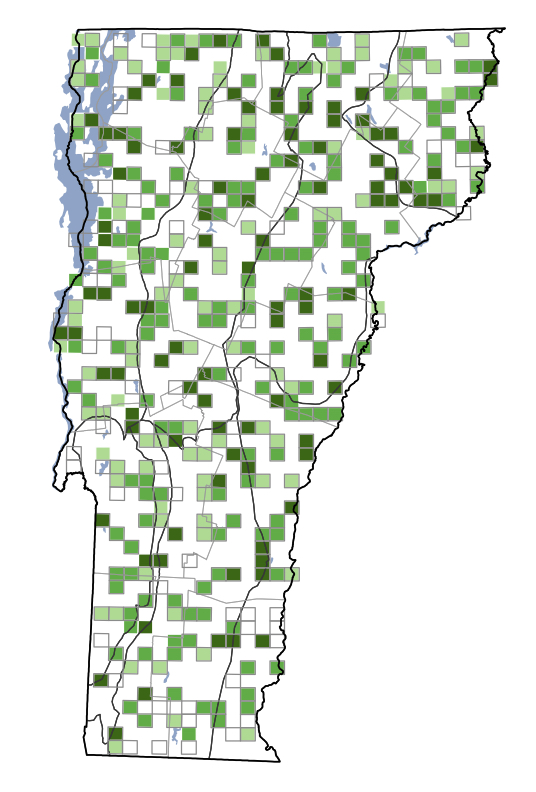
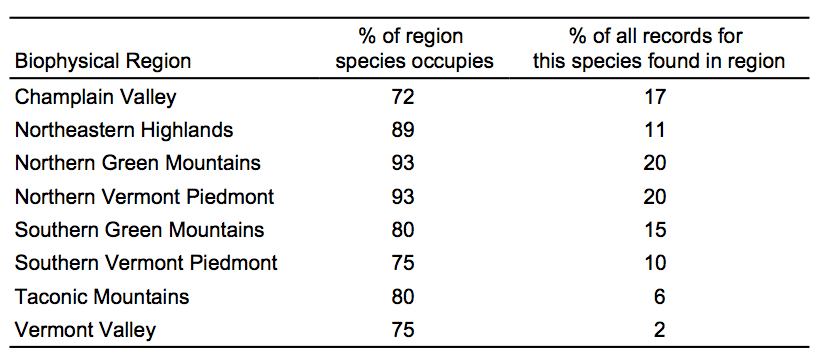
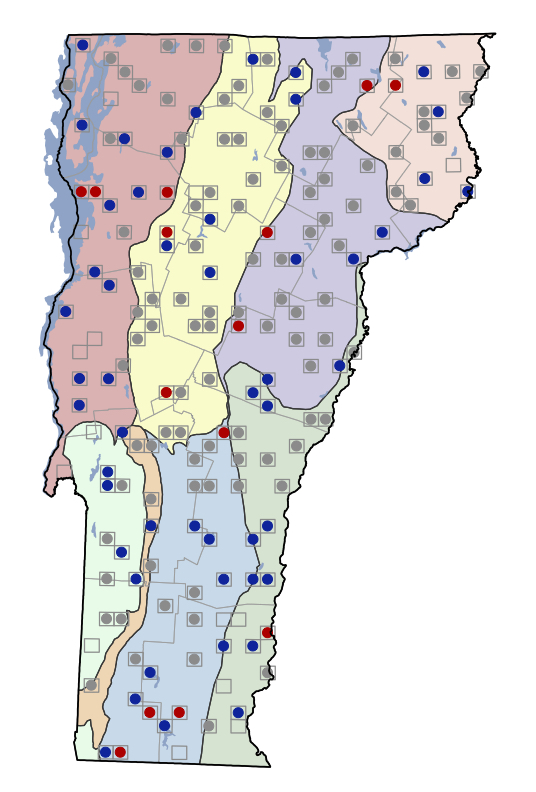
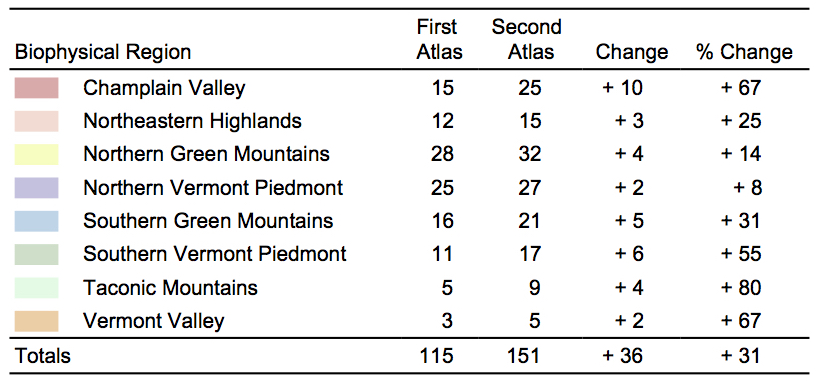
- Status in VT: Increased by 31% (115 to 151 blocks). Greatest increases in Taconic Mountains.
- Data from other research: No additional data for VT.
- Conservation status: State rank S5B
- Other atlases: NY: 45%; PA: 163%; MD: 36%; ON: 26%
- VT’s role in North American range: VT is within the core of the range.
- Causes of change since first Atlas: Plentiful habitat including shrubbery alongside established roadsides; recovery of riparian habitats adjacent to former pasturelands.
- Management/Monitoring recommendations: No current recommendations.
Population Trends
First Vermont Breeding Bird Atlas (1976-1981)
Species Account
Second Vermont Breeding Bird Atlas (2003 – 2007)
Species Account

Change in Distribution
Links
Vermont eBird
Encyclopedia of Life
All About Birds