Summary
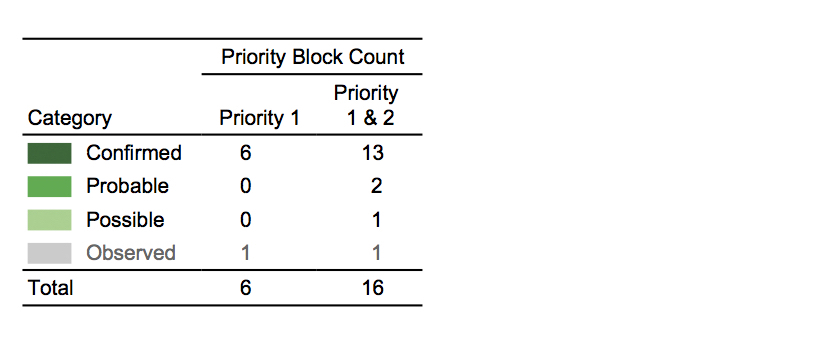
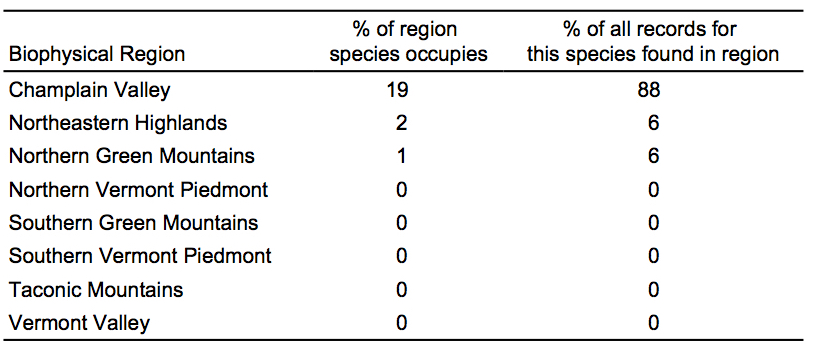
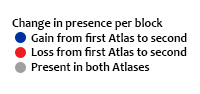
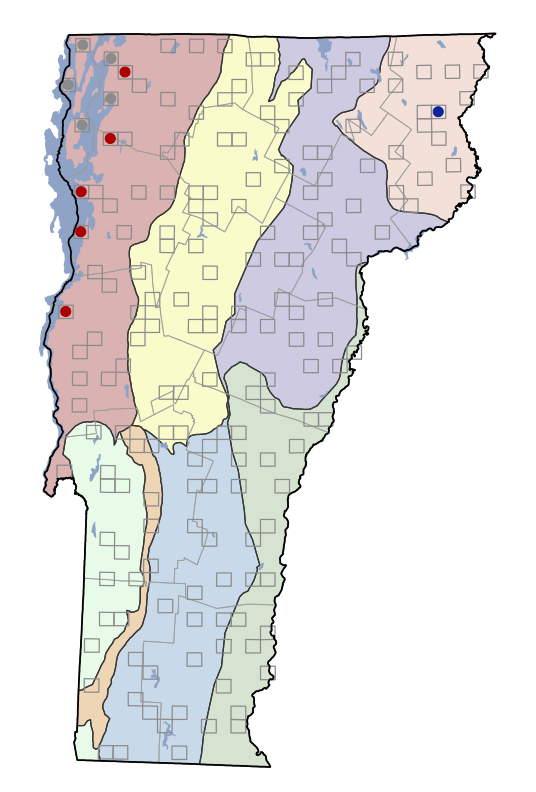
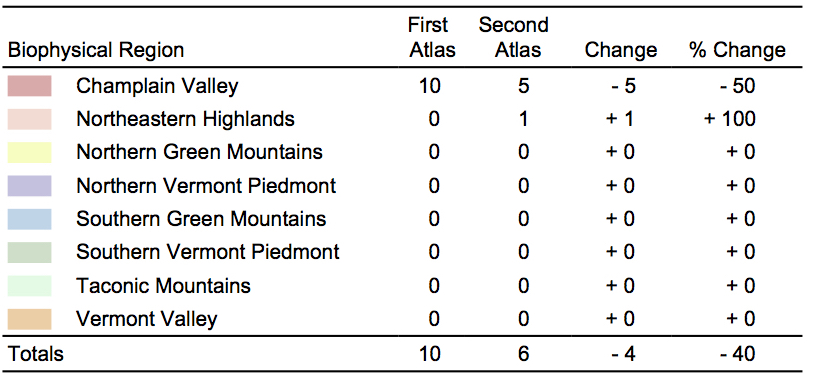
- Status in VT: Decreased by 40% (10 to 6 blocks). Decrease occurred in Champlain Valley.
- Data from other research: VTFWD nest box data show constant numbers between atlases.
- Conservation status: State rank S2B; S5N
- Other atlases: NY: 29%; ON: non-significant increase
- VT’s role in North American range: VT is on the southeastern edge of the range.
- Causes of change since first Atlas:Competition with fish for invertebrate prey (e.g., see Mallory et al. 1994); competition with Wood Duck and Hooded Merganser for nest cavities; lakeshore development (?); increases in human activity (?); disruption of ecosystem by zebra mussel (?).
- Management/Monitoring recommendations: Documented decrease should be investigated; standard safe dates were not employed during first Atlas, leaving the possibility that late migrants were recorded as Possible or Probable breeders.
First Vermont Breeding Bird Atlas (1976-1981)
Second Vermont Breeding Bird Atlas (2003 – 2007)

Change in Distribution
Links