Skip to content
Song Sparrow (Melospiza melodia)
Summary
- Natural history: Few North American birds have been studied as intensively as the Song Sparrow, which breeds in nearly any semi-open setting from wild hedgerows and marshes to suburban yards and showed almost no change in distribution from the First Atlas to the Second Atlas, keeping one of the highest confirmation rates of any Vermont bird. Naturalists already described it as an abundant Vermont bird by the late 1800s, not long after settlers’ forest-clearing created the brushy edge habitat it favors. Even so, Breeding Bird Survey routes have picked up a slow, multi-decade decline across the wider Northeast, a trend blamed on those same fields gradually maturing back into forest.
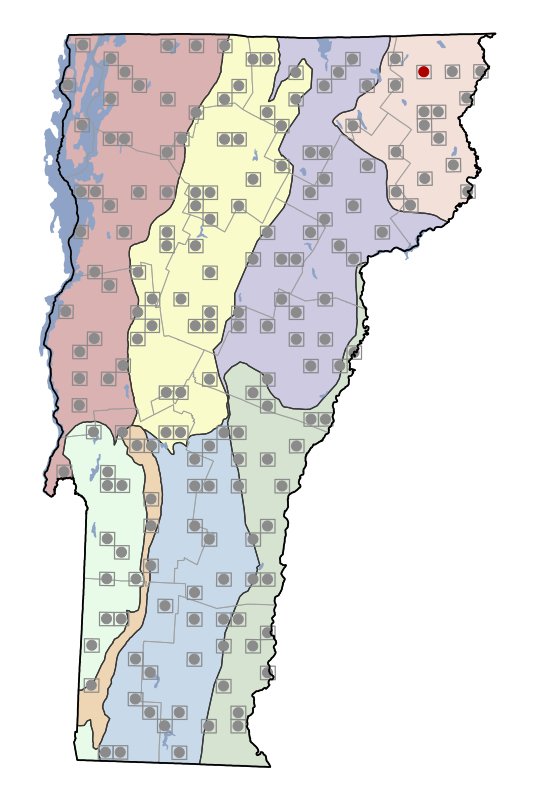
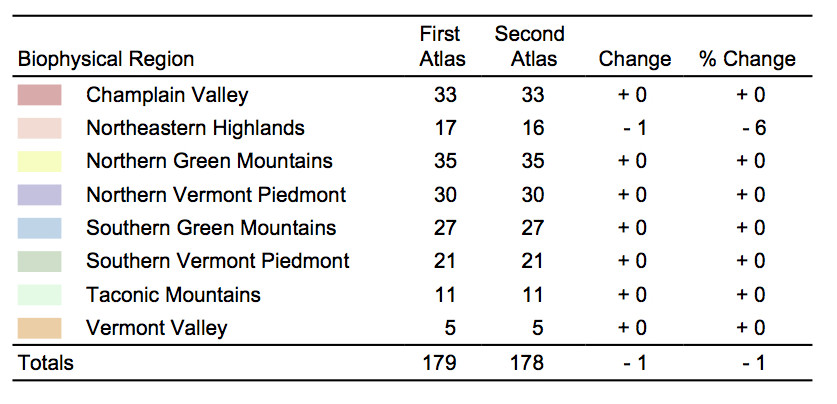
- Status in VT: Decreased by 1% (179 to 178 blocks). Decrease in Northeastern Highlands.
- Data from other research: No additional data for VT.
- Conservation status: State rank S5B
- Other atlases: NY: -1%; PA: 2%; MD: -1%
- VT’s role in North American range: VT is within the core of the range.
- Causes of change since first Atlas: Minimal change.
- Management/Monitoring recommendations: No current recommendations.
Population Trends
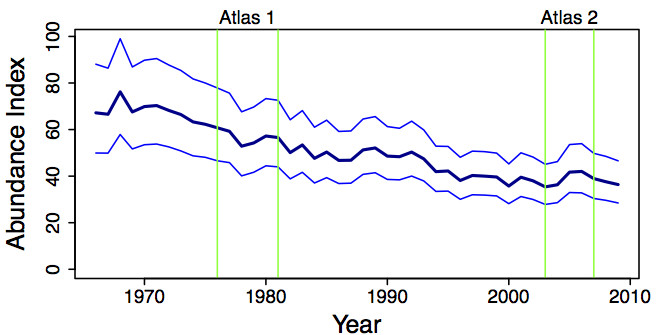
First Vermont Breeding Bird Atlas (1976-1981)
Species Account
Second Vermont Breeding Bird Atlas (2003 – 2007)
Species Account
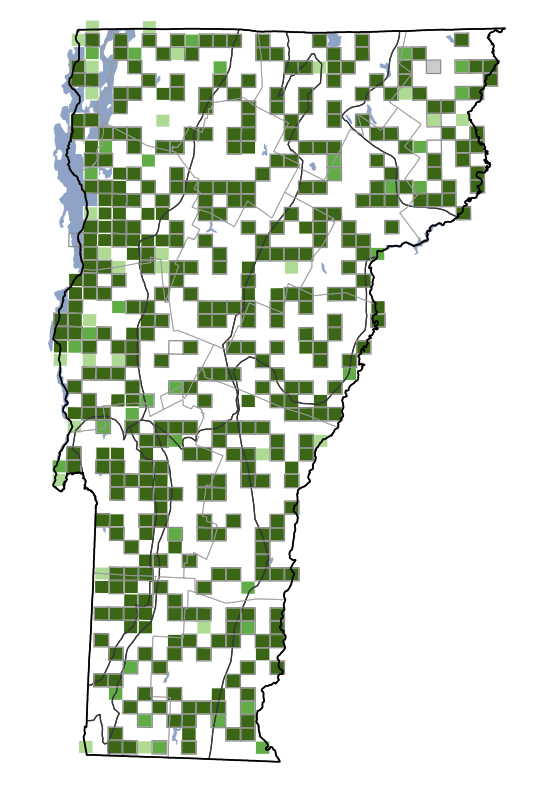
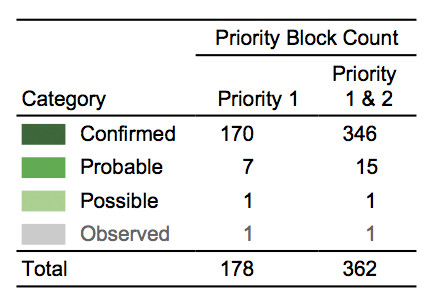
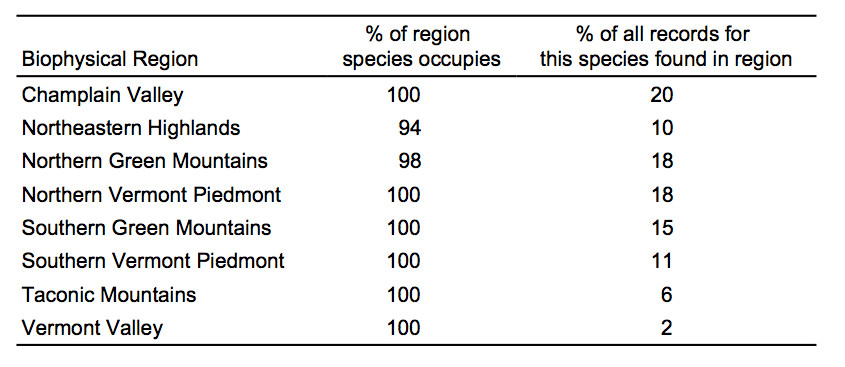
Change in Distribution

Links
Vermont eBird
Encyclopedia of Life
All About Birds