Summary
- Natural history: Unlike most Vermont songbirds, the Grasshopper Sparrow has two entirely different songs in its repertoire, a buzzy one for courting mates and disputing territory and a quieter second one that may function as a predator alarm. The species has probably never been common in the state, and its scarcity showed clearly in one multi-year banding effort in Chittenden County that captured nearly a thousand Savannah Sparrows and Bobolinks but only four Grasshopper Sparrows, including a male that sang and defended a territory for three summers without ever attracting a mate. Habitat loss from reforestation, development, and more intensive farming has since confined the species to a handful of sites statewide, including a small population monitored for years at Camp Johnson in Winooski.
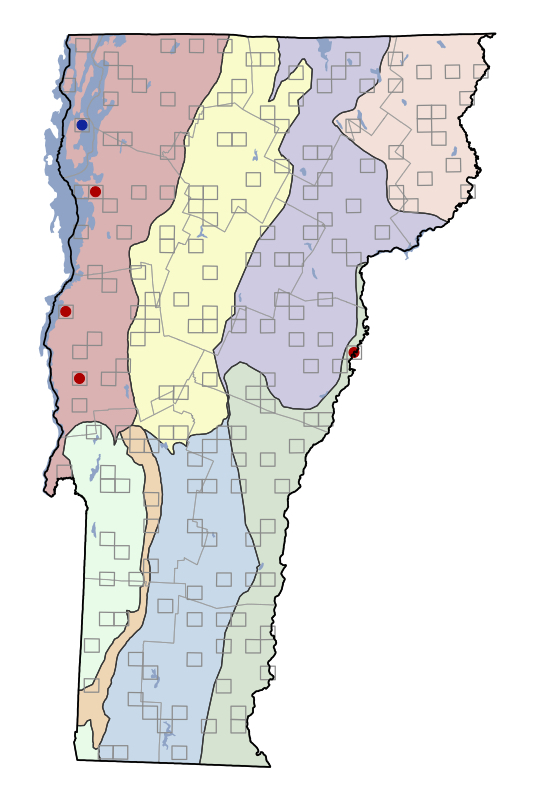
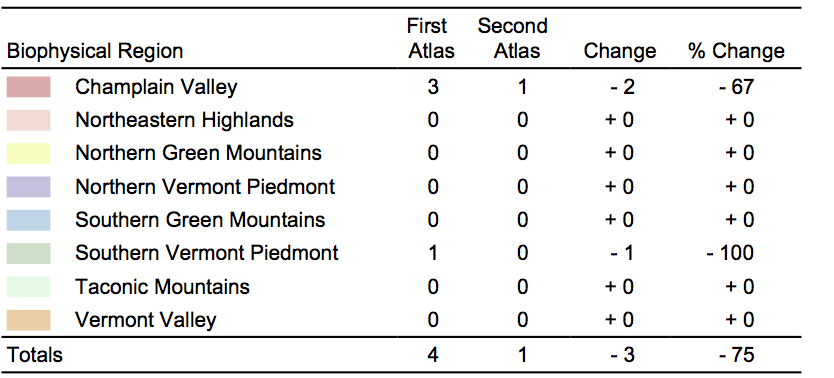
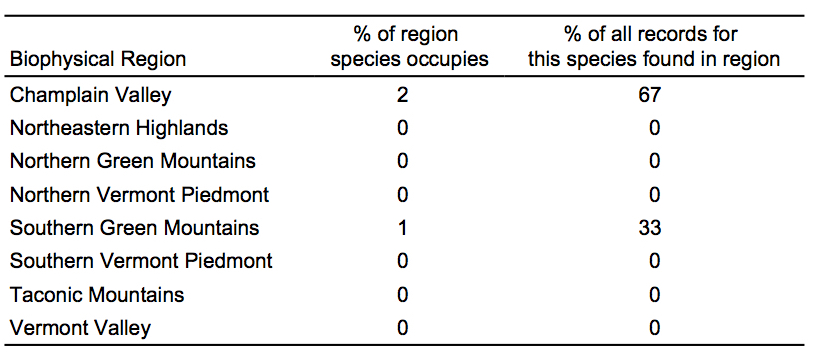
- Status in VT: Decreased by 75% (4 to 1 blocks). Greatest decreases in Southern Vermont Piedmont and Champlain Valley.
- Data from other research: Franklin County Airport (1999-2004, 2007): 5 to 9 singing males annually; Camp Johnson (1999-2007): 3 to 11 singing males annually.
- Conservation status: State rank S1B; SGCN-H, T
- Other atlases: PA: 3%
- VT’s role in North American range: VT is at the northern edge of the range.
- Causes of change since first Atlas: Loss of grassland habitat to reforestation and suburban development; intensified agricultural practices including earlier and more frequent mowing, and conversion of pastures to row crops.
- Management/Monitoring recommendations: Maintain and create connectivity between populations or historically used habitat; delay cutting until 1 August, or limit first cutting of hayfields to dates earlier than 1 June, and second cutting to no earlier than 65 days after first cutting; airports can provide suitable habitat if mowed after 1 August.
First Vermont Breeding Bird Atlas (1976-1981)
Second Vermont Breeding Bird Atlas (2003 – 2007)


Change in Distribution