Summary
- Natural history: The Canada Warbler is a secretive bird of shrubby swamps and mossy forest floors, nesting low among roots and debris in cover dense enough to make it easy to overlook, in habitat usually wet and buggy enough to discourage all but the most determined birders. Its decline in Vermont does not line up neatly with statewide forest trends, since total forest cover and the amount of young, maturing forest both increased over the same period the bird was disappearing from blocks. Researchers suspect the losses instead reflect a shrinking of two particular forest types the warbler depends on, spruce-fir and elm-ash-red maple, rather than any overall change in how much of Vermont is forested.
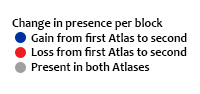
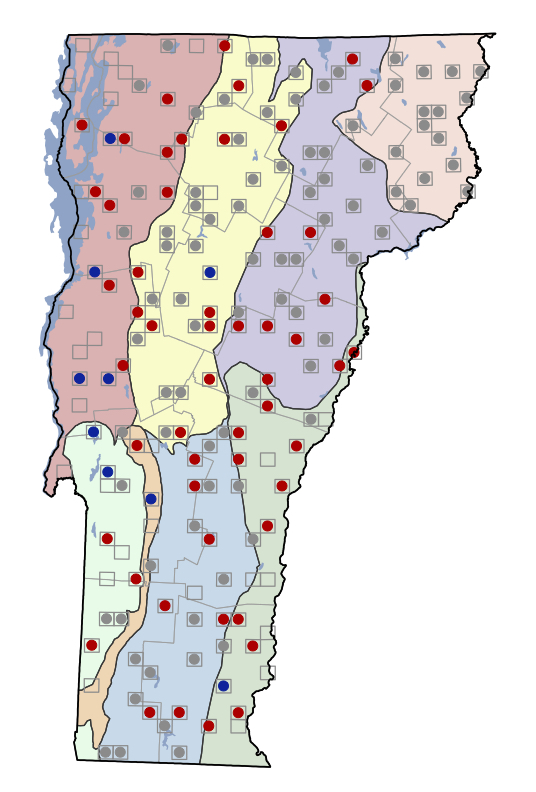
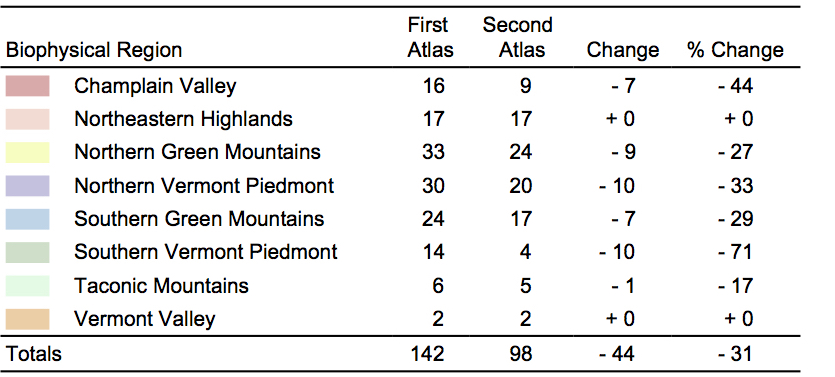
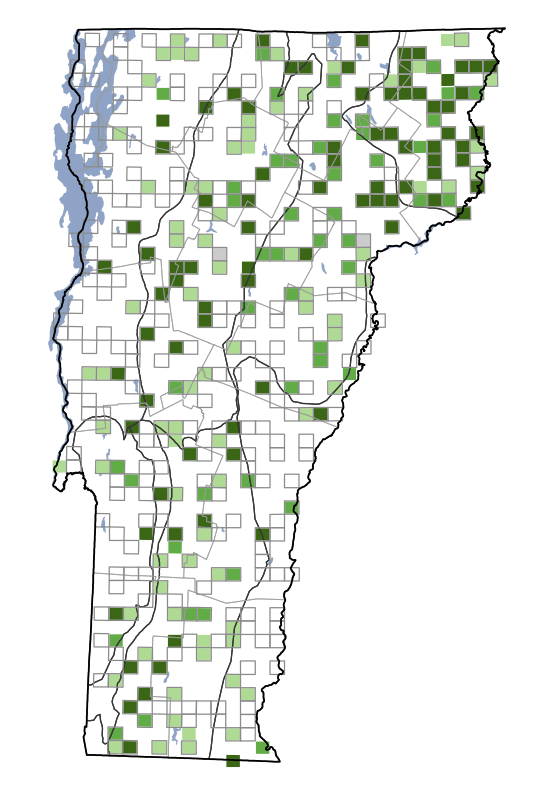
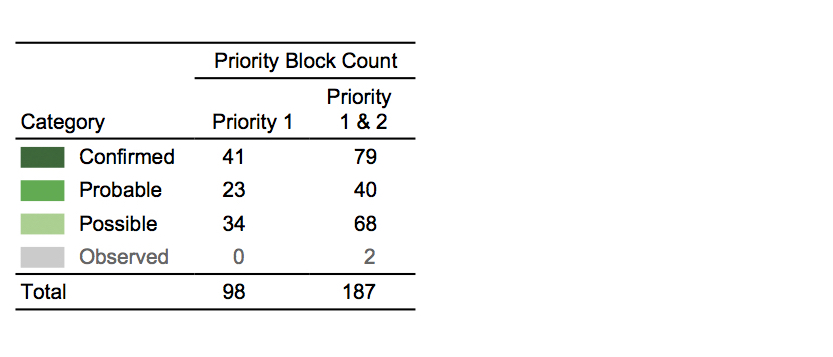
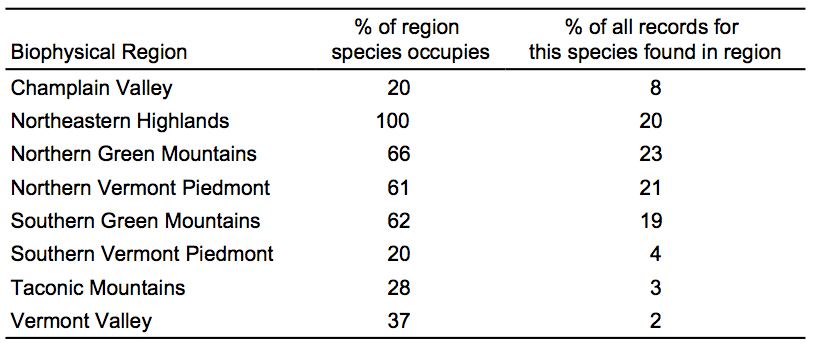
- Status in VT: Decreased by 31% (142 to 98 blocks). Losses in all biophysical regions except Northeastern Highlands and Vermont Valley. Greatest loss in the Southern Vermont Piedmont.
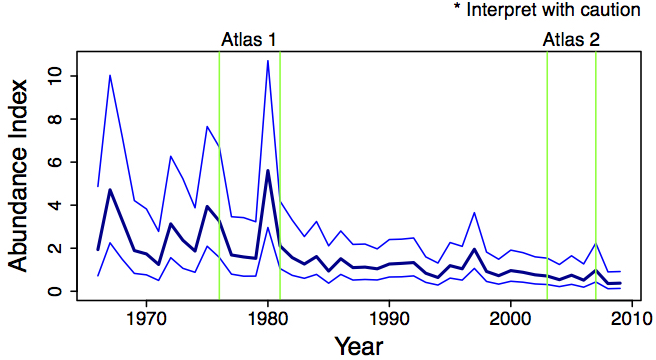
- Data from other research: VFMP data show an annual trend of -6.7% at 12 sites from 1989 to 2006 (Rimmer, Faccio, and McFarland 2007).
- Conservation status: State rank S4B; SSC; SGCN-H
- Other atlases: NY: -23%
- VT’s role in North American range: VT is within the core of the range.
- Causes of change since first Atlas: Loss of two forest cover types that are important to this species: spruce-fir and elm-ash-red maple; loss of forested wetlands; loss or degradation of habitat on wintering grounds.
- Management/Monitoring recommendations: Forest managers should provide dense regenerating forests that have emergent, mature trees; protect red maple swamps; see “Canada Warbler – Population Status, Habitat Use, and Stewardship Guidelines in Northeastern Forests” (PDF).
Population Trends
First Vermont Breeding Bird Atlas (1976-1981)
Second Vermont Breeding Bird Atlas (2003 – 2007)
Change in Distribution