Skip to content
Northern Waterthrush (Parkesia noveboracensis)
Summary
- Natural history: The Northern Waterthrush has a signature habit of pumping its body up and down and flicking its tail as it walks the edges of bogs, alder swamps, and beaver ponds, staying close to shrubby cover, and it builds its nest on the ground nearby, tucked into upturned roots or a hollow in the bank. Its chicks leave the nest before they are able to fly and rely on both parents for another four to five weeks, and adult males grow quieter as summer goes on, making the species much harder to find in July than in May. Among the earliest fall migrants of Vermont’s warblers, most Northern Waterthrushes have departed for wintering mangrove forests in the Caribbean and South America by mid-August.
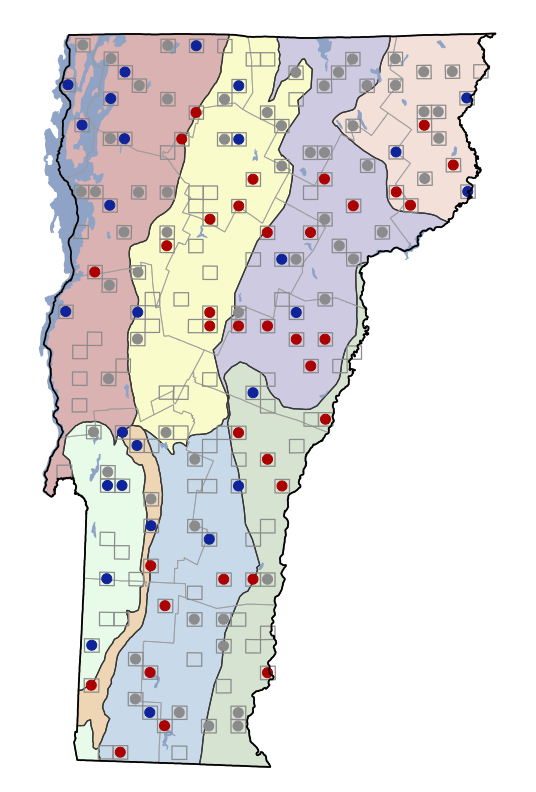
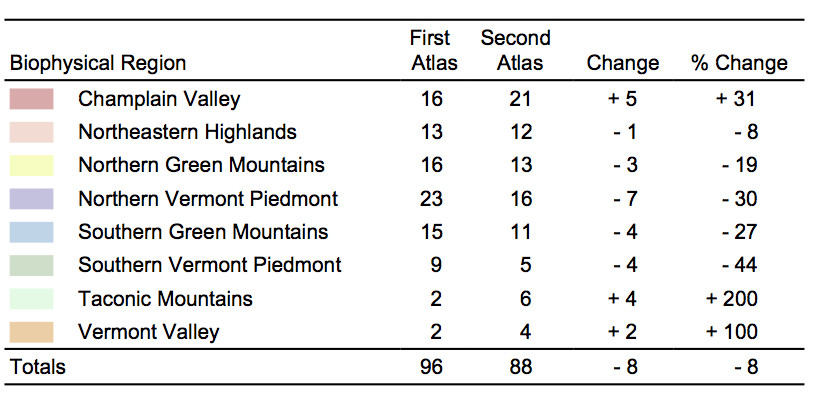
- Status in VT: Decreased by 8% (96 to 88 blocks). Greatest decrease in Southern Vermont Piedmont. Decrease somewhat offset by increases in Taconic Mountains and Vermont Valley.
- Data from other research: No additional data for VT.
- Conservation status: State rank S4S5B
- Other atlases: NY: 4%; PA: -29%; ON: 12%
- VT’s role in North American range: VT is within the core of the range.
- Causes of change since first Atlas: Loss of critical wintering habitat (?).
- Management/Monitoring recommendations: No current recommendations.
Population Trends
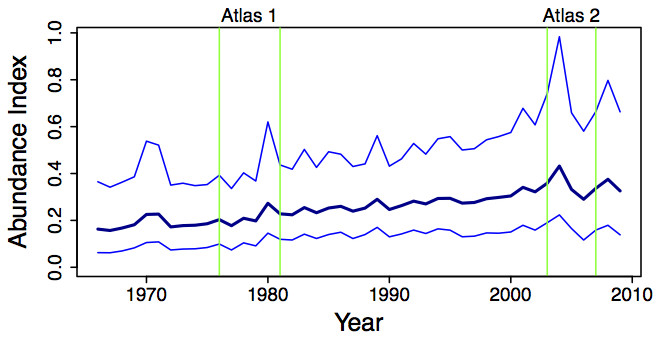
First Vermont Breeding Bird Atlas (1976-1981)
Species Account
Second Vermont Breeding Bird Atlas (2003 – 2007)
Species Account
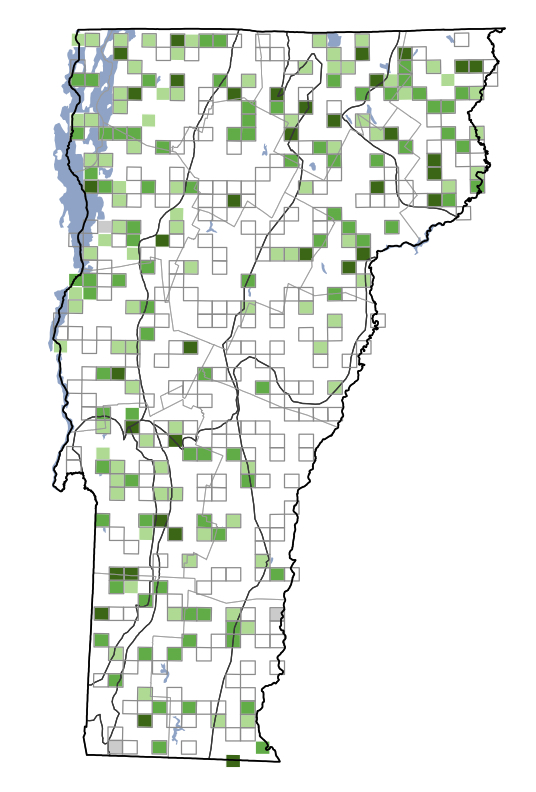
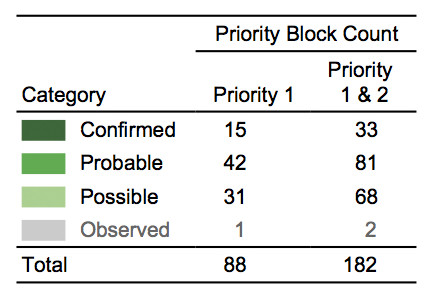
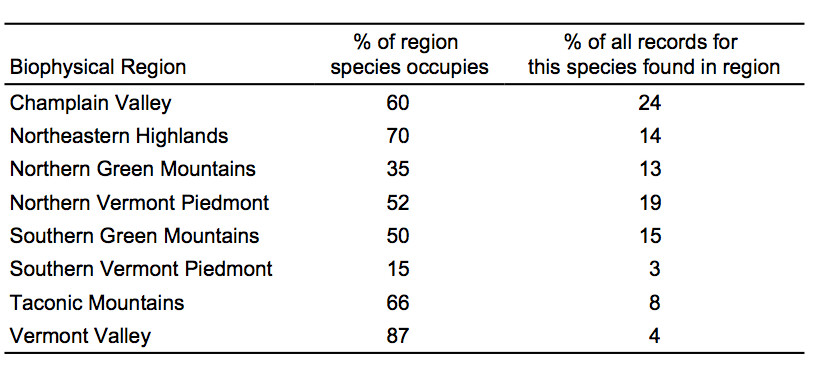
Change in Distribution

Links
Vermont eBird
Encyclopedia of Life
All About Birds