Skip to content
Wood Thrush (Hylocichla mustelina)
Summary
- Natural history: A century ago, naturalists considered the Wood Thrush uncommon in Vermont, but as abandoned farmland reverted to forest through the twentieth century, the damp, leaf-carpeted hardwoods it needs for nesting and foraging became more common, and its population grew along with it. Its more recent decline appears to stem from several compounding causes rather than one clear culprit, including acid rain that strips calcium-rich invertebrates from its food supply and shrinking wintering habitat in Central America. Nests are usually built low in a shrub or sapling, three to four meters up, and tend to sit progressively higher as the summer breeding season wears on.
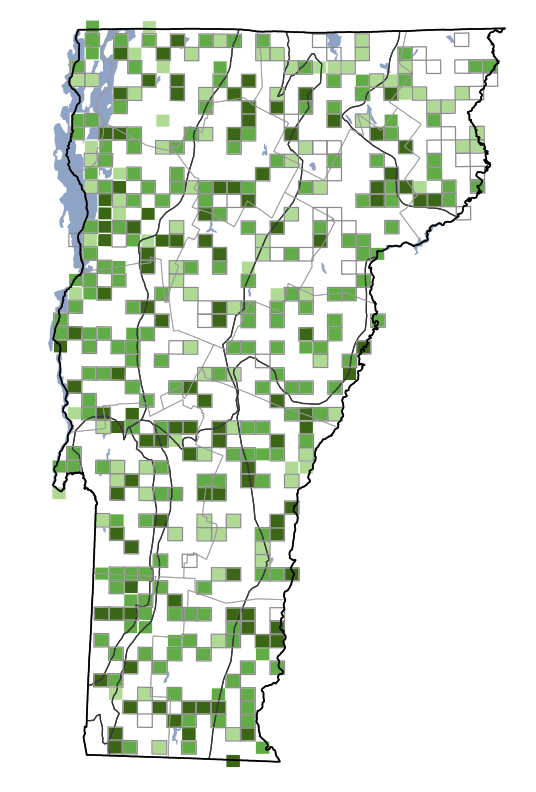
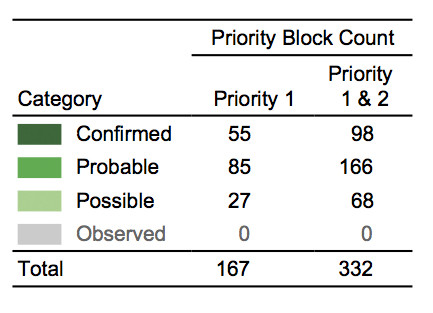
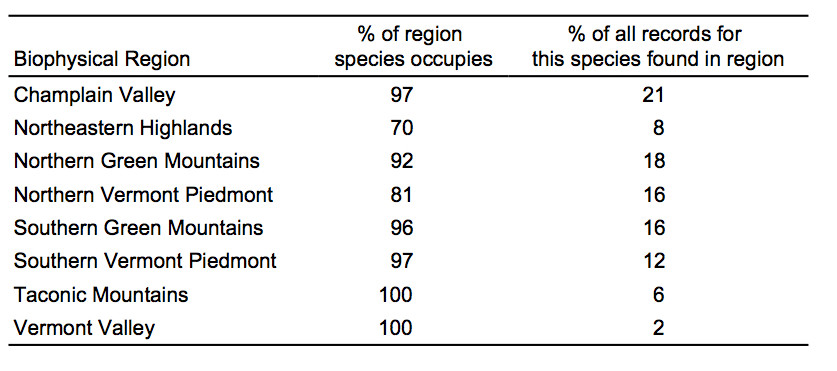
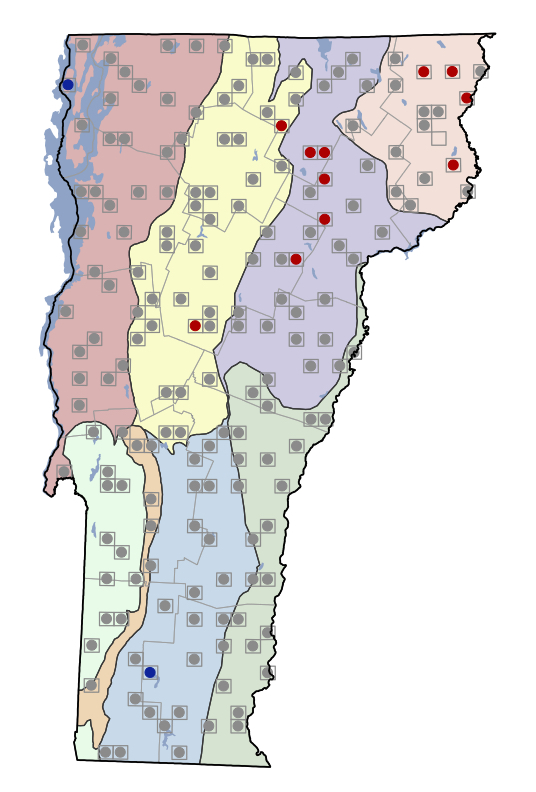
- Status in VT: Decreased by 5% (176 to 167 blocks). Greatest decreases in Northeastern Highlands and Northern Vermont Piedmont.
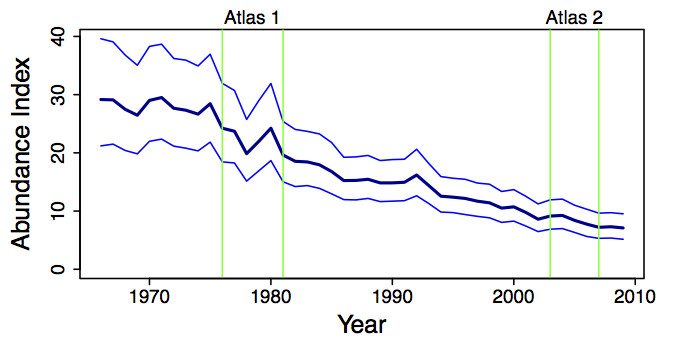
- Data from other research: FBMP: significant annual decrease of 6.0%
- Conservation status: State rank S5B; SSC; SGCN-M
- Other atlases: NY: losses concentrated in Adirondack Mountains
- VT’s role in North American range: VT is within the core of the range.
- Causes of change since first Atlas: Forest maturation; reduced availability of calcium-rich invertebrate prey due to forest acidification; increased nest predation and parasitism resulting from habitat fragmentation; loss of habitat on wintering grounds.
- Management/Monitoring recommendations: Habitat conservation on breeding and wintering grounds.
Population Trends
First Vermont Breeding Bird Atlas (1976-1981)
Species Account
Second Vermont Breeding Bird Atlas (2003 – 2007)
Species Account
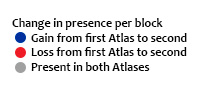
Change in Distribution

Links
Vermont eBird
Encyclopedia of Life
All About Birds