Skip to content
Yellow-bellied Sapsucker (Sphyrapicus varius)
Summary
- Natural history: Yellow-bellied Sapsuckers drill neat rows of shallow wells into tree bark to feed on the sap and insects it attracts, a food source so valuable to other wildlife that Ruby-throated Hummingbirds sometimes nest near a productive well and will defend it from rival hummingbirds. The species favors young forest that springs up after disturbance, often choosing aspens softened by heartwood rot for its nest cavity, and males looking to attract mates will hammer on metal signs, mailboxes, or house flashing to produce a drumbeat that carries for hundreds of meters.
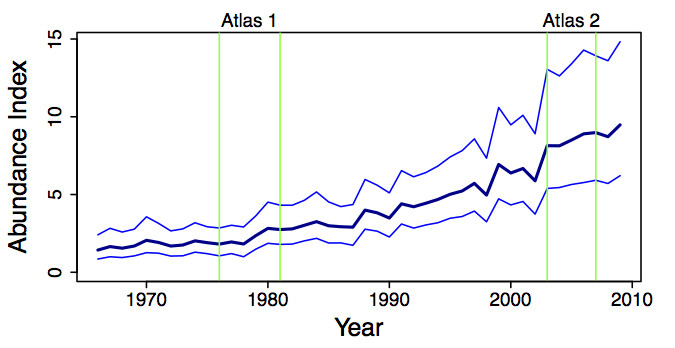
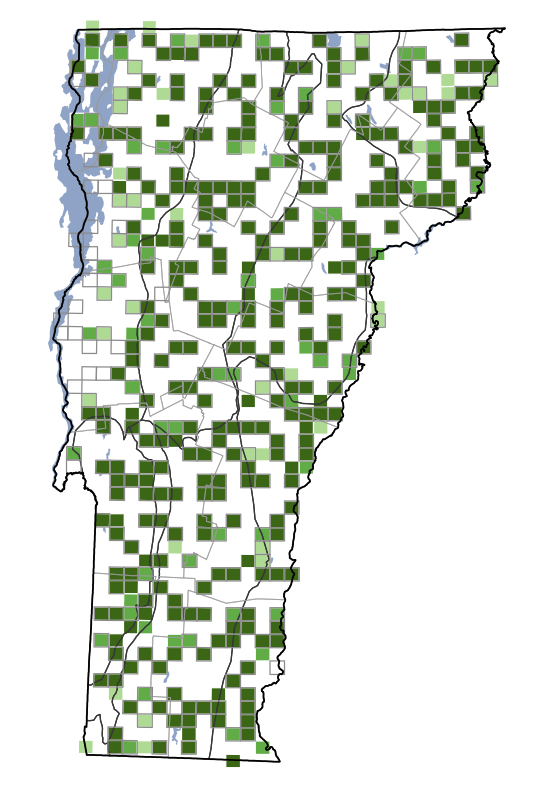
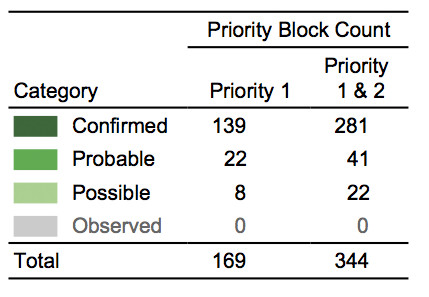
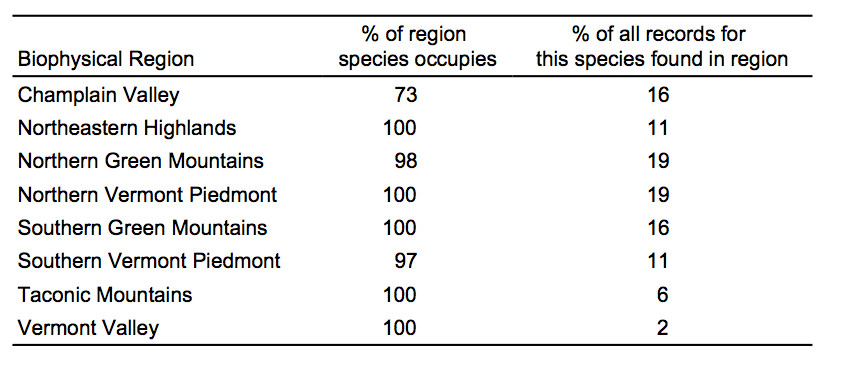
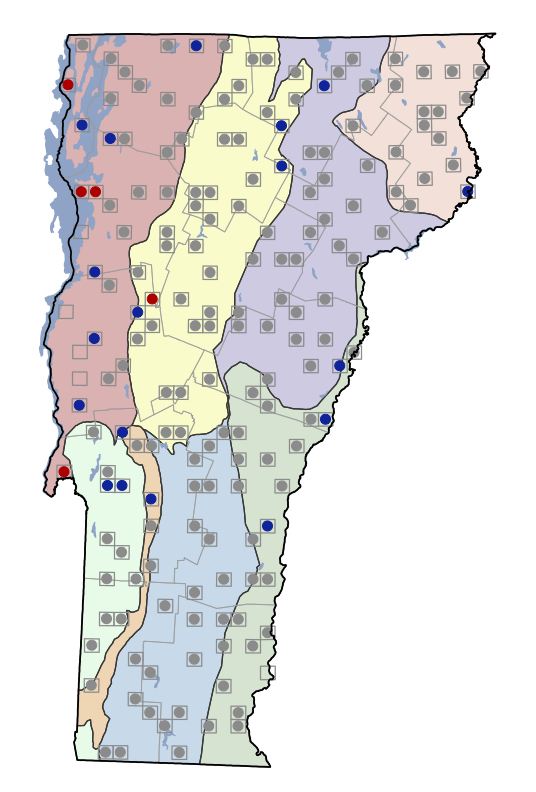
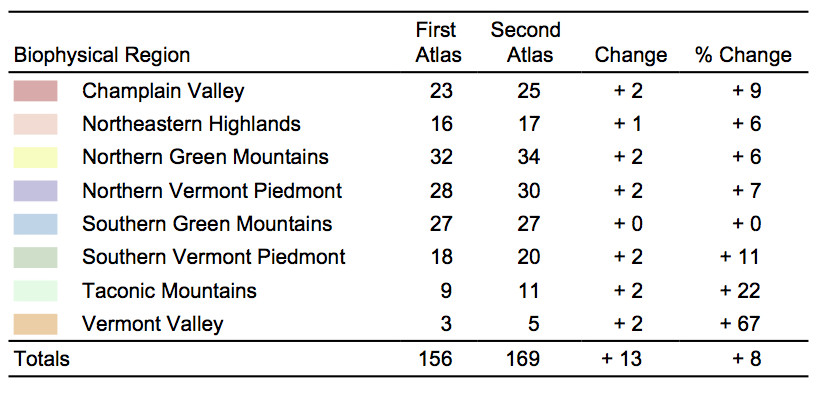
- Status in VT: Increased by 8% (156 to 169 blocks). Increases throughout the state.
- Data from other research: FBMP: Significant annual increase (P = 0.04)
- Conservation status: State rank S5B
- Other atlases: NY: 52%; PA: 101%; ON: no sig. change.
- VT’s role in North American range: VT is within the core of the range.
- Causes of change since first Atlas: Increase in mid-successional habitat due to continued regrowth on former agricultural lands (?).
- Management/Monitoring recommendations:No current recommendations.
Population Trends
First Vermont Breeding Bird Atlas (1976-1981)
Species Account
Second Vermont Breeding Bird Atlas (2003 – 2007)
Species Account
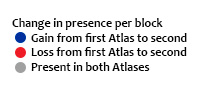
Change in Distribution
Links
Vermont eBird
Encyclopedia of Life
All About Birds