Skip to content
Tufted Titmouse (Baeolophus bicolor)
Summary
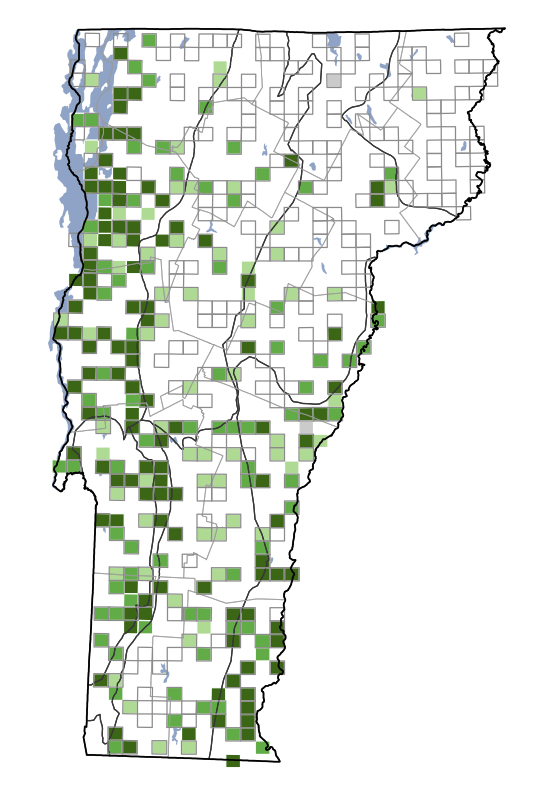
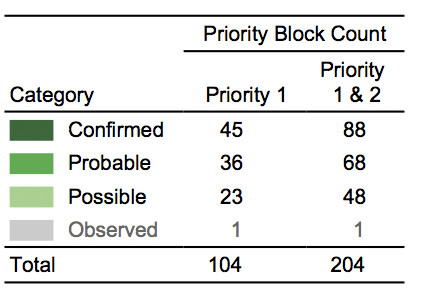
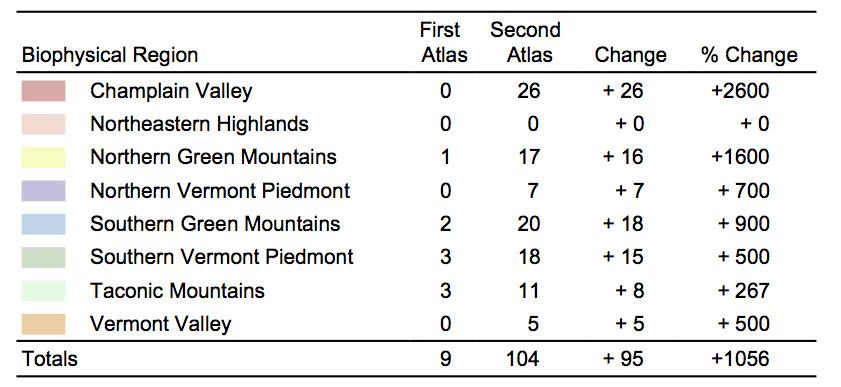
- Natural history: The Tufted Titmouse’s range crept only as far north as southern New York before the early 1900s, but a roughly 70-year northward push brought it to Massachusetts by the late 1950s and Vermont by 1976. Here it went from just 9 occupied blocks in the First Atlas to 104 in the Second Atlas, a colonization credited to a warming climate, maturing forests, and winter bird feeders.
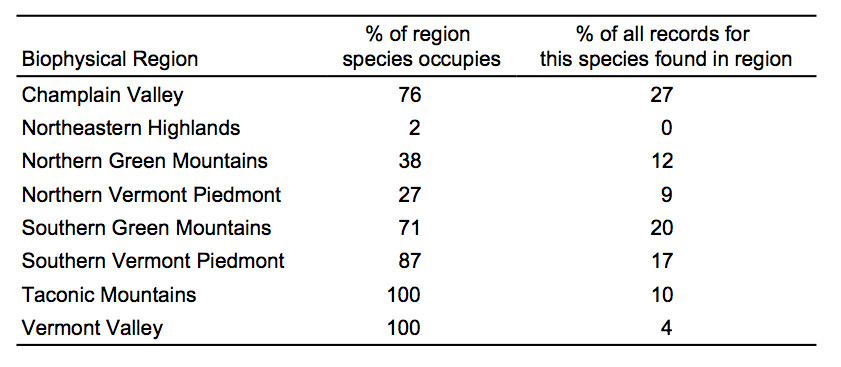
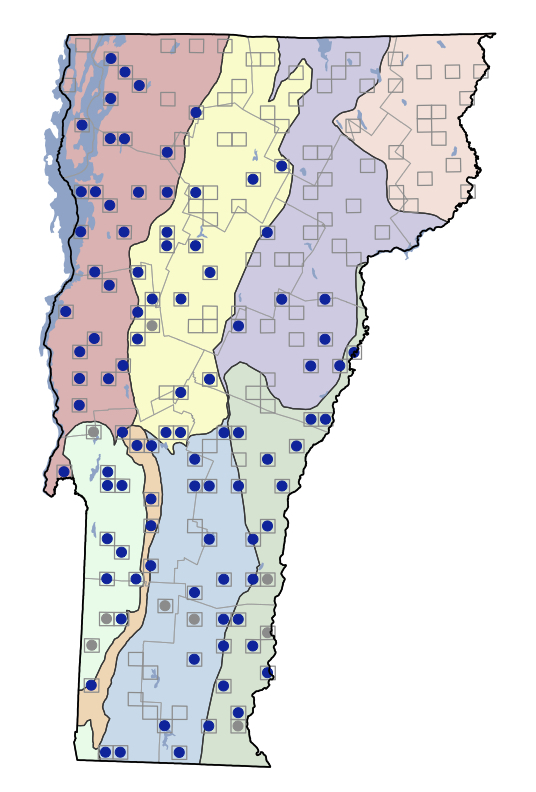
- Status in VT: Increased by 1,056% (9 to 104 blocks). Greatest increases in Champlain Valley and Northern Green Mountains.
- Data from other research: FBMP: annual increase of 12.4%
- Conservation status: State rank S5
- Other atlases: NY: 84%; PA: 15%
- VT’s role in North American range: VT is at the northern edge of the range.
- Causes of change since first Atlas: warming climate; forest maturation; increase in winter feeding stations.
- Management/Monitoring recommendations:No current recommendations.
First Vermont Breeding Bird Atlas (1976-1981)
Species Account
Second Vermont Breeding Bird Atlas (2003 – 2007)
Species Account
Change in Distribution

Links
Vermont eBird
Encyclopedia of Life
All About Birds