Skip to content
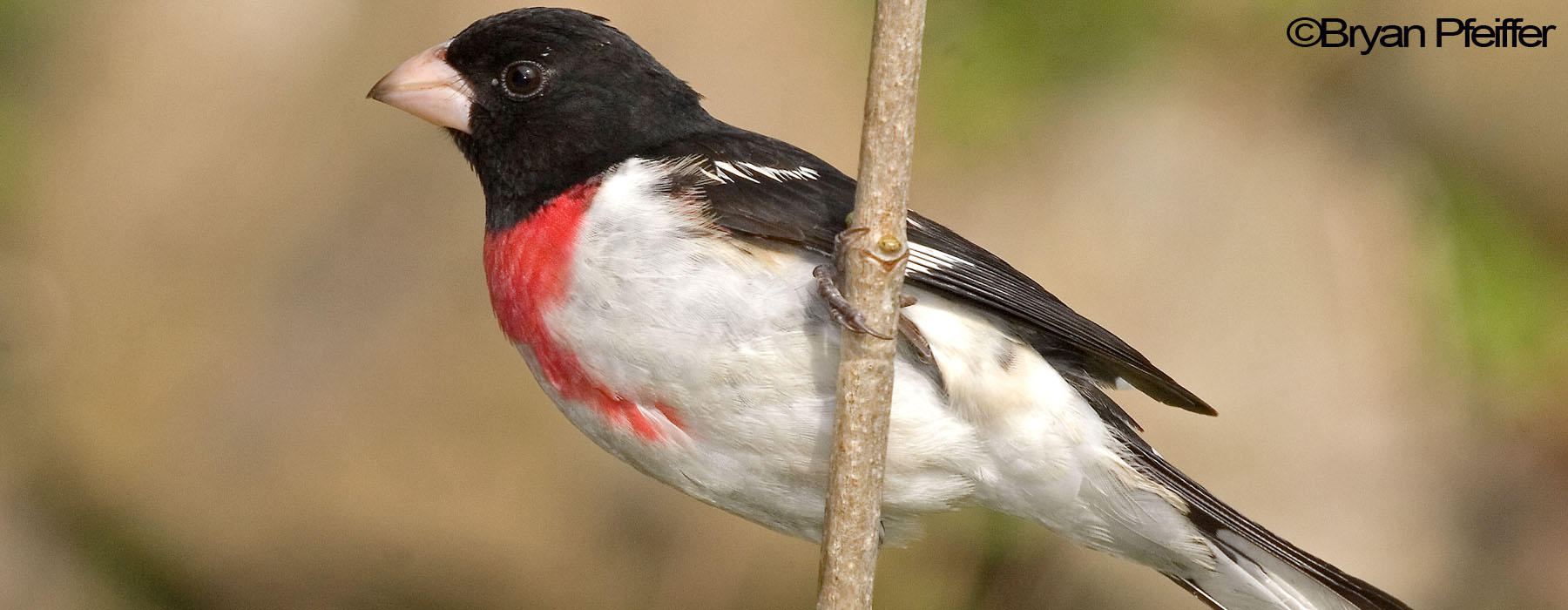
Rose-breasted Grosbeak (Pheucticus ludovicianus)
Summary
- Natural history: Long before European settlement, Rose-breasted Grosbeaks likely thrived on the open, brushy patches created by beavers, windstorms, insect outbreaks, wildfire, and even abandoned Native American village clearings, and the species probably declined when nearly 85 percent of Vermont’s forest was cut for farms in the 1800s, though it never became rare. Today the birds return to Vermont in late April and become regulars at sunflower feeders, so much so that one breeding confirmation during the Second Atlas came from a family of fledglings begging for food at a backyard feeder. Southern Vermont now holds some of the densest Rose-breasted Grosbeak populations found anywhere in New England, even though the species’ true population center lies far to the west in Wisconsin.
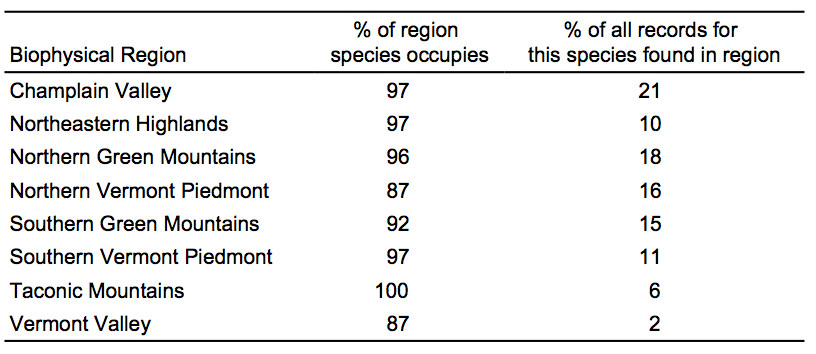
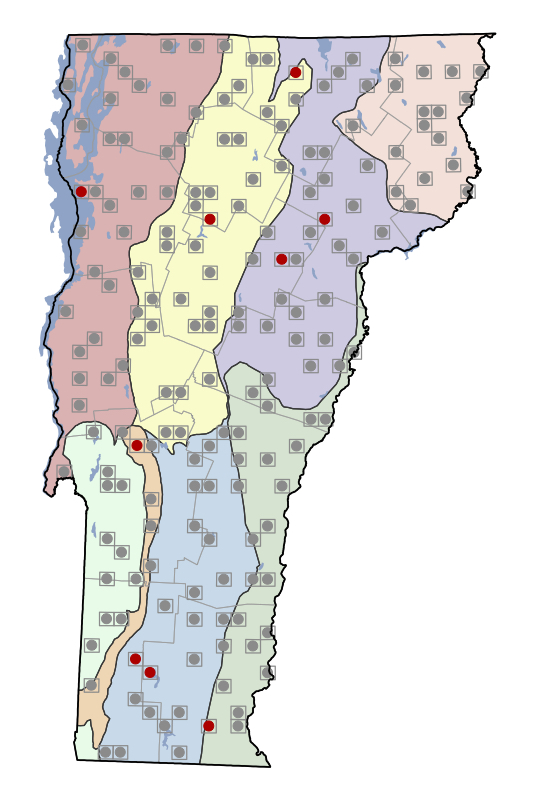
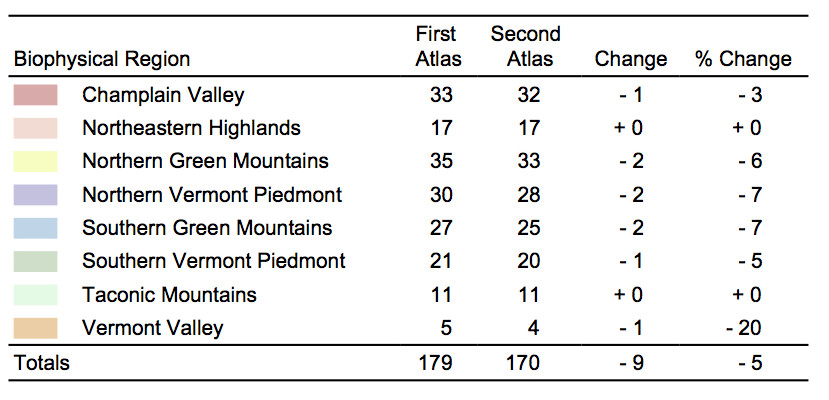
- Status in VT: Decreased by 4% (179 to 171 blocks).
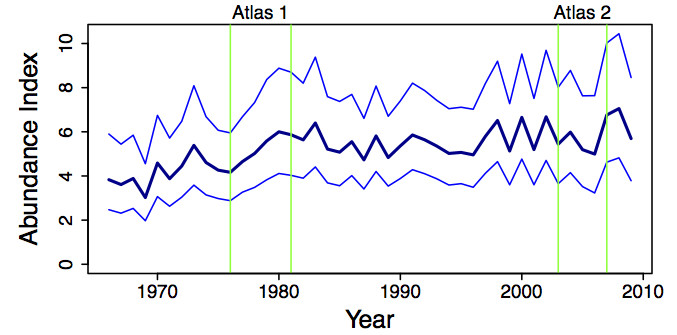
- Data from other research: FBMP: No sig. trend.
- Conservation status: State rank S5B
- Other atlases: NY: -6%; PA: 13%; ON: -8%
- VT’s role in North American range: VT is within the core of the range.
- Causes of change since first Atlas: Increase in canopy closure and shading of understory due to maturation of secondary forests (?).
- Management/Monitoring recommendations:Selective cutting of larger patches of forests in order to open the canopy and increase understory density.
Population Trends
First Vermont Breeding Bird Atlas (1976-1981)
Species Account
Second Vermont Breeding Bird Atlas (2003 – 2007)
Species Account
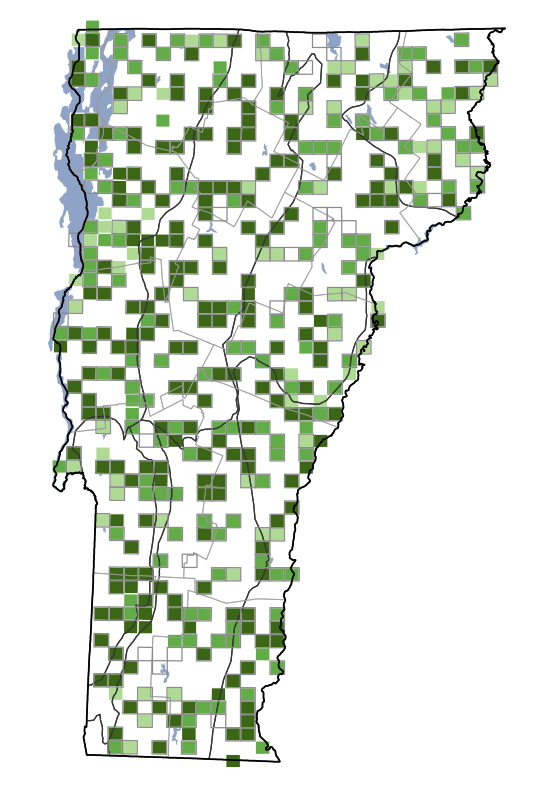
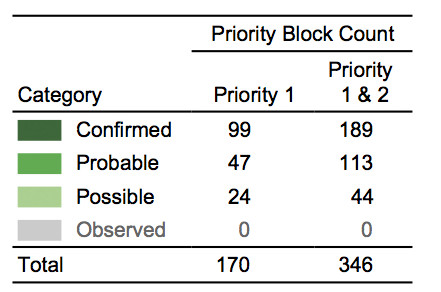
Change in Distribution

Links
Vermont eBird
Encyclopedia of Life
All About Birds