Skip to content
Purple Martin (Progne subis)
Summary
- Natural history: The Purple Martin is the only bird in eastern North America whose survival now depends almost entirely on nest boxes and gourds that people put up for it, a relationship that began when Native Americans hung hollow gourds for the birds before European settlement. Vermont’s colonies, once scattered well inland and through the southern Champlain Valley, have contracted to just two clusters in Grand Isle and northwestern Addison counties, mirroring a broader Northeastern collapse blamed on nest-site competition, cold snaps that can kill adults outright, and pesticide exposure on their South American wintering grounds.
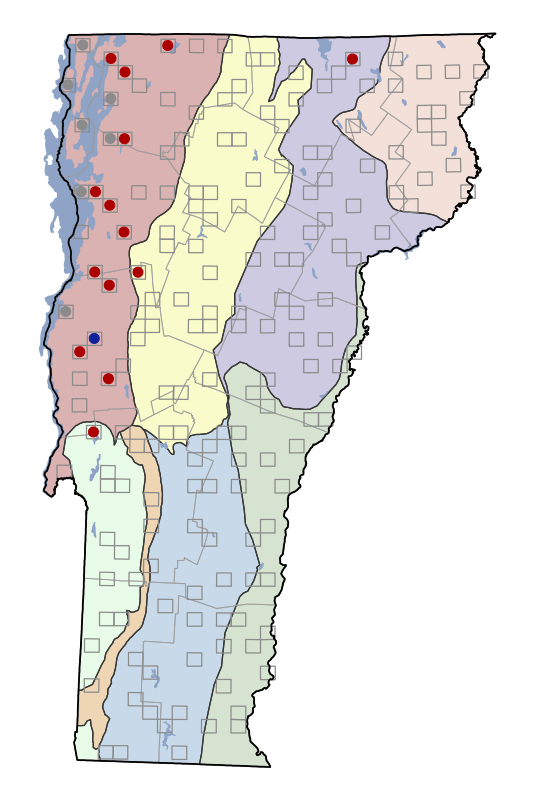
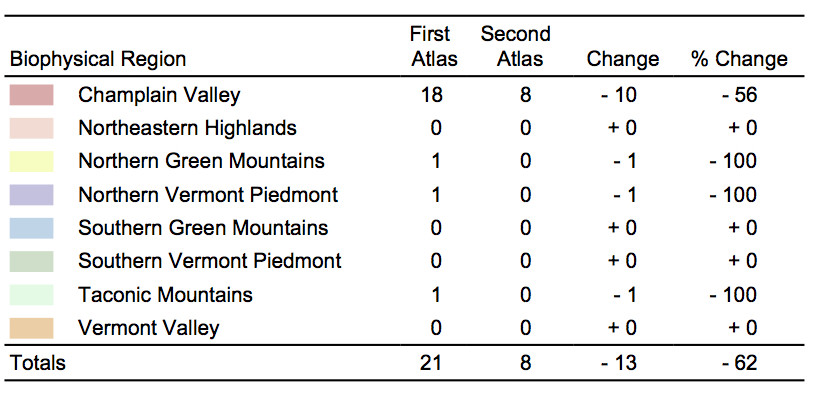
- Status in VT: Decreased by 62% (21 to 8 blocks). Greatest decreases in Northern Green Mountains, Northern Vermont Piedmont, and Taconic Mountains.
- Data from other research: No additional data for VT.
- Conservation status: State rank S3B; SSC; SGCN-M
- Other atlases: NY, ON, PA: decreases ranging from 39 to 48%
- VT’s role in North American range: VT is at the northeastern edge of the range.
- Causes of change since first Atlas: Cold and wet weather reduces prey availability and can result in adult mortality and nest failure (not necessarily a cause of Atlas changes, however); use of pesticides in wintering areas.
- Management/Monitoring recommendations: Provide housing and supplemental food (see Purple Martin Conservation Association.
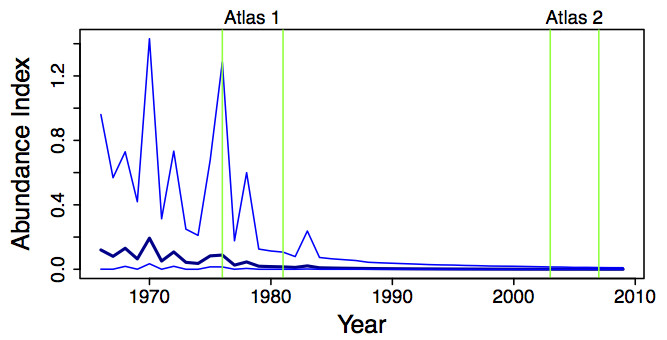
Population Trends
First Vermont Breeding Bird Atlas (1976-1981)
Species Account
Second Vermont Breeding Bird Atlas (2003 – 2007)
Species Account
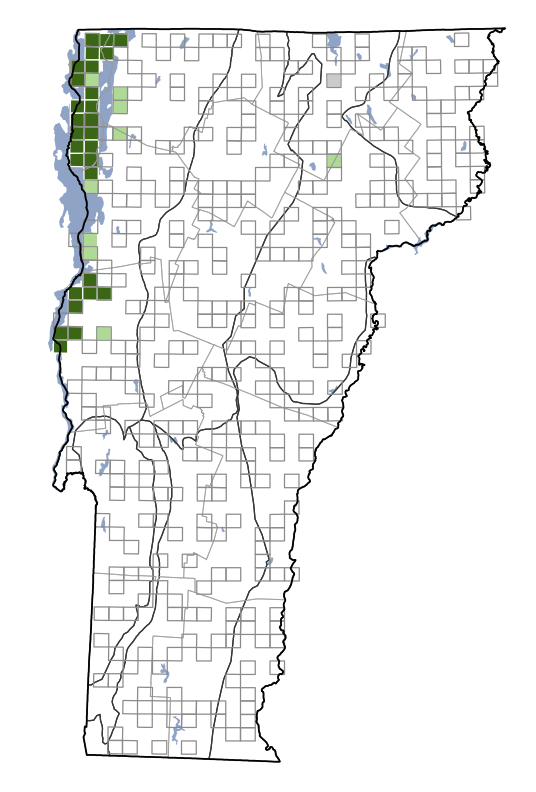
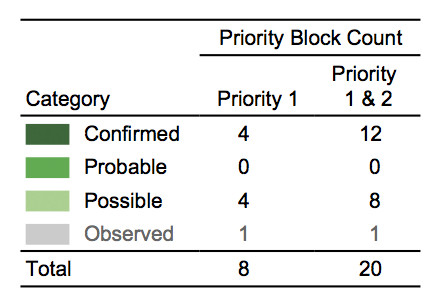
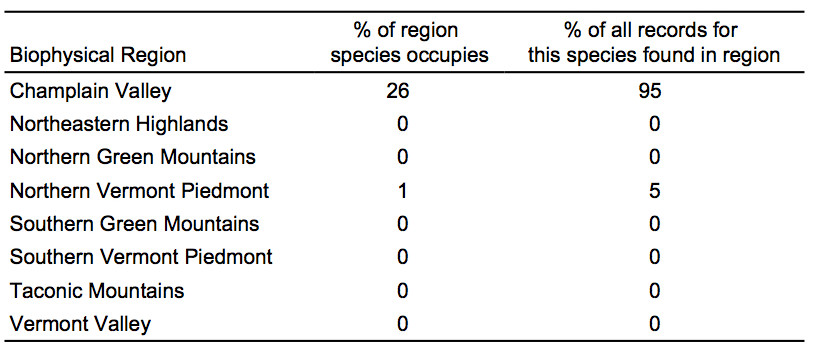
Change in Distribution

Links
Vermont eBird
Encyclopedia of Life
All About Birds