Summary
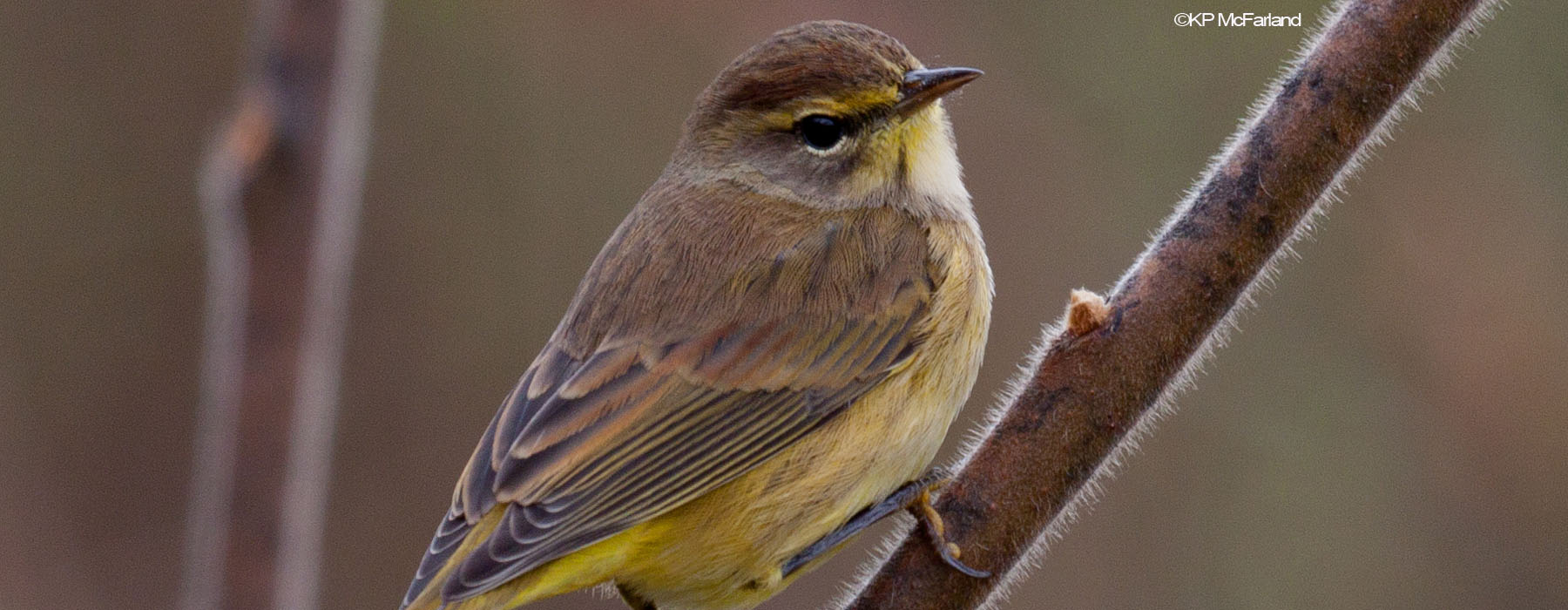
- Natural history: The Palm Warbler earned its name from ornithologists who first met the species on its Caribbean wintering grounds, never guessing that its true home is the bogs and muskeg of the far north, where unlike most of its relatives it builds its nest directly on the ground rather than up in a shrub. Vermont did not confirm its first nest until 1993, in a remote corner of the Nulhegan River watershed, part of a puzzling southward creep also documented in New York and New Hampshire. That spread runs opposite the northward shifts that climate change is expected to cause in boreal species, and no one is certain why, though increased logging in northern Maine may be pushing young birds to disperse into new territory.
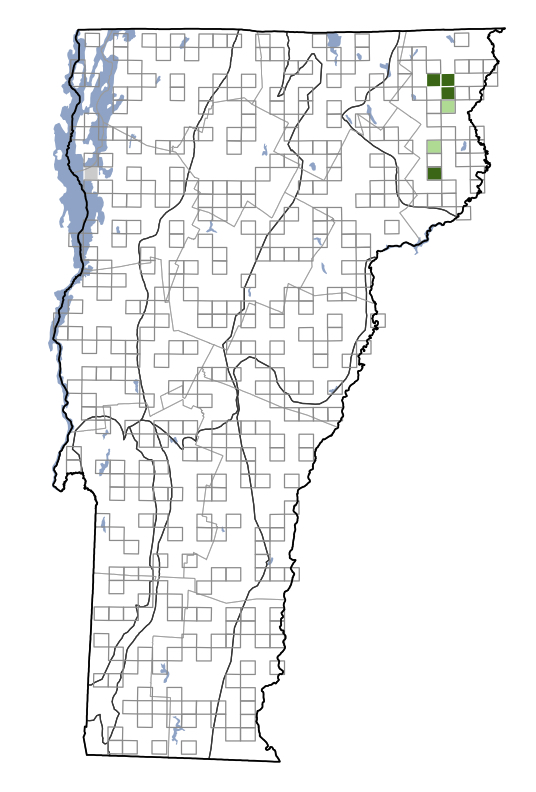
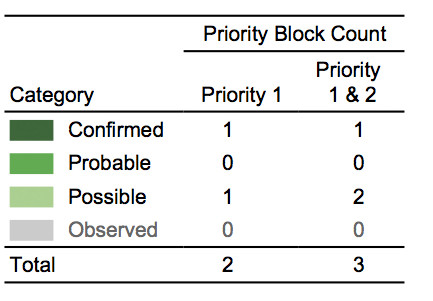
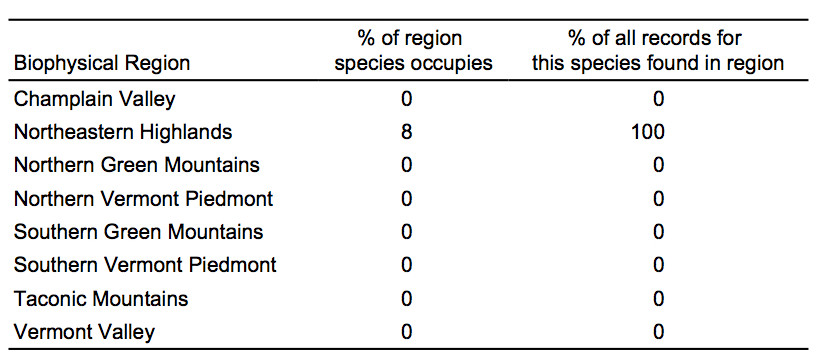
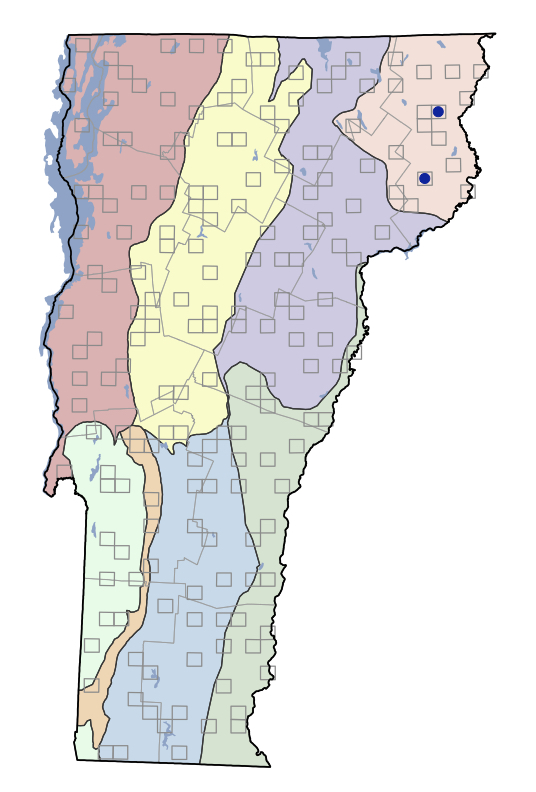
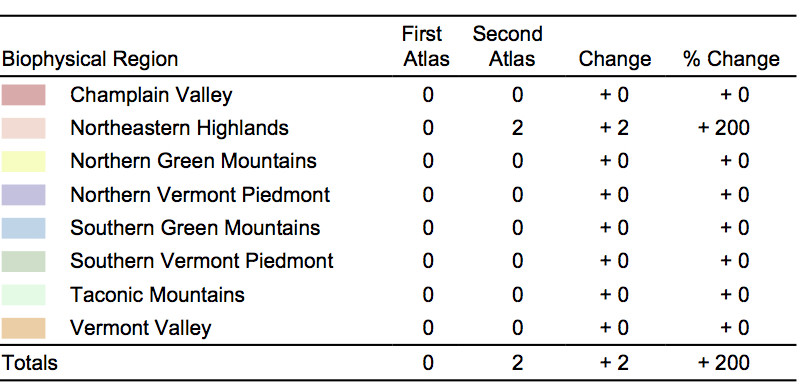
- Status in VT: Increased by 200% (0 to 2 blocks). Increase in Northeastern Highlands.
- Data from other research: No additional data for VT.
- Conservation status: State rank S1B
- Other atlases: NY: 4,300%; ON: 74%
- VT’s role in North American range: VT is south of the core of the range.
- Causes of change since first Atlas: Extensive timber harvesting in northern Maine resulted in increased populations and dispersal, leading to westward expansion (?).
- Management/Monitoring recommendations: Research is needed on habitat requirements and reproductive success.
First Vermont Breeding Bird Atlas (1976-1981)
No Species Account Available
Second Vermont Breeding Bird Atlas (2003 – 2007)
Change in Distribution

Links