Summary
- Natural history: Despite one of the widest breeding ranges of any North American bird and a strong tolerance for nesting alongside people, Killdeer declined faster in Vermont (2.5 percent per year on Breeding Bird Survey routes) than across the continent as a whole (0.8 percent) between 1982 and 2007, a trend attributed mainly to the abandonment and reforestation of marginal farmland.
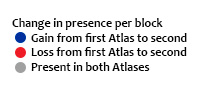
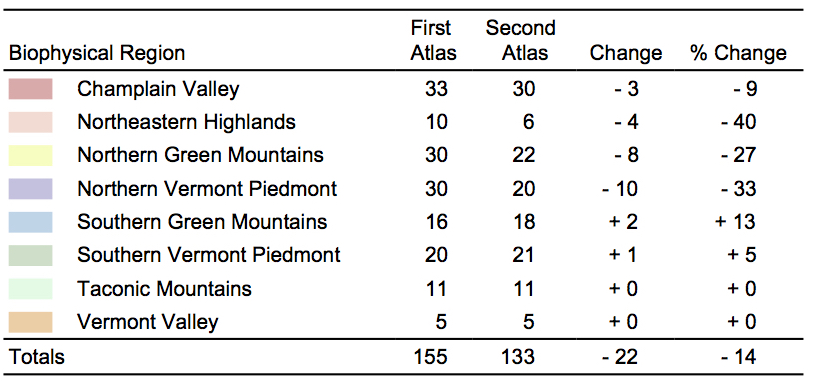
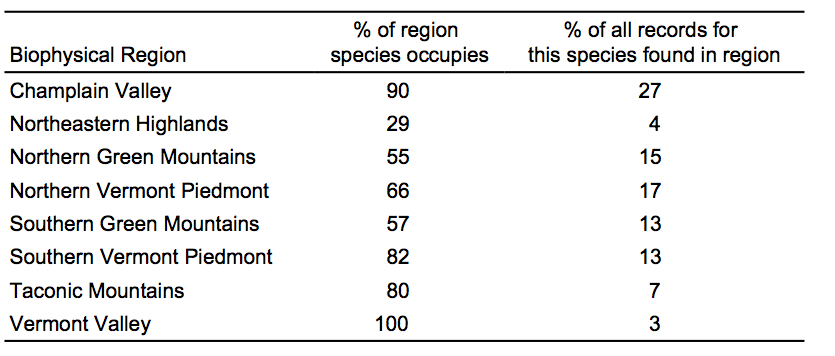
- Status in VT: Decreased by 14% (155 to 133 blocks). Greatest decreases in Northeastern Highlands, Northern Green Mountains.
- Data from other research: No additional data for VT.
- Conservation status: State rank S5B
- Other atlases: NY: little change; ON: -16%
- VT’s role in North American range: VT is within the core of the range.
- Causes of change since first Atlas:Abandonment and subsequent reforestation of marginal agricultural land; nest disruption by plowing and harvest; application of agricultural pesticides.
- Management/Monitoring recommendations: No specific recommendations.
First Vermont Breeding Bird Atlas (1976-1981)
Second Vermont Breeding Bird Atlas (2003 – 2007)

Change in Distribution