Summary
- Natural history: Plume hunters targeted Great Blue Herons hard in the 1800s, and the outcry that followed helped spark some of the country’s earliest organized bird conservation efforts, even though by 1901 Vermont observers still considered the species only ‘not uncommon.’ Most colonies here are small and short-lived, shifting location every few years, with the notable exception of the persistently large heronry on Shad Island at Missisquoi National Wildlife Refuge, which has held between 250 and 600 nests annually for decades. Because adult herons may forage miles from the nest, uncertainty has always surrounded exactly how many pairs breed here, and the state still lists the species as a conservation priority because winter food shortages and human disturbance near colonies can suppress reproduction even as overall numbers grow.
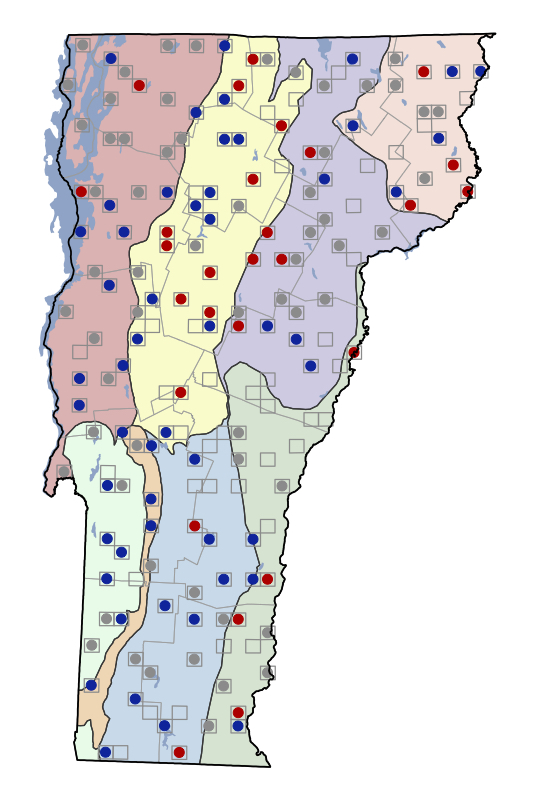
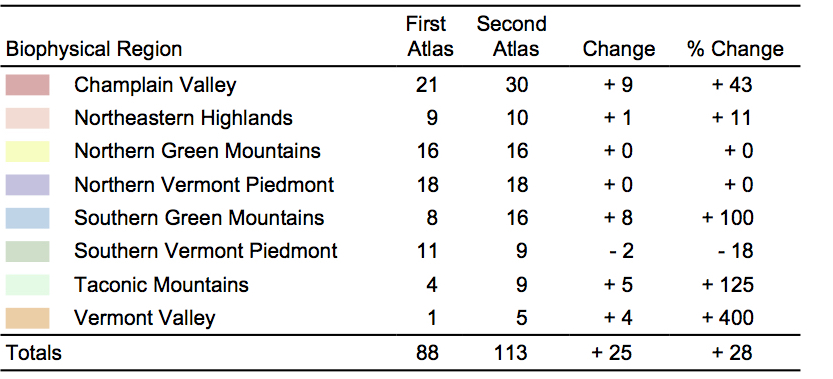
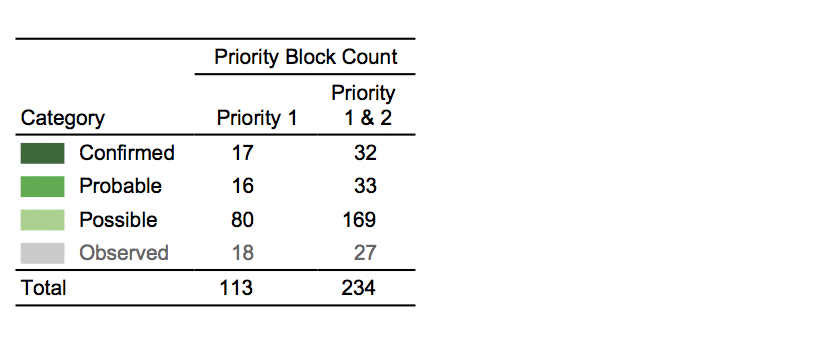
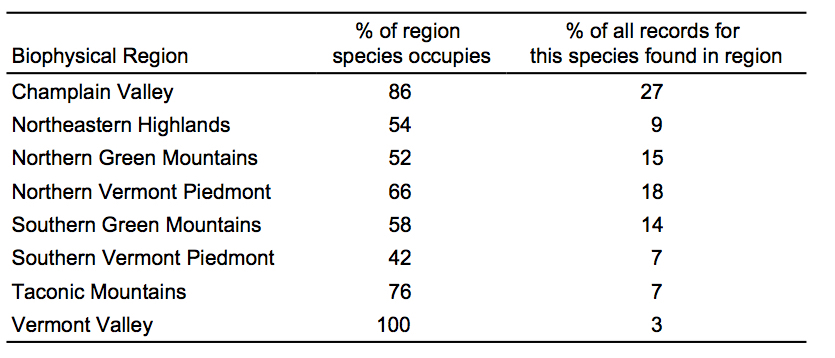
- Status in VT: Increased by 28% (88 to 113 blocks). Greatest increase in blocks in Champlain Valley.
- Data from other research: No additional data for VT.
- Conservation status: State rank S3S4B; SGCN-M
- Other atlases: NY: 20%; PA: 28%; ON: -22%
- VT’s role in North American range: VT is within the core of the range.
- Causes of change since first Atlas: Unknown.
- Management/Monitoring recommendations:Protection of colonies from disturbance during breeding period.
First Vermont Breeding Bird Atlas (1976-1981)
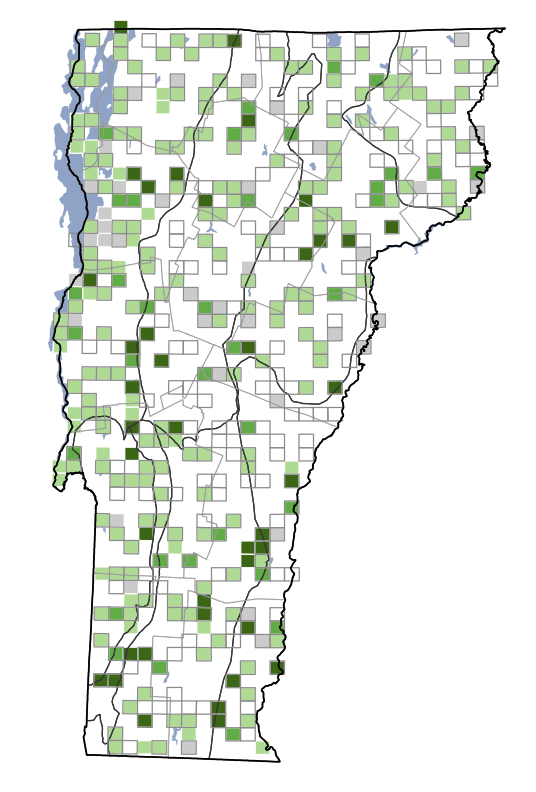
Second Vermont Breeding Bird Atlas (2003 – 2007)
Change in Distribution