Summary
- Natural history: The Fish Crow spent centuries as a strictly coastal bird no farther north than New Jersey, then suddenly pushed inland up the Hudson, Connecticut, and other river valleys in the mid-1900s, typically jumping into new territory rather than spreading gradually outward. Vermont’s first breeding record, at South Burlington’s Red Rocks Park in 1998, likely grew out of that Hudson River population, and the bird remains easy to overlook because it looks nearly identical to the American Crow and is best told apart by its distinctive nasal, two-note call.
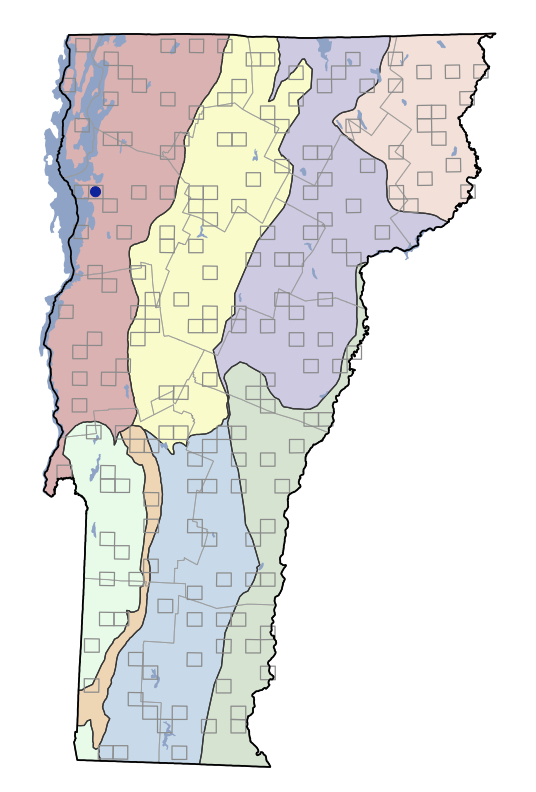
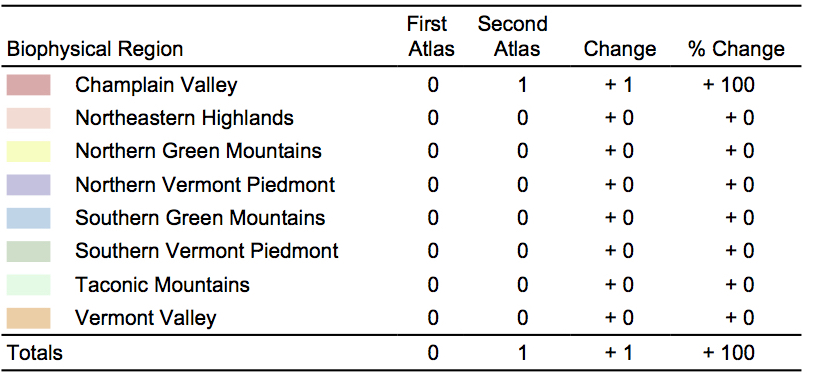
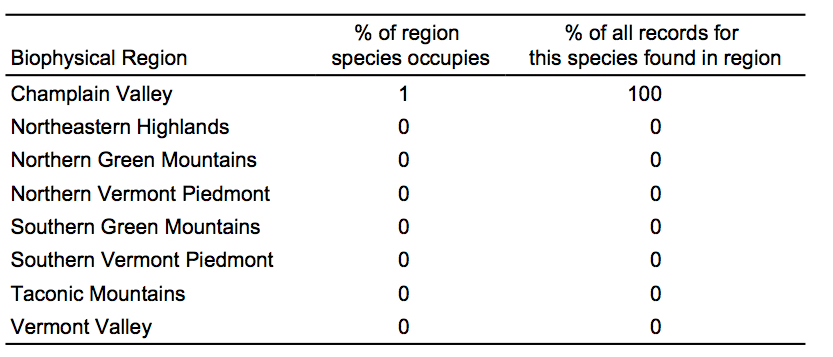
- Status in VT: Increased by 100% (0 to 1 block). A pair reported in Burlington area annually since 1998 successfully nested during the Atlas.
- Data from other research: No additional data for VT.
- Conservation status: State rank S1B
- Other atlases: NY: 54%; PA: 69%
- VT’s role in North American range: VT is disjunct from the core of the range.
- Causes of change since first Atlas: No change.
- Management/Monitoring recommendations:No current recommendations.
First Vermont Breeding Bird Atlas (1976-1981)
No Species Account Available
Second Vermont Breeding Bird Atlas (2003 – 2007)


Change in Distribution