Summary
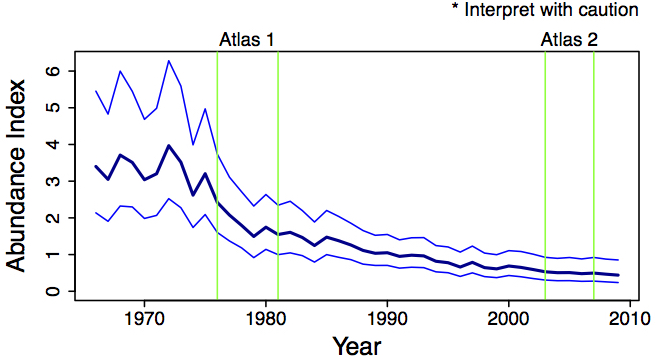
- Natural history: Field Sparrows favor overgrown pastures and old fields in the early stages of growing back to forest, a transient habitat that in New York studies vanished from a given field within about two decades. The species actually thrived when European settlers cleared Vermont’s forests for agriculture, but as those same fields have matured back into woods, its numbers have fallen sharply here and across the Northeast. Interestingly, adults tend to return to the same nesting grounds each year, but their offspring typically disperse to breed elsewhere, a habit tied to the shifting nature of the shrubby habitat itself.
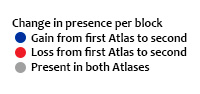
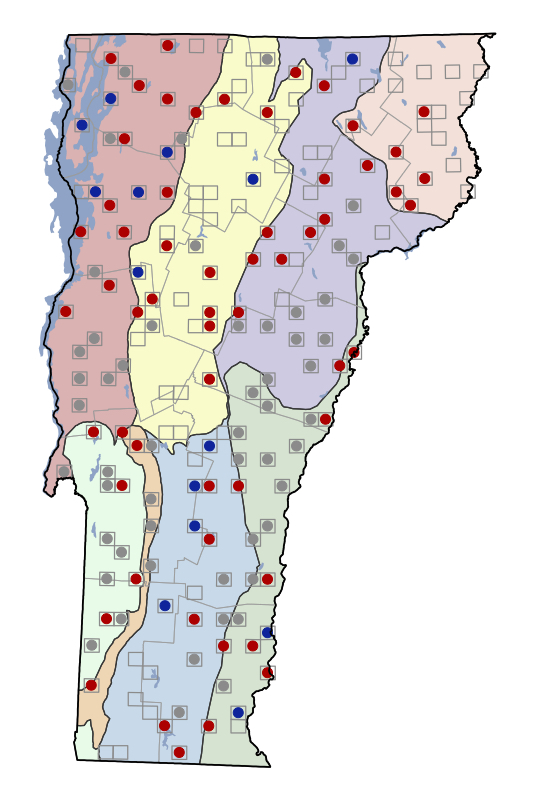
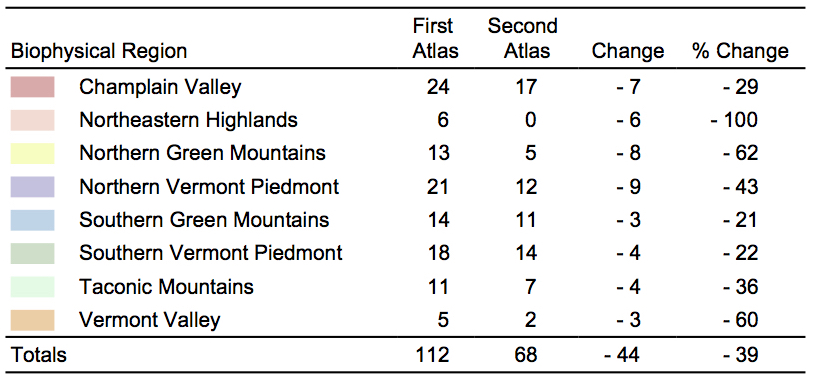
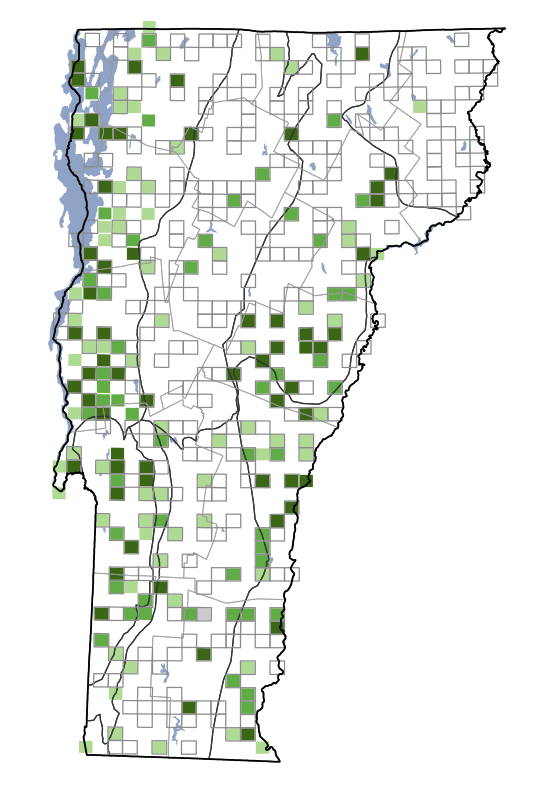
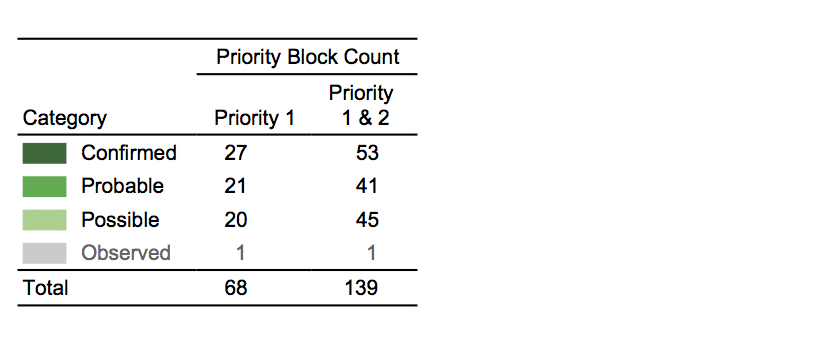
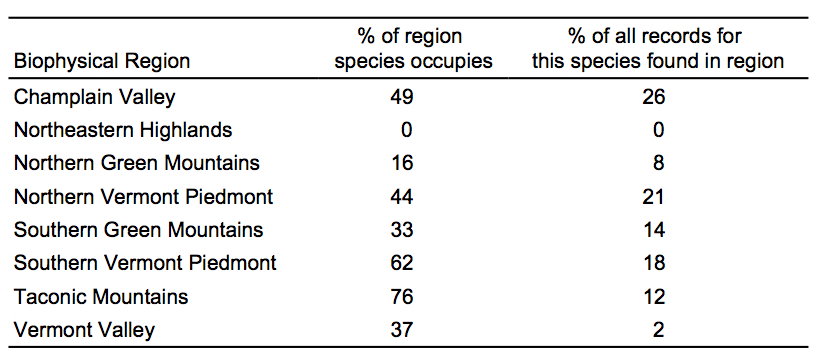
- Status in VT: Decreased by 39% (112 to 68 blocks). Greatest decrease in Northeastern Highlands.
- Data from other research: No additional data for VT.
- Conservation status: State rank S4B; SGCN-M; SSC
- Other atlases: NY: -16%; PA: +2%; ON: -33%
- VT’s role in North American range: VT is near the northern edge of the range.
- Causes of change since first Atlas: Loss of habitat through succession of abandoned farmland to forest.
- Management/Monitoring recommendations:Establishment and maintenance of at least one large management area (>1,000 ha) dedicated to early-successional species; WAP set population goal of 10,000 individuals.
Population Trends
First Vermont Breeding Bird Atlas (1976-1981)
Second Vermont Breeding Bird Atlas (2003 – 2007)
Change in Distribution