Summary
- Natural history: The Eastern Wood-Pewee is one of only a few long-distance migrants nesting in Vermont that keep singing well into late summer, long after their young have fledged, for reasons ornithologists still don’t fully understand, possibly to hold a feeding territory or stake a claim for next year. It nests in open deciduous woodland with a distinct edge nearby, and its slow decline has been linked both to the maturation of Vermont’s forests, which reduces that edge habitat, and to heavy browsing by white-tailed deer elsewhere in its range, which strips out the shrubby understory where pewees forage.
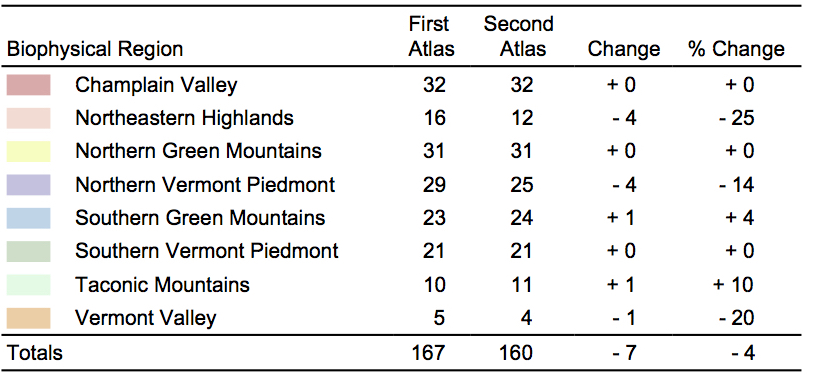
- Status in VT: Decreased by 4% (167 to 160 blocks). Greatest decrease in Northeastern Highlands.
- Data from other research: FBMP: no sig. trend.
- Conservation status: State rank S5B
- Other atlases: NY: -4%; PA: 1%; MD: 2%
- VT’s role in North American range: VT is within the core of the range.
- Causes of change since first Atlas: Depletion of subcanopy vegetation from extensive browsing by white-tailed deer (?); reduction of woodland habitat due to forest maturation (?).
- Management/Monitoring recommendations:No current recommendations.
Population Trends
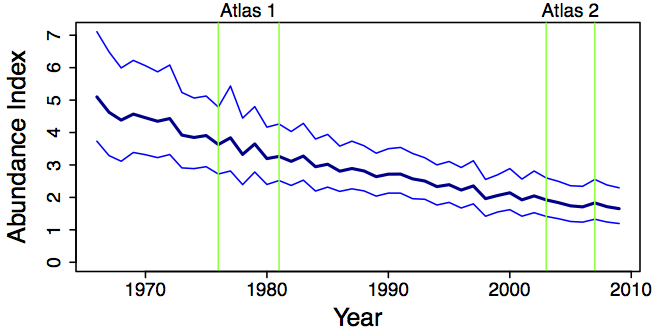
First Vermont Breeding Bird Atlas (1976-1981)
Second Vermont Breeding Bird Atlas (2003 – 2007)
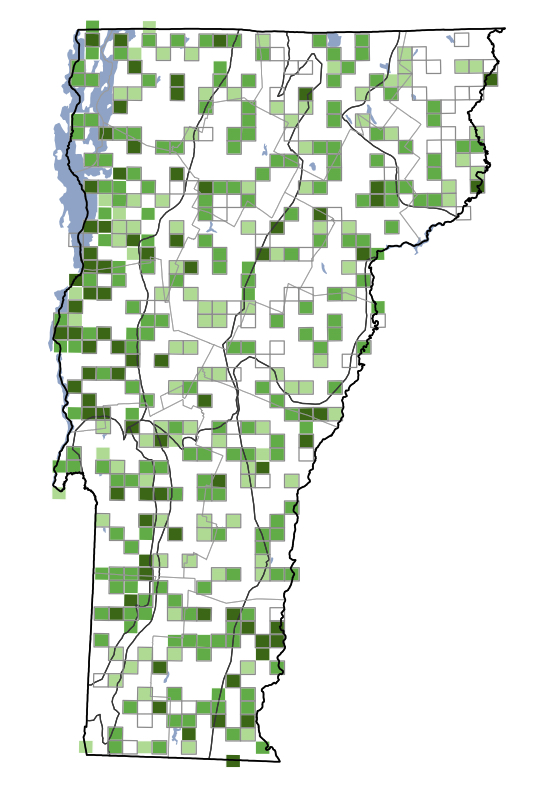

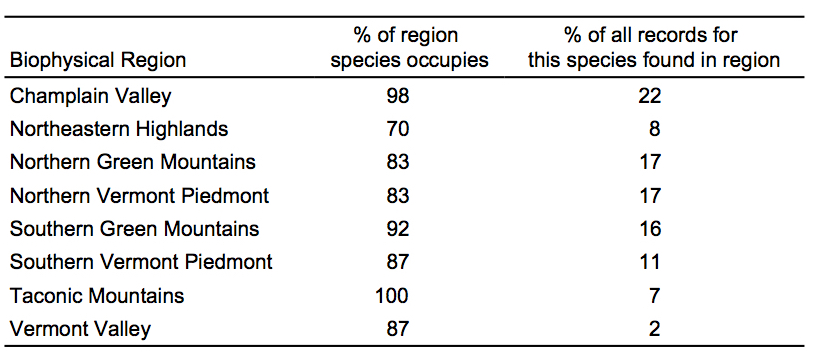
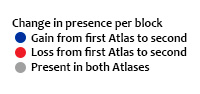
Change in Distribution

Links