Summary
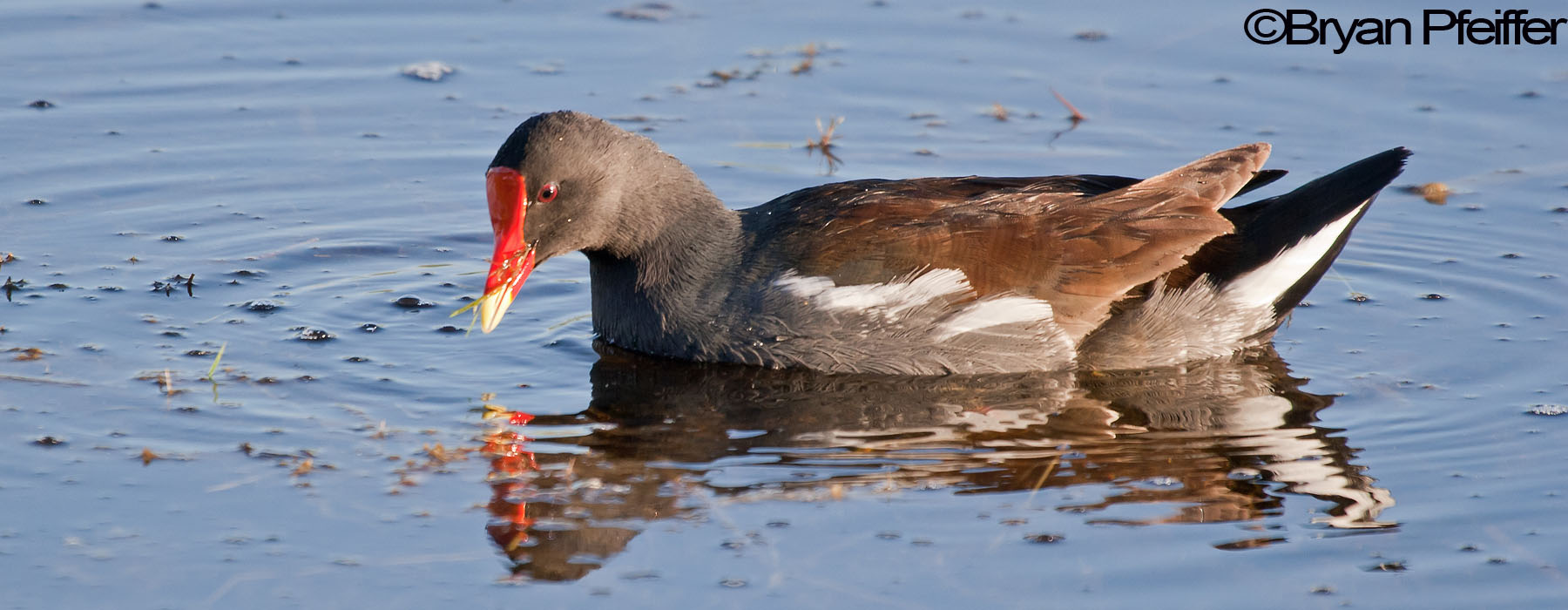
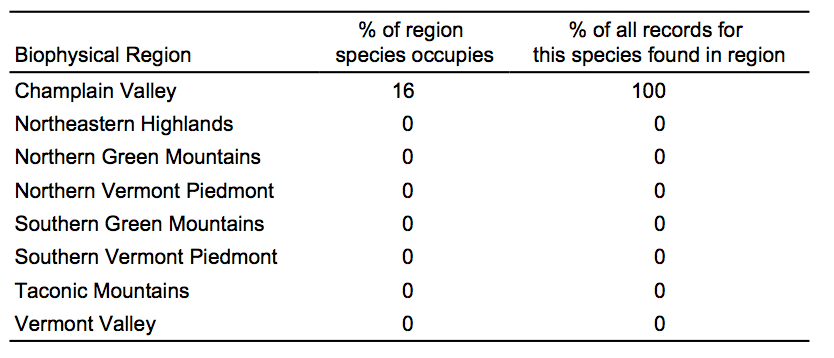
- Natural history: Common Moorhens are primarily birds of the Caribbean and South America that only pushed north into the United States and southern Canada during the twentieth century, and Vermont sits at the remote, unstable edge of that expanded range. Chicks are precocial and leave the nest quickly, so most Vermont breeding records come from sightings of young already out and about rather than active nests, and those young stay with their parents well into fall before reaching full size around ten weeks old. The species is confined almost entirely to the emergent marshes of the Champlain Valley, and biologists worry that invasive plants like purple loosestrife and Phragmites could crowd out the cattail habitat it depends on, as has happened to moorhen populations elsewhere in the Northeast.
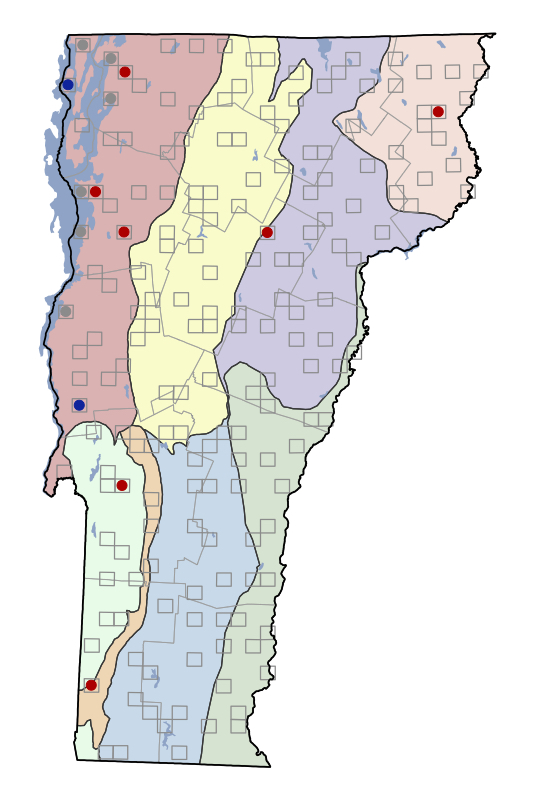
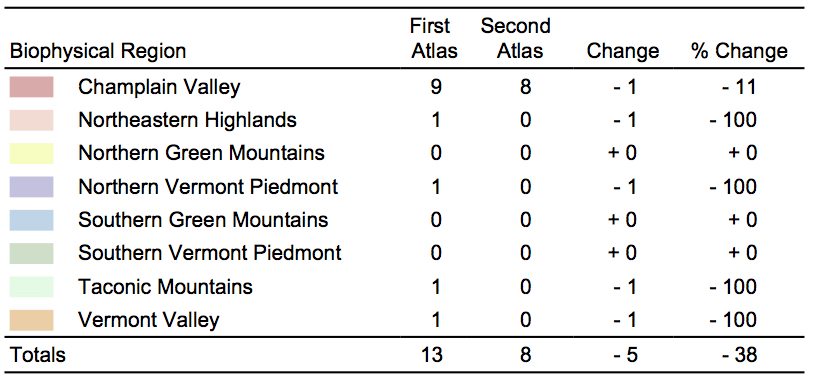
- Status in VT: Decreased by 38% (13 to 8 blocks). Lost from Northeastern Highlands, Northern Vermont Piedmont, Taconic Mountains, Vermont Valley.
- Data from other research: No additional data for VT.
- Conservation status: State rank S1S2B; SSC
- Other atlases: NY: substantial local decrease; PA: -36%; ON: -35%; MD: -15%
- VT’s role in North American range: VT is on the northeastern periphery of the range.
- Causes of change since first Atlas: Unknown, but potential exists for invasive plant species altering structure of cattail marshes and negatively affecting local populations.
- Management/Monitoring recommendations:Conduct surveys using standardized protocol.
First Vermont Breeding Bird Atlas (1976-1981)
Second Vermont Breeding Bird Atlas (2003 – 2007)
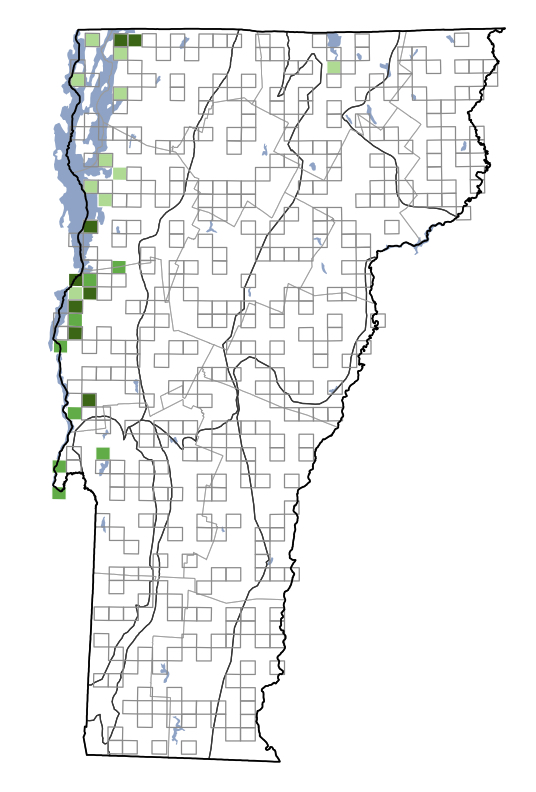

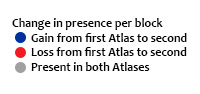
Change in Distribution