Summary
- Natural history: Cedar Waxwings are named for the small, red, wax-like droplets that tip their wing feathers, a feature that grows more pronounced with age and may help attract a mate. In parts of the Northeast, waxwings sometimes show orange rather than the usual yellow band at the tip of the tail, a shift traced to a diet that now includes berries from an introduced honeysuckle. Because sugary fruit is their primary food, waxwings nest later than most Vermont songbirds, often waiting until midsummer when berries are ripening.
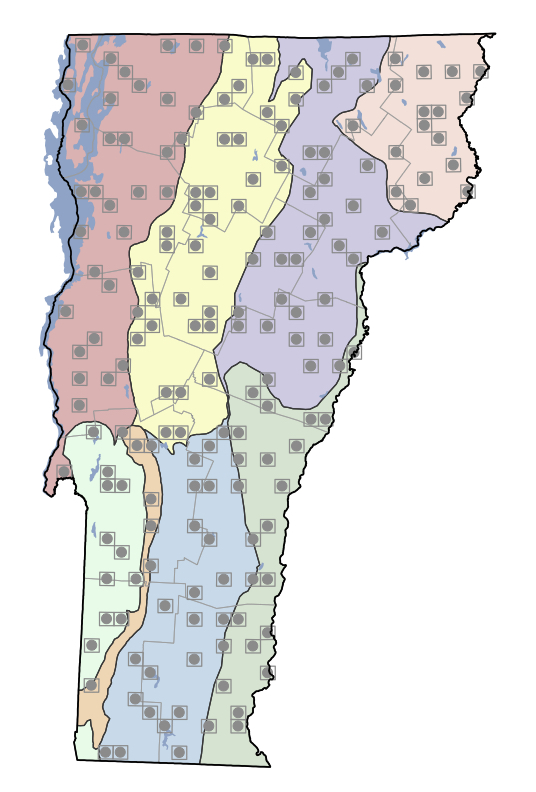
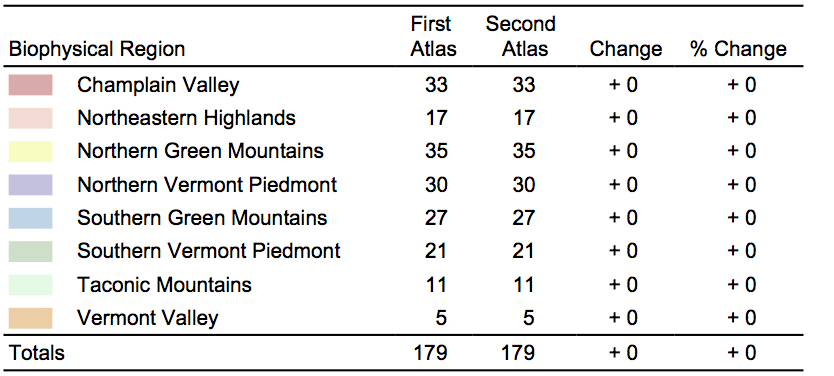
- Status in VT: No change (179 to 179 blocks). Occupies 100% of Priority 1 blocks.
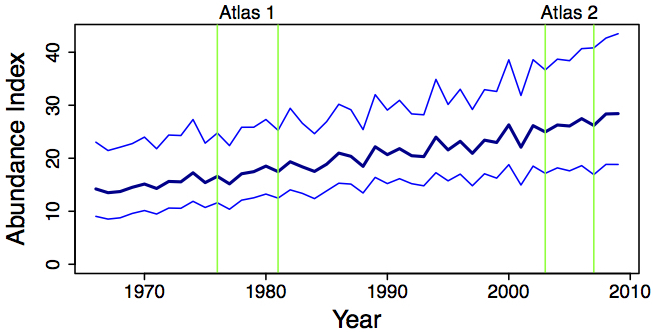
- Data from other research: FBMP: no sig. trend.
- Conservation status: State rank S4S5B; S5N
- Other atlases: NY and ON: minimal change; PA: 5%; MD: 46%
- VT’s role in North American range: VT is within the core of the range.
- Causes of change since first Atlas: No Change.
- Management/Monitoring recommendations:Continue planting ornamental fruit trees.
Population Trends
First Vermont Breeding Bird Atlas (1976-1981)
Second Vermont Breeding Bird Atlas (2003 – 2007)
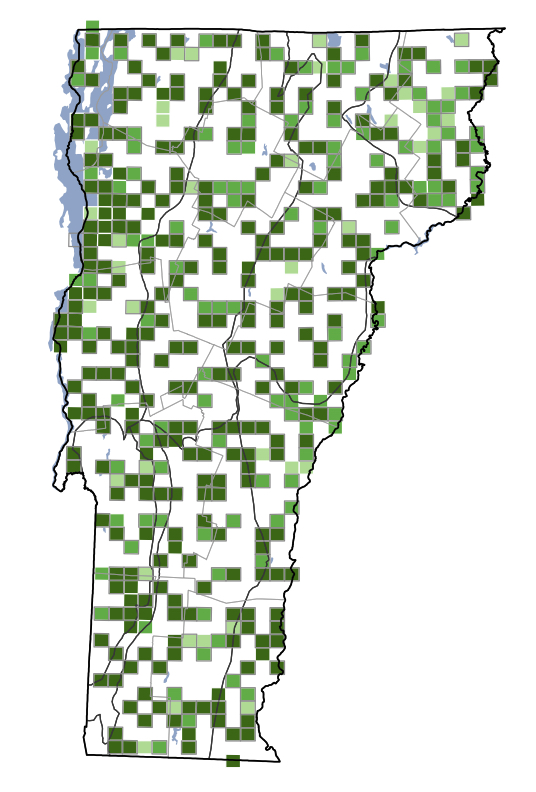

Change in Distribution