Summary
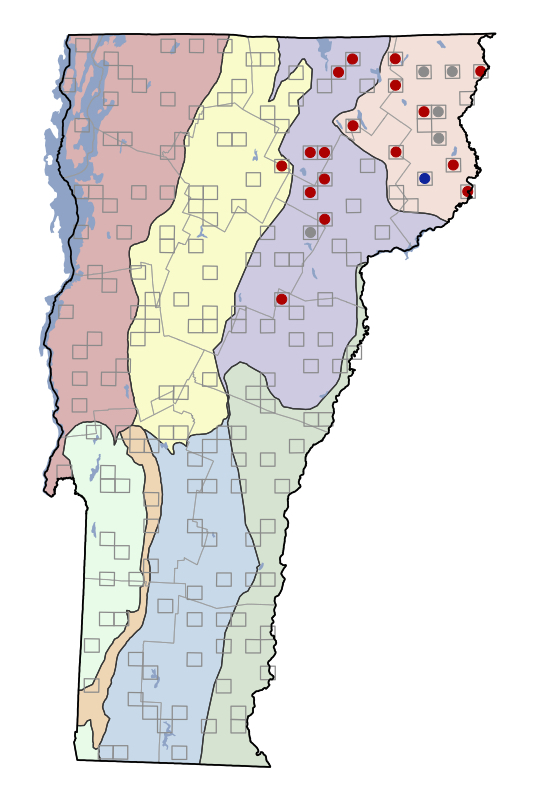
- Natural history: The Boreal Chickadee survives brutal northern winters by hoarding insects and seeds in bark crevices, a habit that lets it live year-round in spruce-fir forest at the southern edge of the vast Canadian boreal biome, of which Vermont’s Northeastern Highlands form one of only a few outposts in the lower forty-eight states. A spruce budworm outbreak in the late 1970s and early 1980s may have briefly boosted its numbers, but the heavy logging that followed in those damaged stands cut the region’s mature spruce-fir forest by roughly half, a change likely behind its sharp decline between the First and Second Atlases.
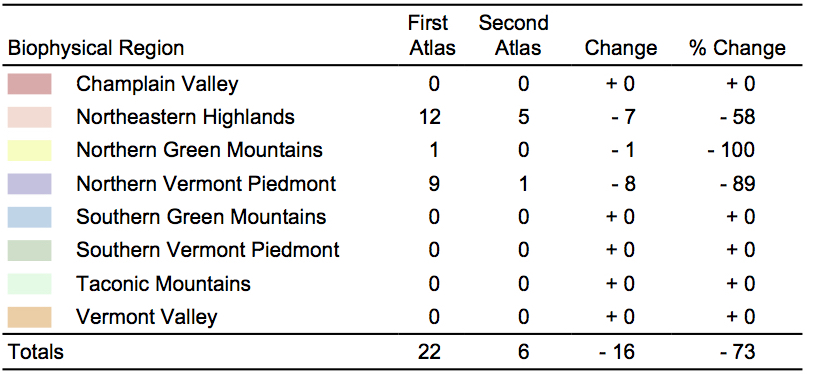
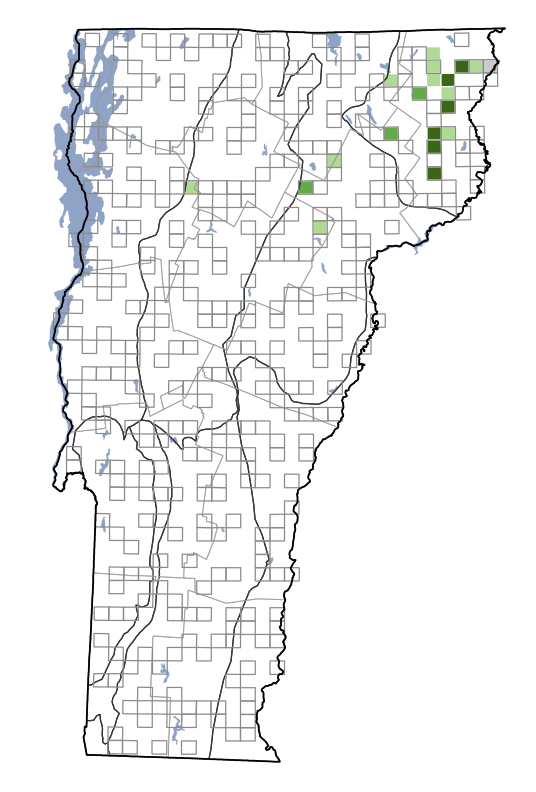
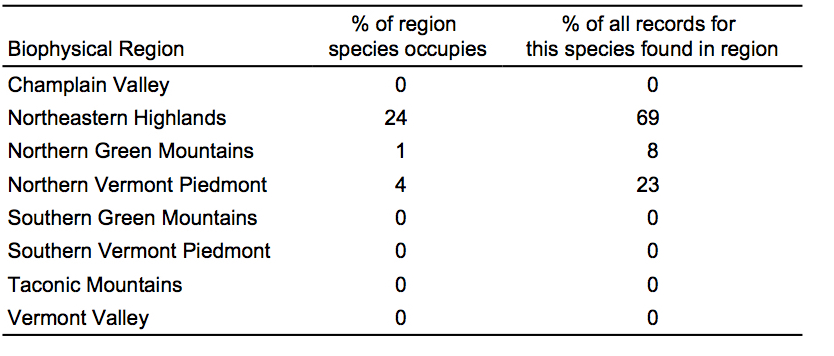
- Status in VT: Decreased by 73% (22 to 6 blocks). Greatest decrease in Northern Vermont Piedmont.
- Data from other research: No additional data for VT.
- Conservation status: State rank S2; SSC
- Other atlases: NY: 12%; ON: no sig. change.
- VT’s role in North American range: VT is at the southern edge of the range.
- Causes of change since first Atlas: Spruce budworm outbreak during first Atlas may have temporarily boosted populations (?); reduction in area of spruce–fir forest and the number of mature conifers per unit area in northeastern VT caused by tree mortality from spruce budworm outbreak and increased logging.
- Management/Monitoring recommendations:Protection of boreal forest.
First Vermont Breeding Bird Atlas (1976-1981)
Second Vermont Breeding Bird Atlas (2003 – 2007)

Change in Distribution