Summary
- Natural history: Vermont marks the southeastern edge of the Black Tern’s breeding range, which otherwise stretches northwest across Canada’s prairies nearly to Alaska, and the state’s entire population now clings to a few large marshes on Lake Champlain’s northern shore. Rather than build on solid ground, these terns anchor loose nests to rafts of floating vegetation, a tactic that wards off mammal predators but leaves eggs vulnerable whenever water levels rise unexpectedly. Invasive plants such as Phragmites and purple loosestrife are suspected of degrading these marshes in recent decades, one likely contributor to a decline sharp enough to have the species listed as endangered in Vermont.
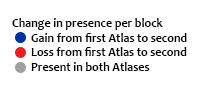
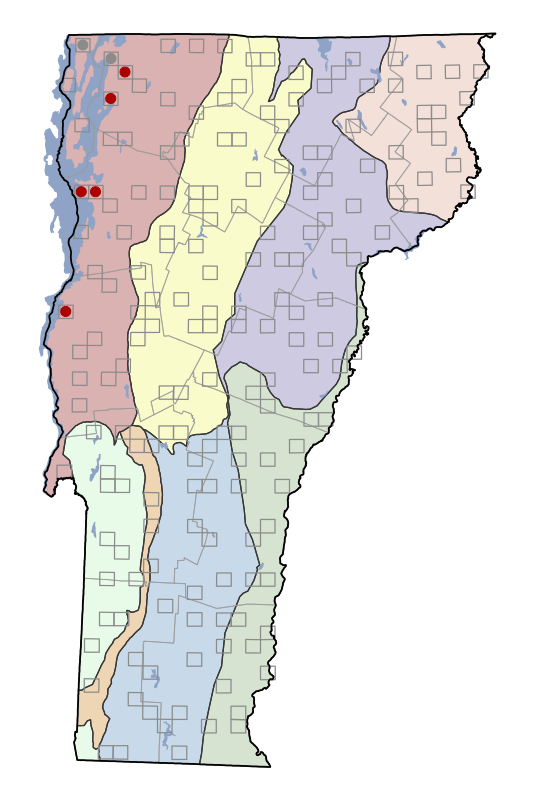
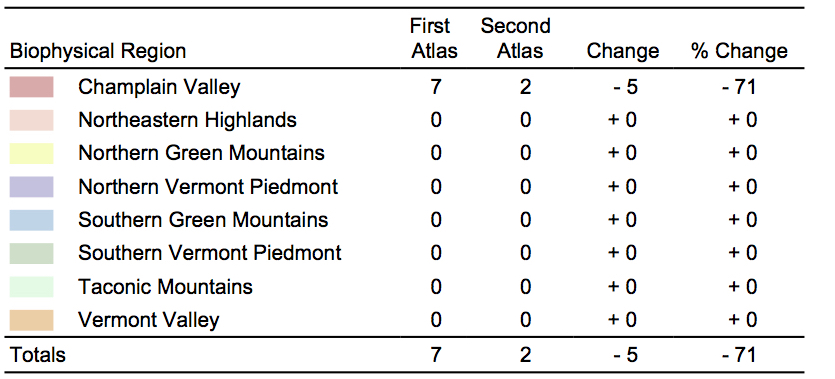
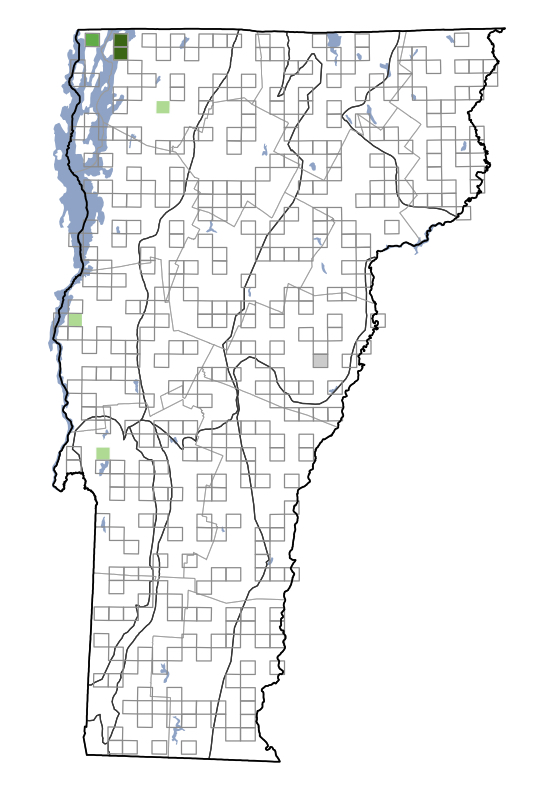
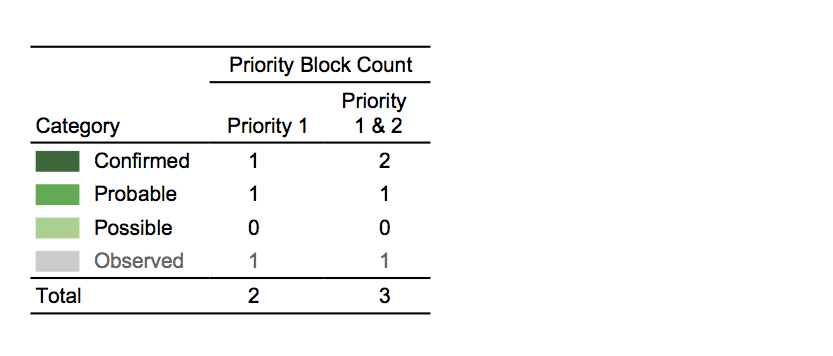
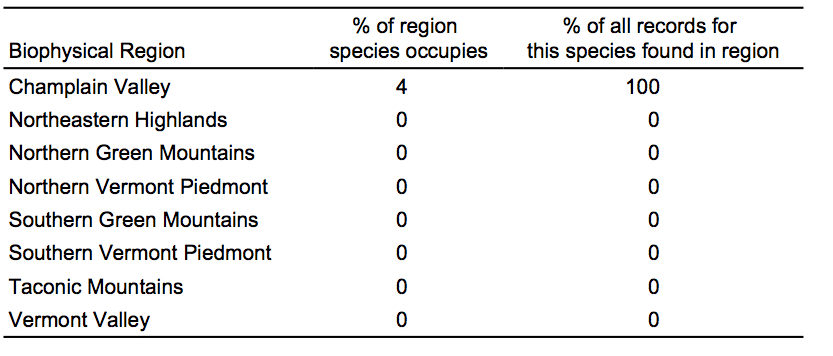
- Status in VT: Decreased by 71% (7 to 2 blocks). Decrease occurred in Champlain Valley.
- Data from other research: Missisquoi NWR: 66 pairs in 2008, 121 pairs in 2009.
- Conservation status: State rank S1B; SGCN-H; E
- Other atlases: NY: -40%; PA: -27%; ON: disappeared from Niagara Peninsula and declined by up to 50% in other regions.
- VT’s role in North American range: VT is on the extreme southeastern edge of the range.
- Causes of change since first Atlas: Reduced habitat suitability resulting from invasion of phragmites and/or purple loosestrife.
- Management/Monitoring recommendations:Protection of known breeding colonies from extreme water fluctuations during the breeding season, invasive species, and boating activity, provision of artificial nest platforms.
First Vermont Breeding Bird Atlas (1976-1981)
Second Vermont Breeding Bird Atlas (2003 – 2007)
Change in Distribution