Summary
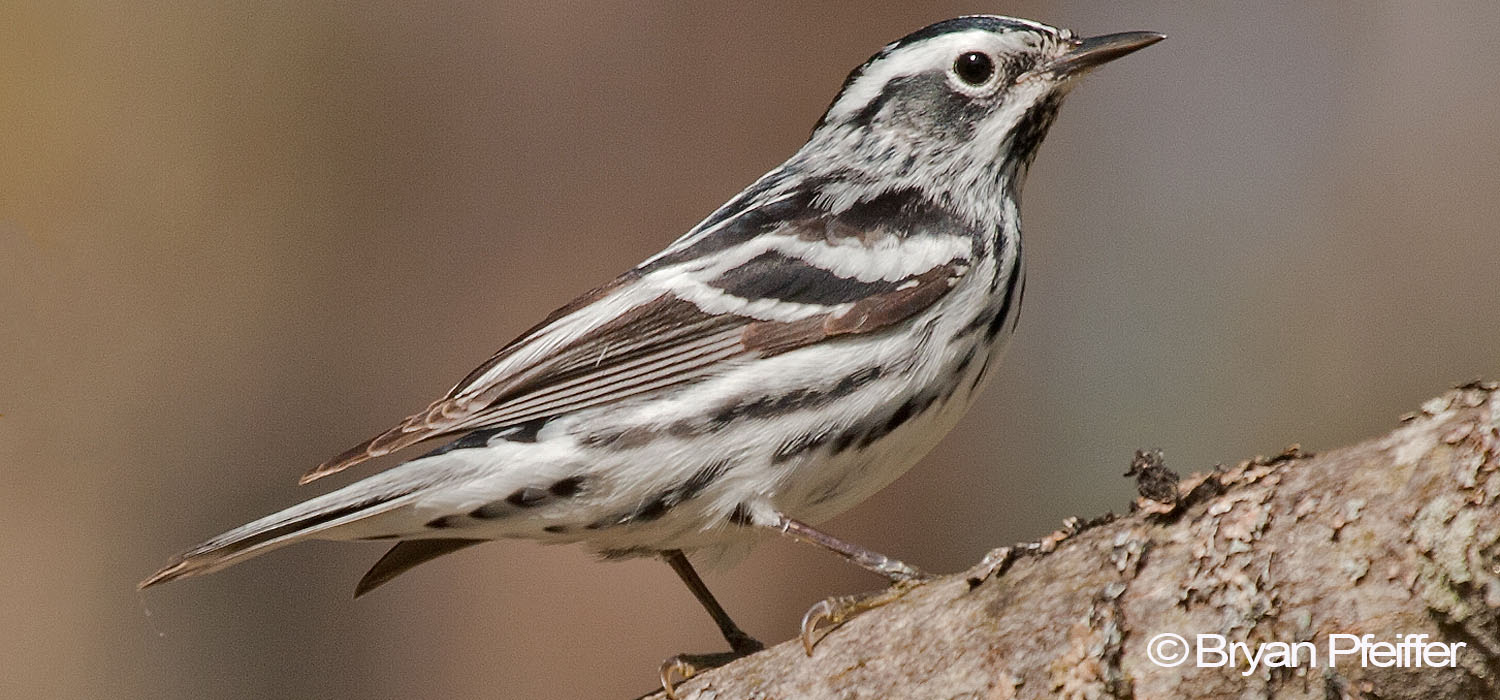
- Natural history: Unlike most warblers, which glean insects from leaves and twigs, the Black-and-white Warbler creeps along tree trunks and limbs in a nuthatch-like fashion, probing bark crevices for hidden insects. It hides its nest low in leaf litter near a stump or rotting log rather than up in a tree, camouflaging it so well that atlas surveyors turned up only four nests during the entire Second Atlas. A female flushed from the nest will feign injury and flutter away, a distraction display meant to draw predators toward herself and away from her hidden young.
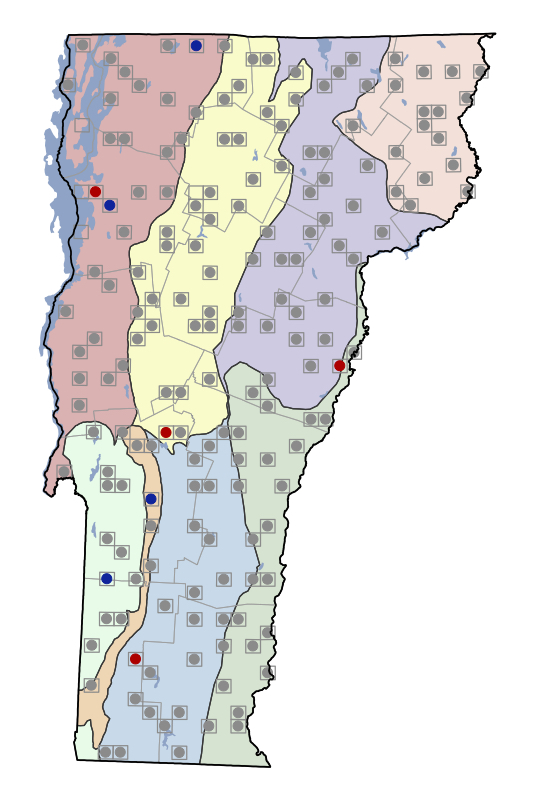
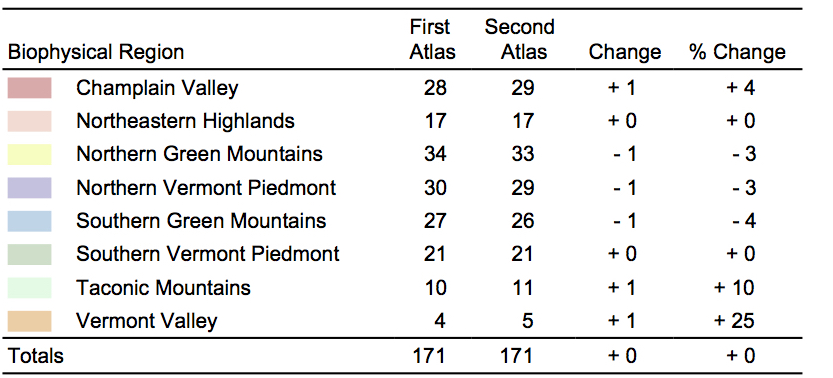
- Status in VT: No change. Continues to be common throughout Vermont.
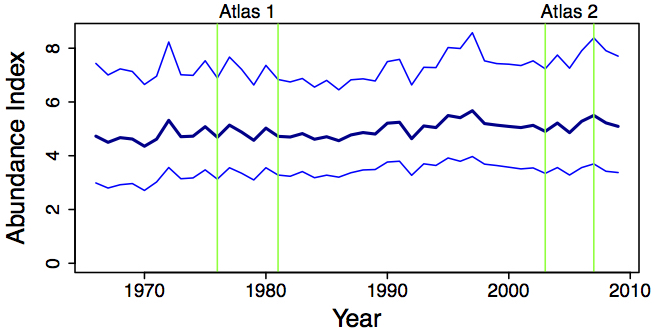
- Data from other research: FBMP: 6.7% (P = 0.10)
- Conservation status: State rank S5B
- Other atlases: NY: -1%; PA: 9%; ON: 21%
- VT’s role in North American range: VT is within the core of the range.
- Causes of change since first Atlas: No change. Possible threats: forest fragmentation from roads, suburban sprawl, and cleared rights-of-way.
- Management/Monitoring recommendations:No current recommendations.
Population Trends
First Vermont Breeding Bird Atlas (1976-1981)
Second Vermont Breeding Bird Atlas (2003 – 2007)
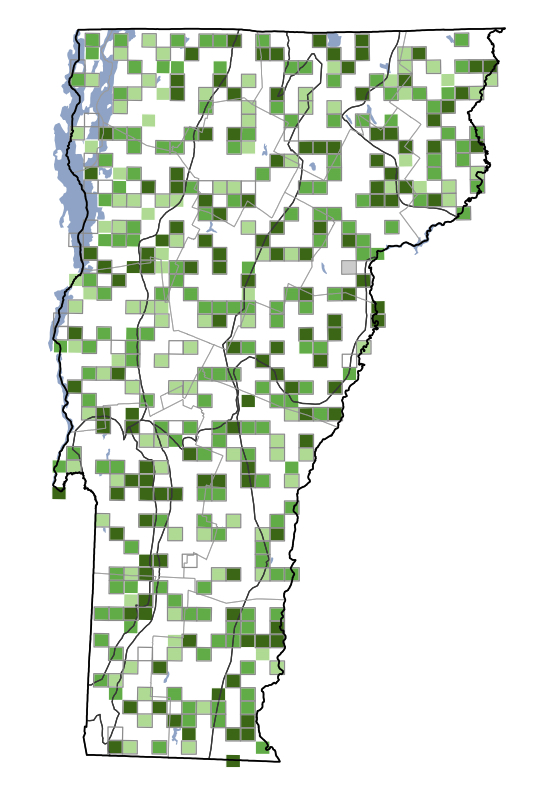

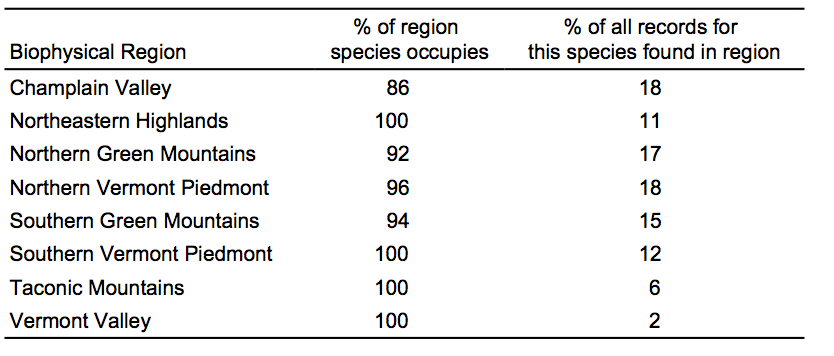
Change in Distribution