Summary
- Natural history: Nicknamed the eight-hooter for its rhythmic who-cooks-for-you-all call, the Barred Owl is normally so sedentary that banded individuals are almost never recovered far from where they hatched, yet one banded in Woodstock, Vermont, turned up 25 miles away five years later. The species was the only owl to gain ground between Vermont’s two Atlases, a rebound tied to a century of reforestation that restored the large, hollow trees it needs for nesting. Its numbers are believed to have risen and fallen with the state’s forest cover for two centuries.
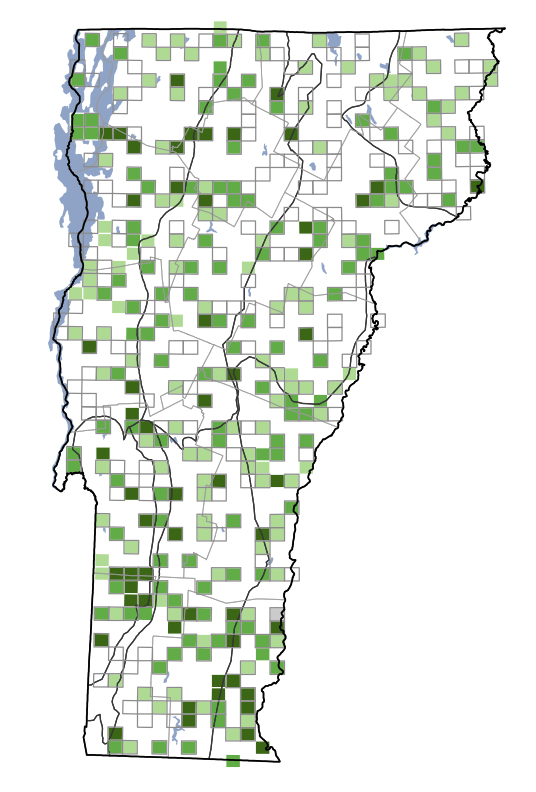
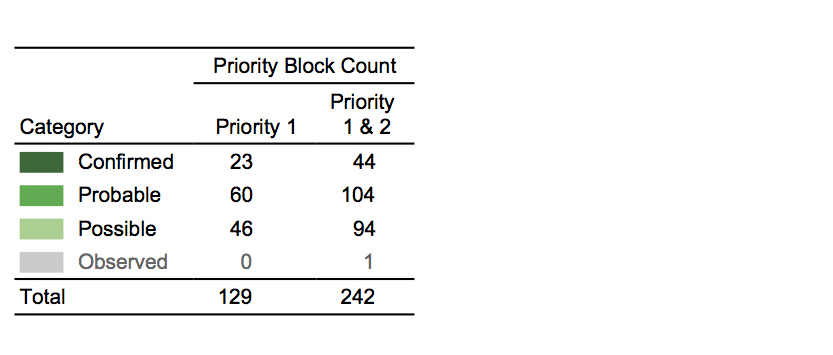
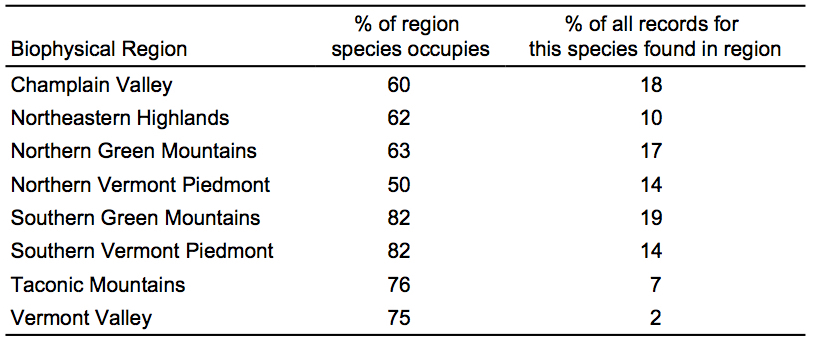
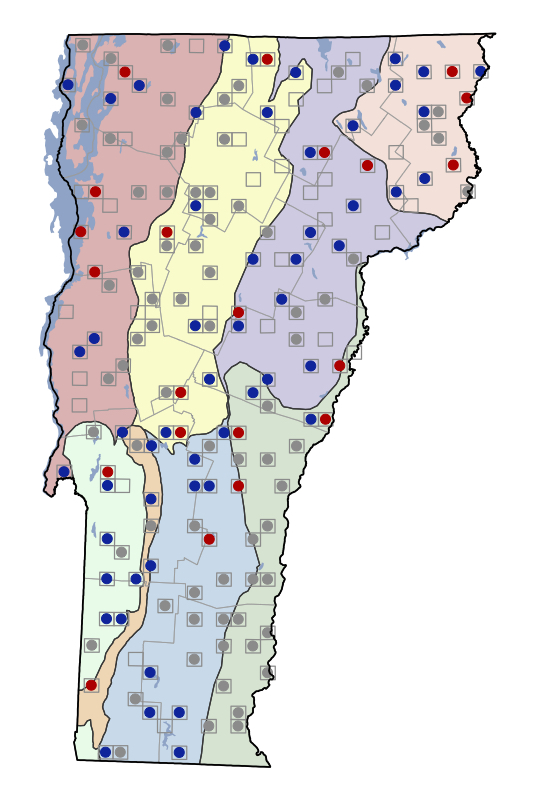
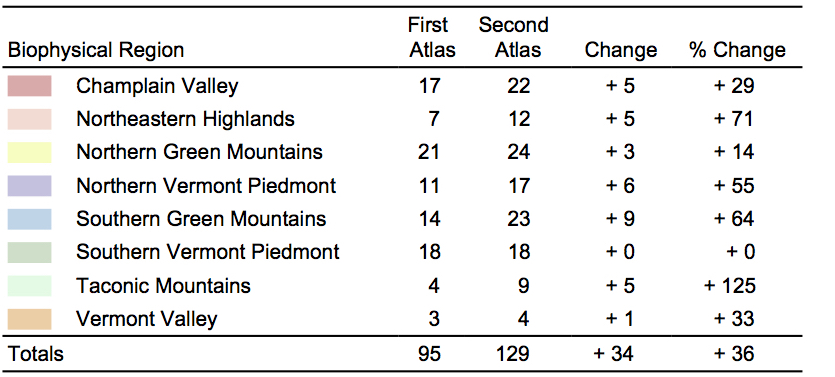
- Status in VT: Increased by 36% (95 to 129 blocks). Greatest increase in Taconic Mountains.
- Data from other research: No additional data for VT.
- Conservation status: State rank S4
- Other atlases: NY: 43%; PA: 18%; ON: substantial increase.
- VT’s role in North American range: VT is within the core of the range.
- Causes of change since first Atlas: Forest maturation resulting in increased nesting habitat.
- Management/Monitoring recommendations: Lengthening of timber rotations; maintenance of natural forest age structures; retention of snags and mature trees.
First Vermont Breeding Bird Atlas (1976-1981)
Second Vermont Breeding Bird Atlas (2003 – 2007)
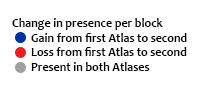
Change in Distribution
Links