Summary
- Natural history: American Redstarts hunt like miniature flycatchers, darting out from perches to snatch insects in midair, and they flash their vivid tail and wing patches like a matador’s cape to startle hidden prey into moving. The species favors second-growth and forest edges over mature woodland, so a male found nesting in a conifer stand is more likely a young, inexperienced bird settling for lower-quality territory. Despite their small size, redstarts defend their nests aggressively and have been recorded harassing intruders as large as Eastern Screech-Owls and Northern Saw-whet Owls.
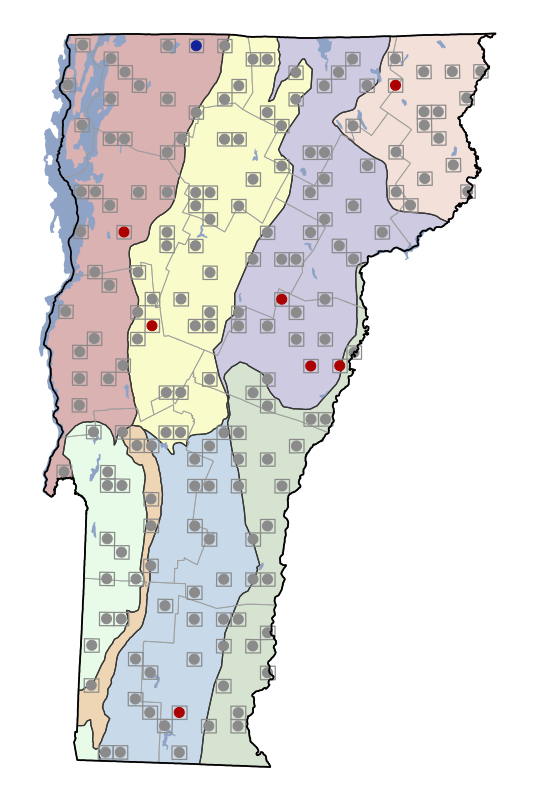
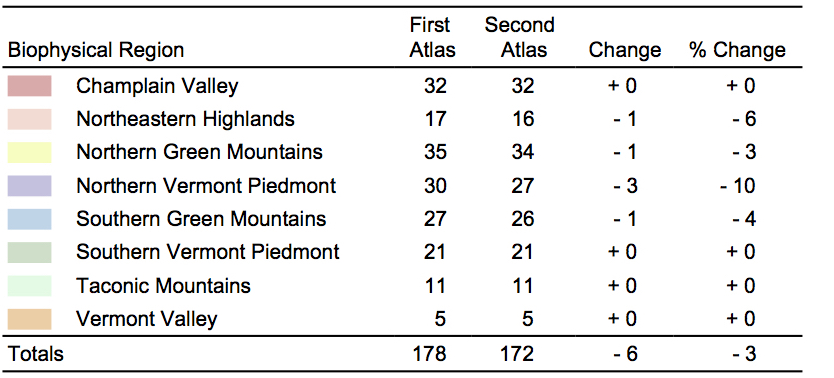
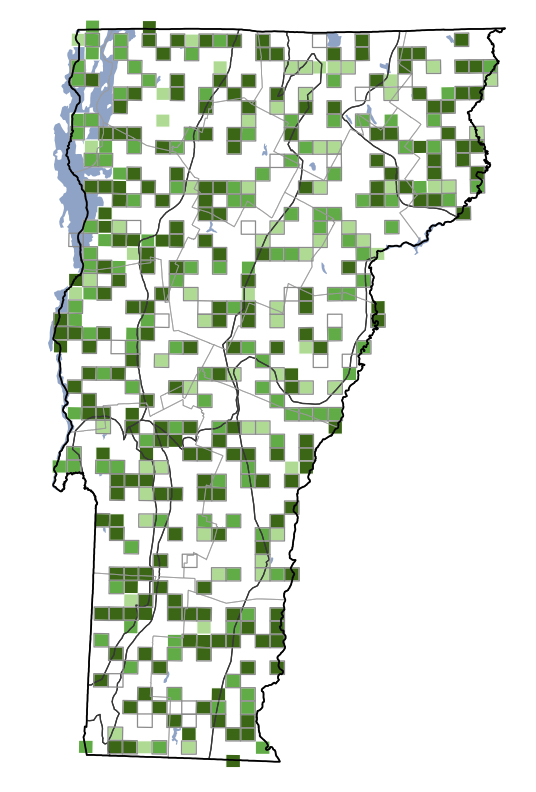
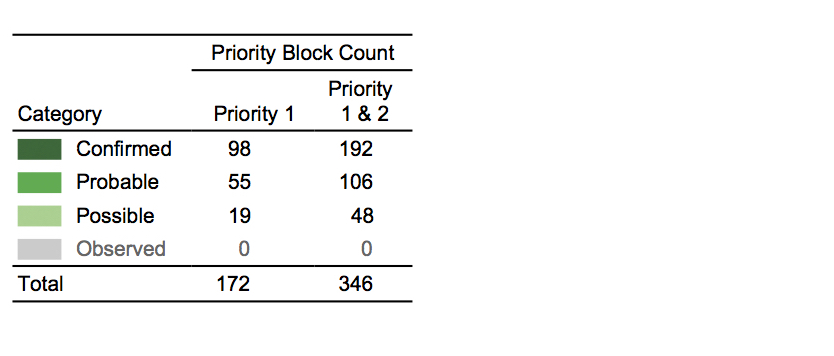
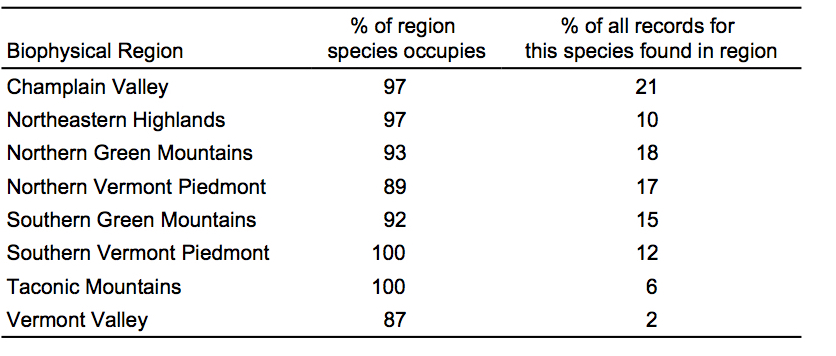
- Status in VT: Decreased by 3% (178 to 172 blocks). Greatest decrease in Northern Vermont Piedmont.
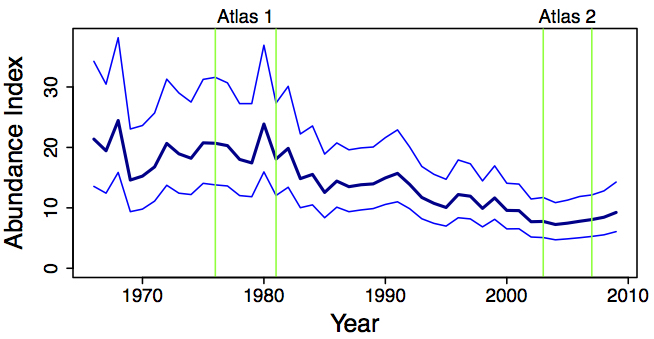
- Data from other research: FBMP: -5.3% (P = 0.10)
- Conservation status: State rank S5B
- Other atlases: NY: 2%; PA: 24%; ON: no sig. change
- VT’s role in North American range: VT is within the core of the range.
- Causes of change since first Atlas: Loss of early successional habitat; loss of quality habitat on wintering grounds.
- Management/Monitoring recommendations: No current recommendations.
Population Trends
First Vermont Breeding Bird Atlas (1976-1981)
Second Vermont Breeding Bird Atlas (2003 – 2007)
Change in Distribution